
Residential Concrete Driveway Planning Guide
August 10, 2026
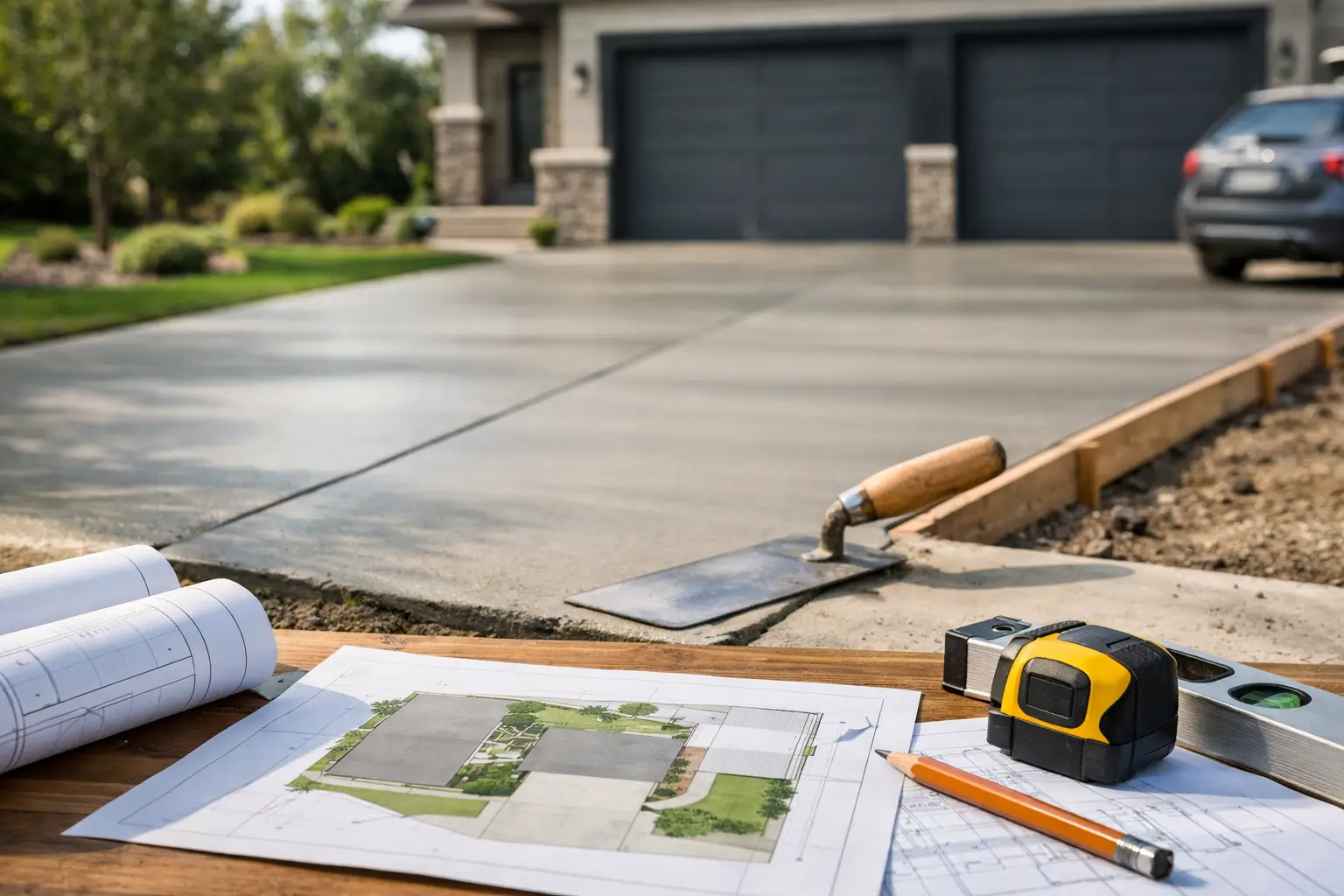
A driveway has to do more than look clean from the street. It must carry daily vehicles, handle Bakersfield heat, direct water away from the home, and hold up through years of use without becoming an ongoing repair project. This residential concrete driveway planning guide helps homeowners make the major decisions before concrete trucks arrive – when changes are still simple, clear, and cost-effective.
Start With How the Driveway Will Be Used
The right driveway design begins with real use, not just the outline of the old driveway. A household with two sedans has different needs than a property with full-size trucks, RV access, trailers, frequent guests, or a three-car garage. Think about where vehicles enter, turn, park, and back out. Tight turns and narrow approaches often cause more daily frustration than homeowners expect.
Measure the usable space around garage doors, gates, sidewalks, and landscaping. If you want room for guest parking or need a wider approach from the street, include it in the original plan. Adding concrete later can work, but a well-planned layout creates a more unified appearance and avoids unnecessary demolition.
Access matters during construction, too. A contractor needs a workable route for equipment, base preparation, and concrete placement. On compact lots, that may affect how the crew stages the project and whether nearby surfaces need protection.
Choose a Layout That Fits the Property
Straight driveways are practical, but practical does not have to mean plain. A wider apron at the street can make turning into the driveway easier. Curved edges can soften a front yard design. A side extension may create useful parking for a boat, trailer, or extra vehicle.
The layout should also respect the home’s architecture. A clean broom-finished driveway may be the best fit for a traditional home with a simple exterior. Homes with more custom landscaping, stone accents, or modern lines may benefit from decorative borders, saw-cut patterns, color, or stamped concrete details. The goal is visual impact that still feels appropriate for the property.
Before approving a design, consider future plans. If a gate, garage addition, detached shop, or front-yard renovation is likely, plan the driveway around it now. Good concrete work should support the way you intend to use the property for years, not only solve today’s parking need.
Plan the Base, Thickness, and Reinforcement
Concrete gets the attention, but the ground beneath it does much of the heavy lifting. A driveway installed over poorly prepared soil can settle, crack excessively, or develop low areas even if the concrete itself was placed correctly. Proper excavation, grading, and compaction create the stable foundation the slab needs.
For most residential passenger vehicles, a standard driveway slab is commonly designed around typical residential thickness. Areas that carry heavier loads may require a thicker section and more preparation. This can include RV pads, trailer parking, delivery access, trash-truck routes, or portions of the driveway that routinely support work trucks.
Reinforcement is another decision worth discussing early. Steel reinforcement or fiber reinforcement can help manage cracking and improve performance, but it does not eliminate the need for a solid base, correct placement, and properly located control joints. Concrete naturally shrinks as it cures. The objective is to guide that movement into planned joints instead of letting cracks appear randomly across the surface.
A dependable contractor will evaluate site conditions rather than offering one identical solution for every home. Soil, slope, driveway use, and the condition of existing concrete all influence the recommended scope.
Drainage Is Not an Afterthought
Water should never be allowed to sit against a garage, flow toward the foundation, or collect in the center of a driveway. In Kern County, intense rain events can quickly expose small grading mistakes. A driveway needs a deliberate slope that sends water where it belongs while remaining comfortable to walk and drive on.
This is especially important when replacing an existing driveway. If the old concrete has puddles, a sunken section, or water that reaches the garage, replacement is the time to correct the underlying problem. Simply pouring new concrete at the same elevation can recreate the same issue.
Drainage planning may involve adjusting grades, creating a swale, setting a channel drain, or coordinating the driveway with adjacent walkways and landscaping. The best choice depends on the property. The key is to address water movement before the slab is poured, not after it becomes a nuisance.
Select a Finish for Safety and Curb Appeal
Your finish affects appearance, traction, maintenance, and budget. A standard broom finish remains a smart choice for many Bakersfield homes because it is clean, durable, and provides dependable traction. It works well with nearly any exterior style and is often the most straightforward option.
For homeowners seeking a more customized look, decorative concrete can add definition without sacrificing everyday function. Borders can frame the driveway or connect visually with a patio and walkway. Integral color can create a warmer, more finished appearance. Stamped concrete can deliver a high-end texture, though it requires thoughtful design and proper maintenance to keep its appearance looking sharp.
Lighter colors are often worth considering in sunny areas because they can feel less heat-absorbing than darker surfaces. That said, lighter finishes may show tire marks or stains more easily. There is no single best finish – the right option balances the home’s style, expected traffic, sun exposure, and how much maintenance you are comfortable with.
Understand the Timeline Before Scheduling the Work
A driveway project is not just pour day. The schedule typically includes site evaluation, design decisions, permits or local requirements when applicable, demolition, grading, base work, forms, reinforcement, concrete placement, finishing, and curing. Weather and the complexity of the project can also affect timing.
After placement, fresh concrete needs time to gain strength. While a crew can provide project-specific guidance, homeowners should plan for limited vehicle access during the curing period. Moving vehicles onto a new driveway too soon can damage the surface and compromise a project that was otherwise completed correctly.
Prepare your household before work begins. Move vehicles out of the garage, identify alternate parking, keep pets away from the work zone, and clear movable items near the driveway. If access for a neighbor or shared area could be affected, a little advance communication goes a long way.
Compare Estimates by Scope, Not Just Price
A low number on an estimate is not always a lower-cost project in the long run. Two driveway proposals can look similar at first glance while including very different levels of demolition, base preparation, thickness, reinforcement, drainage correction, finish work, and cleanup.
Ask what happens to old concrete, how the subgrade will be prepared, what thickness is proposed, where control joints will be placed, and whether drainage concerns are included. If decorative work is part of the plan, make sure the color, border details, pattern, and sealing expectations are clearly described.
You should also look for a contractor who communicates clearly and understands local conditions. National Concrete approaches driveway projects with the same focus on craftsmanship and straightforward service that Bakersfield homeowners expect from a top-rated local concrete contractor. A clear plan and responsive communication make the entire process easier from estimate through final walkthrough.
A Residential Concrete Driveway Planning Guide for Long-Term Value
The best driveway investment is rarely the flashiest one. It is the one that fits the property, drains correctly, supports the vehicles you actually use, and complements the home without creating extra maintenance. Thoughtful preparation is what makes a driveway look intentional on day one and continue performing after countless hot summers, rainy days, and daily trips in and out.
Before making a final decision, walk the property with your contractor and point out every concern: where water collects, where vehicles turn, where you want more parking, and which design details matter most. That conversation can turn a basic replacement into a driveway you will be glad to pull into every day.