
How to Level Concrete Steps for a Safer Entry
November 6, 2026
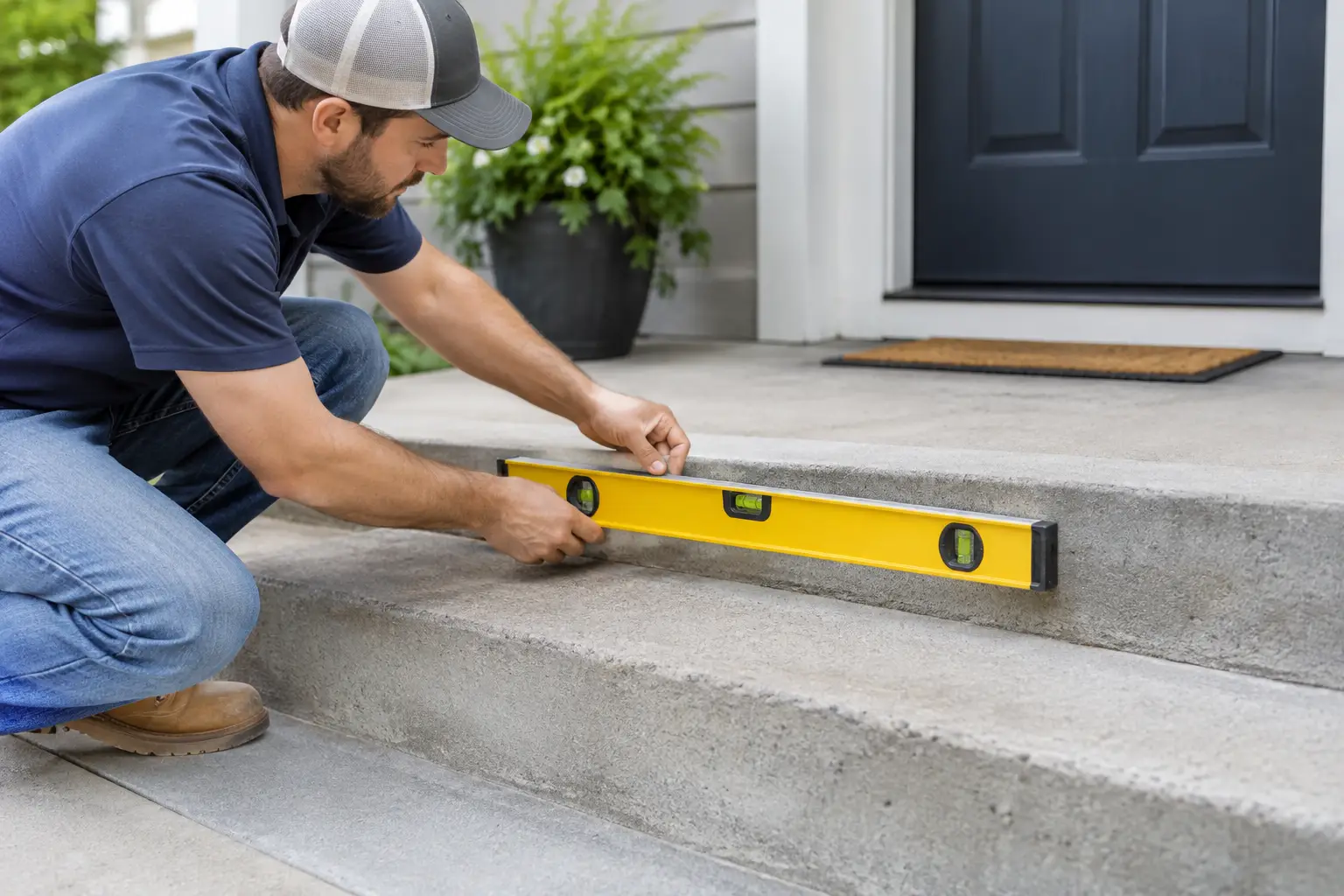
A front entry should feel solid underfoot, not like a place where guests have to watch every step. When concrete stairs settle, tilt, crack, or pull away from the porch, homeowners often ask how to level concrete steps without creating a bigger problem. The right answer depends on why the steps moved, how much they have shifted, and whether the concrete itself is still structurally sound.
For Bakersfield homes and commercial properties, step movement is more than a curb-appeal issue. Uneven risers create a trip hazard, standing water can speed up damage, and a visible gap at the entry can allow water to reach areas where it does not belong. Addressing the cause early is usually simpler than waiting until the steps need full replacement.
Why Concrete Steps Become Uneven
Concrete does not usually settle without a reason. The most common issue is soil movement beneath the steps. A poorly compacted base can compress over time, leaving part of the concrete unsupported. In Kern County, changing moisture levels, irrigation leaks, drainage problems, and expansive soils can also cause the ground to shift.
Water is often the hidden culprit. Downspouts that discharge beside the entry, sprinklers aimed at the concrete, or grading that directs runoff toward the house can soften or wash out supporting soil. A heavy set of poured steps may then sink or rotate toward the low spot.
Tree roots, vehicle impact, and normal aging can contribute as well. On commercial properties, repeated foot traffic and equipment activity around an entrance may expose weak base preparation that was not obvious when the concrete was first installed.
The key question is not simply whether the steps look crooked. It is whether they are still moving. A contractor should look for fresh cracking, widening gaps, drainage patterns, and signs that the adjacent porch, walkway, or foundation has shifted too.
When You Can Level Concrete Steps Instead of Replacing Them
Leveling is often a good option when the steps are intact but have settled as a single unit. If the concrete has only minor surface wear, no serious deterioration, and no major structural cracks, lifting and stabilizing the steps can restore a safer entry without tearing everything out.
Professional lifting methods generally involve placing material beneath the settled concrete to fill voids and raise it gradually. The exact approach can vary by project. A traditional cement-based grout may be appropriate in some situations, while lightweight expanding foam can work well where controlled lifting and minimal added weight are priorities.
Neither method is automatically best for every property. The right choice depends on the size and thickness of the steps, access around the entry, soil conditions, drainage concerns, and the amount of correction needed. A proper inspection matters because raising concrete too quickly or too far can crack it or leave the top landing out of alignment with the doorway.
Leveling may not be the right fix if the steps have broken into multiple pieces, have deep spalling, or were built without adequate reinforcement. It also may not solve a problem caused by active soil instability or a continuing water leak. In those cases, repairing the drainage issue and replacing the damaged steps can be the more dependable long-term investment.
Check the Rise and Run Before Any Repair
A set of steps can look nearly level and still be unsafe. What matters is the relationship between every tread and riser. People expect each step to be similar in height. Even one noticeably taller or shorter riser can catch a foot, especially at night or when someone is carrying groceries.
Before making a repair plan, measure the height of each riser and the depth of each tread. Also check whether the top landing slopes away from the house and whether the bottom step meets the walkway cleanly. A repair that fixes the tilt but creates inconsistent step heights is not a quality repair.
Handrails deserve attention at the same time. If settled steps have changed the height or angle of a rail, it may no longer provide the support it was intended to provide. Local building requirements can vary based on the project, property type, and scope of work, so a qualified contractor should confirm what applies before construction begins.
A Practical Process for Leveling Concrete Steps
A successful repair starts with diagnosis, not equipment. The work should begin by identifying where the soil has settled and where water is traveling. If the source of the movement remains in place, newly leveled steps can eventually sink again.
The contractor will inspect the concrete, adjacent flatwork, porch connection, cracks, and surrounding grade. They should also look for gaps between the steps and the house, soft soil around the base, and any signs that water collects near the entry after irrigation or rain.
Once the cause is understood, the steps are prepared for lifting. Small access holes may be drilled in carefully selected locations. Material is then placed beneath the steps in controlled stages, lifting the concrete while the crew monitors elevation and alignment. This is precision work, particularly around door thresholds, brick veneer, railings, and connected walkways.
After the desired position is reached, the access holes are patched and joints or gaps are addressed as needed. The area should then be evaluated for drainage improvements. That might mean adjusting sprinkler heads, extending a downspout discharge, regrading a nearby area, or sealing a gap where water has been entering below the concrete.
For a minor repair, this process can be less disruptive than demolition and replacement. There is no need to remove large sections of concrete simply because one portion has settled. Still, lifting is not a shortcut. It requires the same focus on preparation, elevation, and finish quality that a new concrete installation demands.
When New Concrete Steps Are the Better Choice
Replacement becomes the stronger option when the old steps have extensive cracks, crumbling edges, exposed reinforcement, or a design that no longer works for the property. It can also make sense when homeowners want a wider entry, a larger landing, integrated walkways, decorative finishes, or better access from the driveway.
New steps allow the contractor to rebuild the base correctly, improve drainage, and design a more consistent connection to the home. For example, a plain worn entry can be replaced with clean broom-finished steps, colored concrete, or a stamped border that complements a patio or front walkway. The finish should always support traction and daily use, not just appearance.
Commercial owners may need replacement when entry steps must meet updated accessibility, safety, or traffic requirements. A reliable concrete contractor can evaluate the complete approach to the building, including adjacent sidewalks, curbs, ramps, landings, and drainage, rather than treating one damaged step as an isolated issue.
Protect Your Steps After the Repair
Once the steps are level, keeping water under control is the best way to protect the investment. Avoid directing sprinklers at the concrete, keep downspouts from dumping water beside the entry, and watch for low areas where runoff collects. If the concrete is sealed, follow the recommended maintenance schedule for the specific finish and traffic level.
Small changes should not be ignored. A new hairline crack is not always an emergency, but a widening crack, a growing gap at the house, or a step that begins to tilt again deserves a prompt inspection. Catching movement early gives you more repair options and can help prevent a simple entry issue from becoming a larger concrete project.
For Bakersfield property owners, National Concrete brings experienced craftsmanship to both straightforward repairs and custom concrete upgrades. The goal is not merely to make a set of stairs look better for a season. It is to create an entry that feels stable, drains properly, and welcomes people safely for years to come.
If your steps feel uneven or look like they are separating from the porch, take a close look after the next irrigation cycle or rainfall. The pattern of water around the entry often tells the story long before the concrete has the chance to tell it for you.