
How to Plan Concrete Driveway Replacement
July 23, 2026
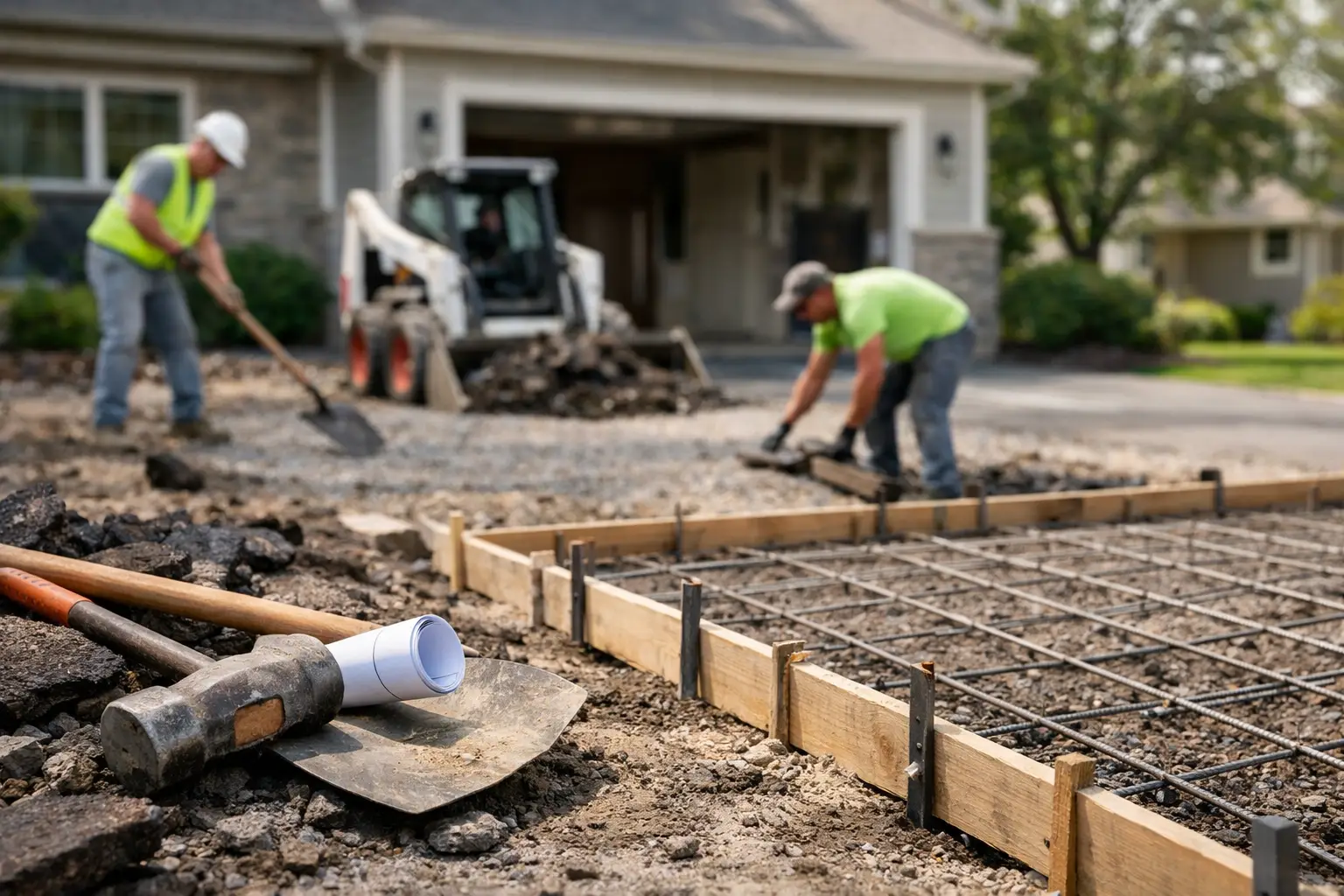
A cracked driveway can go from an eyesore to a daily headache fast. Water pools near the garage, tires bump over broken sections, and the front of your property starts to look neglected. Knowing how to plan concrete driveway replacement helps you avoid rushed decisions and gives you a finished surface built for Kern County heat, vehicle traffic, and long-term curb appeal.
A successful replacement is more than removing old concrete and pouring a new slab. The best results come from planning the right size, slope, base, reinforcement, finish, and access before work begins. Here is what Bakersfield homeowners and property owners should consider before scheduling a concrete driveway project.
Start With the Reason for Replacement
First, look beyond the visible cracks. Small surface cracks may be repairable, but widespread cracking, settlement, severe scaling, or slabs that have lifted or sunk usually point to a larger issue below the concrete. Replacing only the top surface without addressing the cause can lead to the same problems again.
Pay attention to where the driveway has failed. Cracks near the garage, low spots that hold water, broken edges, and tire-path damage each tell a different story. Soil movement, inadequate compaction, poor drainage, tree roots, and years of heavy vehicle use can all affect the slab.
If your driveway is too narrow for your vehicles, lacks a turnaround area, or does not match changes you have made to the property, replacement is also a chance to improve its layout. A new driveway should work better than the old one, not simply look newer.
How to Plan Concrete Driveway Replacement Before Demolition
The planning stage should answer a few practical questions: What will use the driveway? Where should water go? How will vehicles and people move through the area during construction? These details shape the scope and cost of the project.
Measure the footprint and vehicle needs
A standard residential driveway may be enough for two passenger vehicles, but many properties need more room for trucks, trailers, RVs, extra parking, or easier garage access. Consider the full path from the street to the garage, including turns, gates, walkways, and parking pads.
Commercial properties should think about delivery vehicles, service trucks, trash collection, and traffic flow. Heavier loads may require a thicker slab and a more engineered base than a typical residential driveway. This is one area where choosing the lowest quote without comparing specifications can become expensive later.
Plan drainage before choosing a finish
Bakersfield’s dry climate does not eliminate drainage concerns. When rain does arrive, water needs a clear path away from the garage, foundation, and neighboring property. A driveway should be graded to direct runoff appropriately, without creating puddles at the street or against the home.
Drainage planning may involve adjusting the slope, adding a channel drain near the garage, tying into an approved drainage route, or reshaping adjacent landscaping. The right approach depends on the lot, existing elevations, and local requirements. This work is much easier to handle before the new concrete is installed.
Check access and daily logistics
Driveway replacement affects daily routines. You may need to move vehicles, arrange alternate parking, and keep the work area clear for demolition equipment, base material, concrete trucks, and crews. If the driveway is your only route to a garage, plan for several days without vehicle access and follow your contractor’s curing guidance before driving on the new slab.
It is also smart to identify sprinkler lines, landscape lighting, gates, utility covers, and drainage features near the driveway. Addressing these items early helps prevent surprises once demolition starts.
Build the New Driveway From the Ground Up
A durable driveway depends on what is below the concrete just as much as the concrete itself. Old concrete can hide soft spots, unstable soil, or poorly compacted material that needs to be corrected before the new pour.
After removal, the subgrade should be evaluated and prepared. The contractor may need to excavate further, add base material, correct low areas, and compact the surface so it can support the slab consistently. Proper preparation helps reduce settlement and cracking over time.
Thickness should match the job. Many residential driveways are designed for regular passenger vehicles, while heavier pickups, RVs, trailers, and commercial traffic may call for added thickness or reinforcement. Reinforcement can help manage cracking and improve performance, but it does not replace proper base preparation, thickness, joints, and drainage.
Control joints are another essential detail. Concrete naturally shrinks as it cures, and joints encourage cracking to occur in planned lines rather than randomly across the surface. Their placement should suit the driveway layout, transitions, and slab dimensions.
Choose a Design That Fits Your Property
A driveway is one of the largest visible surfaces on most properties. It should be durable, but it can also improve the look of the home, storefront, or building entrance.
A traditional broom finish is practical, slip-resistant, and a strong choice for many residential and commercial driveways. It delivers a clean appearance and dependable traction. For property owners who want a more customized look, decorative borders, saw-cut patterns, exposed aggregate, or stamped concrete can create more visual character.
Decorative concrete has trade-offs. More detailed finishes can raise the project cost and may require more consideration around maintenance, color, and long-term appearance. A simple, well-installed driveway often offers the best value when function and budget are the top priorities. The right choice depends on whether you want the driveway to blend in or become a feature of the property.
Set a Realistic Budget and Compare the Full Scope
Concrete driveway pricing is not based on square footage alone. Demolition, hauling, excavation, base preparation, thickness, reinforcement, drainage work, access limitations, decorative options, and permit requirements can all affect the estimate.
When reviewing proposals, compare the scope line by line. One estimate may include removal and disposal of the old driveway while another does not. One may specify base preparation and reinforcement clearly, while another uses broad language that leaves room for assumptions. Ask what thickness is planned, how the base will be prepared, where joints will be placed, and whether cleanup is included.
The goal is not to chase the cheapest number. It is to choose a clear, fair scope that addresses the conditions on your property. A driveway is a long-term investment, and a contractor should be able to explain the work in straightforward terms.
Confirm Permits, Property Lines, and Local Requirements
Depending on the project, driveway work may require permits or coordination with the City of Bakersfield, Kern County, a homeowners association, or another local authority. Requirements can be especially relevant when a driveway apron connects to the street, drainage is being changed, or work extends near sidewalks and public right-of-way areas.
Before construction, confirm property lines and make sure the planned work does not create conflicts with fences, utility equipment, sidewalks, or neighboring access. If you are widening a driveway, adding a second entrance, or making changes near the curb, ask early about applicable requirements. Waiting until the crew is ready to pour is never the time to discover a restriction.
Choose a Contractor Who Plans, Not Just Pours
The contractor you hire should inspect the site, listen to how you use the property, and provide a scope that makes sense for your goals. They should not treat every driveway as the same rectangle with the same solution.
Ask about experience with demolition, grading, base compaction, drainage, reinforcement, decorative finishes, and local project conditions. Request a written estimate and make sure you understand the schedule, payment terms, site protection, and curing timeline. A dependable contractor communicates clearly before the work starts and keeps the job moving once it begins.
National Concrete helps Bakersfield-area property owners plan driveway replacements with proven craftsmanship, practical recommendations, and an easy, hassle-free process. Whether you need a straightforward replacement or a custom driveway designed to improve curb appeal, the details behind the pour matter.
Prepare for the First Week After the Pour
Fresh concrete needs time to gain strength. Your contractor will provide instructions for when it is safe to walk on the surface, when vehicles can return, and how to protect the driveway during curing. Follow those guidelines even if the concrete looks dry on top.
Avoid dragging heavy items across the slab, parking early, or allowing sharp equipment to damage edges. Keep irrigation from constantly soaking the surface, and wait for recommended curing and sealing intervals before applying any protective products. A little patience in the first days helps protect a driveway designed to serve your property for years.
A well-planned replacement gives you more than a clean new entrance. It gives you a driveway that drains correctly, supports the vehicles you own, complements your property, and lets you pull in each day with confidence.