Dumpster Pad Examples for Bakersfield Properties
October 23, 2026
A dumpster area is easy to overlook until it cracks, puddles, blocks traffic, or creates a messy first impression. The best dumpster pad examples solve those everyday problems with a hard-working concrete surface that supports heavy loads, drains correctly, and fits the way a property actually operates.
For Bakersfield homeowners, builders, and commercial property managers, the right pad is not just a place to set a bin. It is part of the property’s access, cleanliness, maintenance plan, and curb appeal. A well-built concrete dumpster pad can stand up to collection trucks, summer heat, irrigation overspray, and frequent use without becoming a recurring repair project.
What Makes a Dumpster Pad Different?
A dumpster pad is a reinforced concrete slab designed for trash and recycling containers. Unlike a typical walkway or light-use patio, it must handle concentrated weight from loaded dumpsters and the repeated impact of collection equipment. The truck may also roll, pull, or set containers down in the same areas over and over.
That repeated force is why a thin, poorly prepared slab often fails at the edges first. Cracking, settling, and standing water can make the enclosure harder to use and harder to keep clean. The right design begins below the concrete with proper base preparation and continues with practical details such as slope, access clearance, and durable edges.
The exact specifications depend on the dumpster size, pickup method, soil conditions, truck traffic, and whether the site is residential, retail, industrial, or multifamily. A small construction dumpster behind a home does not need the same layout as a busy apartment complex with several containers.
Dumpster Pad Examples That Fit Common Properties
Standard commercial dumpster enclosure pad
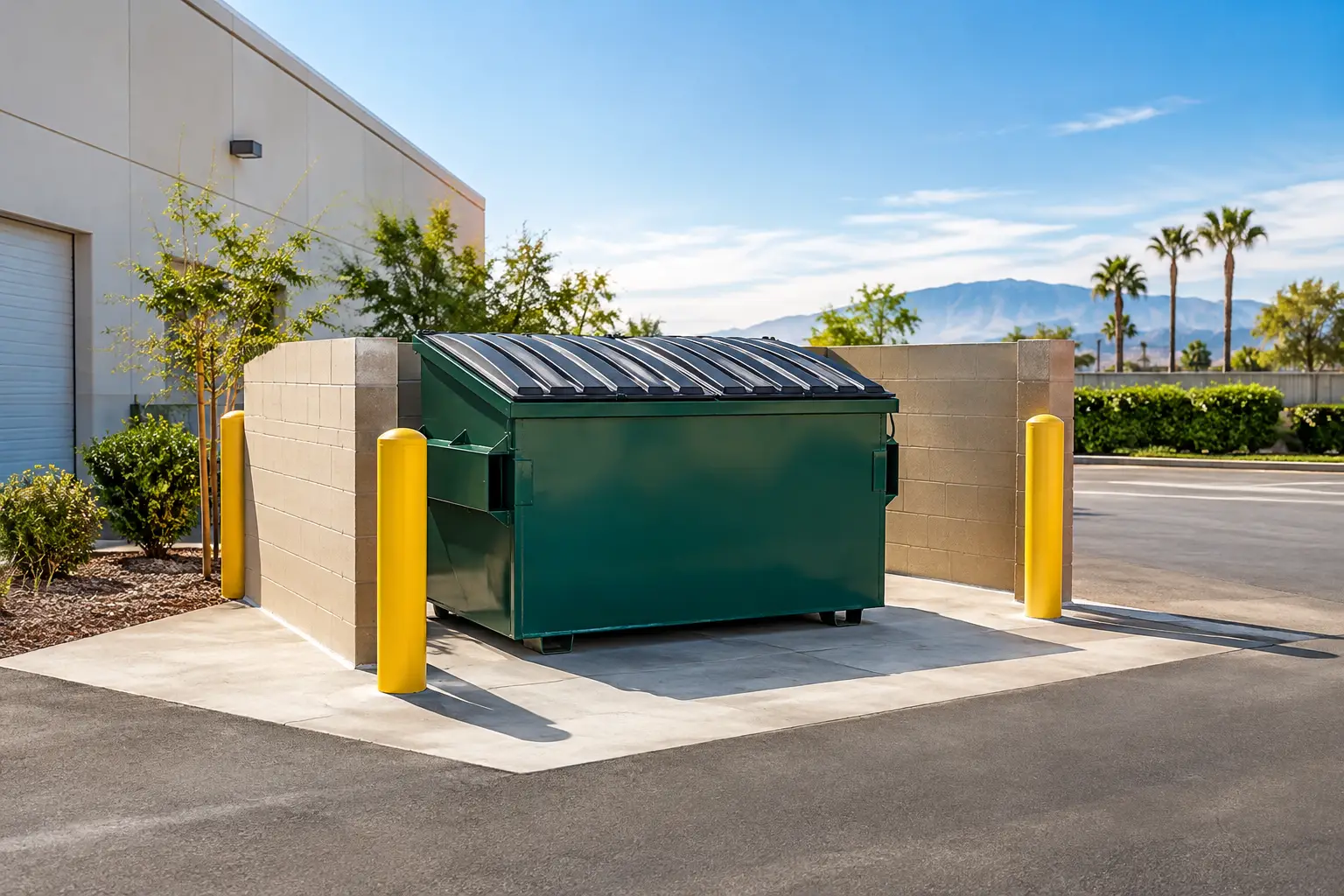
This is the familiar rear-of-building pad used by offices, retail centers, medical buildings, and small warehouses. It usually sits inside a block wall or metal enclosure with gates facing the service drive. The concrete needs enough room for the container, gate swing, and the approach required by the trash hauler.
A practical layout keeps the enclosure gates clear of the dumpster wheels and places the pad level enough for containers to sit securely. At the same time, the surrounding area should drain away from buildings and avoid sending dirty runoff toward customer parking or entryways. For commercial sites, this straightforward setup is often the best value because it is durable, clean, and easy for drivers to access.
Multi-container pad for apartments or retail centers
Properties with multiple tenants produce more waste and need more organization. A larger pad can hold separate trash, recycling, cardboard, or green-waste containers while giving collection crews room to work safely. These dumpster pad examples are common at apartment communities, shopping centers, and mixed-use developments.
The key is not simply making the pad bigger. Containers need a clear travel path, gates need to open fully, and the truck needs enough room to approach and service the bins without striking curbs, landscaping, parked cars, or enclosure walls. Separating containers can improve access, but it also increases the pad footprint. The best layout balances capacity with the space available on the site.
Restaurant or food-service dumpster pad
Restaurants, grocery stores, and food-service businesses often need a pad that accounts for heavier use, frequent cleaning, and grease-related maintenance. The surface should be easy to hose down and detailed to keep water from ponding around the enclosure.
For these properties, location matters as much as slab strength. The dumpster should be convenient for staff but far enough from customer entrances, outdoor dining, and delivery traffic to keep the service area discreet. Concrete curbing, screen walls, and carefully placed access gates can make a major difference in how the area looks from the public side of the property.
Multifamily community dumpster pad
Apartment and condominium properties need a design that works for residents, maintenance teams, and collection trucks. Pads are often placed near parking areas or along internal drives, so poor placement can create traffic conflicts. A well-planned concrete pad gives residents a clear place to dispose of waste without turning the area into a bottleneck.
Many communities also choose block walls or decorative masonry around the pad to control visibility. The enclosure should complement the property, but appearance should not interfere with service access. Gates, bollards, and walls must be positioned so the hauler can do the job without damaging the concrete or surrounding improvements.
Residential construction or remodel dumpster pad
Homeowners may need a temporary dumpster during a renovation, roof replacement, landscaping project, or new build. In this situation, a permanent concrete pad is not always necessary. However, placing a loaded container directly on an existing driveway can create damage, especially if the driveway is older, thin, or already cracked.
A dedicated side-yard or rear-yard pad can be a smart long-term addition for larger estates, accessory dwelling units, or properties that regularly generate green waste and construction debris. It keeps the service area off the driveway and out of sight from the street. If the pad is intended for occasional use only, the design can be more compact than a commercial enclosure while still providing a solid, clean surface.
Industrial or warehouse dumpster pad
Warehouses, manufacturing sites, and contractor yards may require the toughest option. These areas can see larger containers, forklifts, delivery vehicles, and high-frequency hauling. The slab design may need increased thickness, reinforcement, and a stronger base to handle the anticipated loads.
This is not a place to use a one-size-fits-all approach. The container type and collection method should guide the layout before concrete is placed. Investing in proper preparation upfront can prevent expensive repairs and service disruptions later.
Design Details That Protect the Investment
A dumpster pad performs best when its practical details are decided before the pour. First, confirm the container dimensions and pickup method with the waste hauler. Front-load, rear-load, roll-off, and compactor systems all have different clearance needs. A pad that fits the dumpster but not the truck is not a successful installation.
Next, consider concrete thickness and reinforcement. Light residential or occasional-use pads may have different needs than commercial pads exposed to daily containers and heavy collection vehicles. The supporting soil and aggregate base matter just as much as the slab itself. A strong concrete surface on an unstable base can still settle and crack.
Drainage deserves equal attention. A pad should not hold water after washing, irrigation, or rain. In Bakersfield, hot weather can dry a surface quickly, but that does not eliminate drainage concerns. Standing water can carry debris, create odors, soften surrounding soil, and make the enclosure unpleasant for staff and residents.
Finally, think about edge protection. Bollards can help prevent dumpsters, trucks, and employee vehicles from striking enclosure walls or nearby equipment. Their placement needs to protect the site without narrowing the approach path or blocking gate operation.
Plan the Layout Before Concrete Work Begins
Before building a new dumpster pad or replacing a failed one, review the full service route rather than focusing only on the slab dimensions. A good pre-construction plan should confirm:
- The dumpster type, number of containers, and collection schedule.
- Truck approach, turning space, overhead clearance, and gate operation.
- Existing utilities, drainage routes, irrigation lines, and nearby structures.
- Property requirements, enclosure materials, and any applicable permit or site rules.
It is also smart to inspect the surrounding pavement. If the truck must cross weak asphalt, damaged curbs, or an undersized driveway to reach the pad, the service route may need improvements beyond the dumpster area itself.
Finish Choices and Appearance Matter Too
Most dumpster pads use a functional broom finish because it provides traction and is easy to maintain. The concrete does not need decorative stamping to do its job well, but the surrounding enclosure can still reflect the quality of the property. Clean block walls, coordinated gates, and tidy curbing help keep a service area from looking like an afterthought.
For visible residential or commercial locations, a contractor can also match adjacent concrete colors, wall materials, and site layout where appropriate. The goal is not to make the dumpster the focal point. It is to create a durable, orderly area that belongs on the property.
A quality dumpster pad starts with a clear plan for how people, containers, and trucks will use the space. When the layout is built around real service needs instead of rough measurements, the result is cleaner, safer, and far less likely to need premature repairs.