
When Should Driveway Concrete Be Replaced?
August 20, 2026
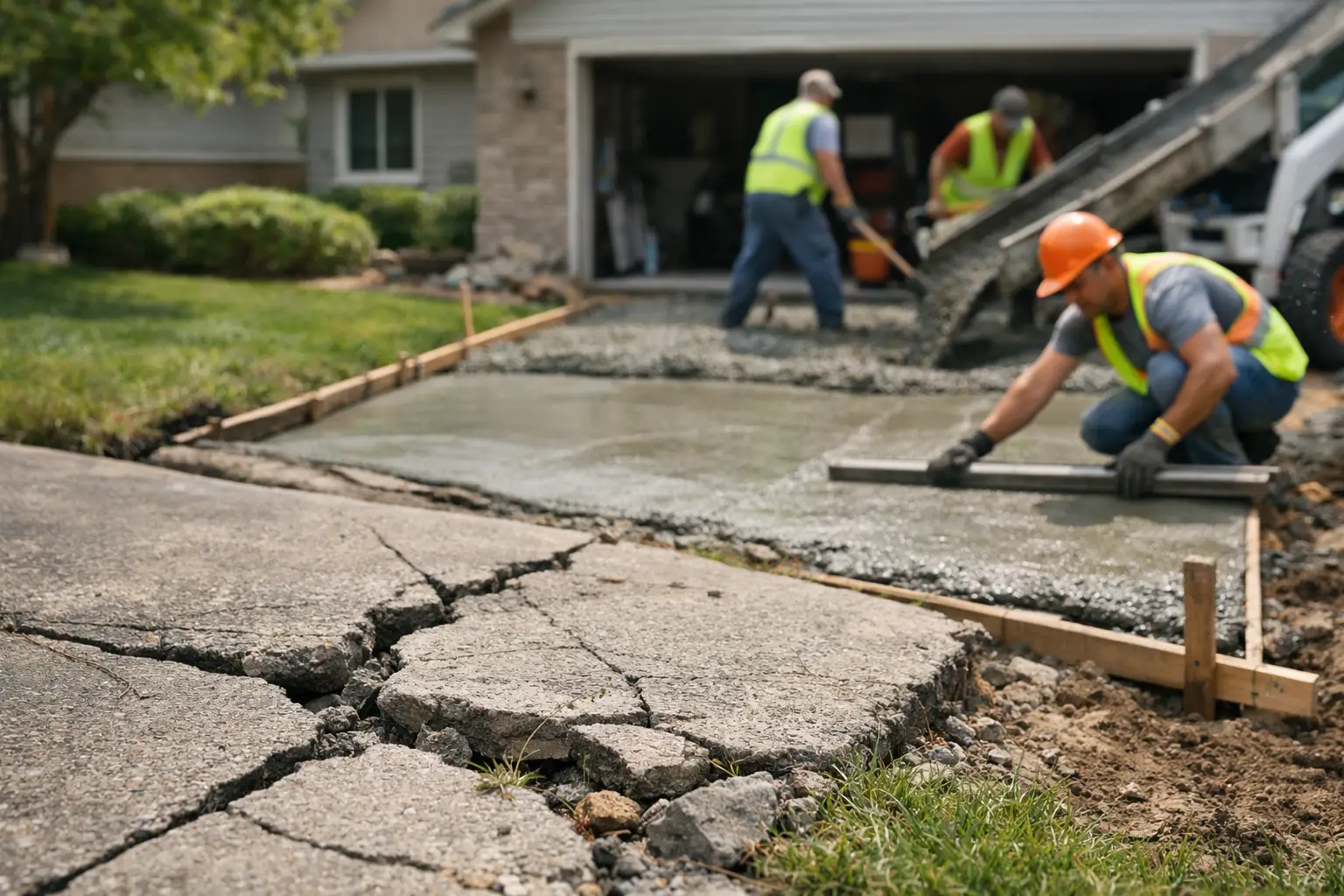
A few hairline cracks do not automatically mean your driveway is finished. But when cracks spread, sections sink, water starts pooling near the garage, or the surface breaks apart under normal use, waiting can turn a manageable project into a bigger expense. Knowing when should driveway concrete be replaced helps Bakersfield property owners protect curb appeal, vehicle access, and the value of their property.
Concrete is tough, but it is not permanent. Kern County heat, soil movement, heavy vehicles, irrigation runoff, and years of use all take a toll. The right answer depends on the type of damage, the condition below the slab, and whether a repair will actually hold.
When Should Driveway Concrete Be Replaced?
Driveway replacement is usually the smarter choice when damage is widespread, structural, or caused by a failing base. A patch may improve the appearance temporarily, but it cannot correct concrete that is shifting because of poor drainage, weak soil support, or extensive cracking.
The clearest sign is the pattern of damage. One isolated crack can often be sealed or repaired. Multiple cracks running in different directions, large broken areas, uneven panels, and crumbling edges point to a driveway that has reached the end of its useful life.
Replacement also makes sense when your current driveway no longer fits how you use the property. Maybe vehicles are wider or heavier than before, you need more parking space, or you want a cleaner layout that improves the front of your home. In those cases, putting money into repeated repairs may not be the best long-term move.
Signs Your Driveway Needs More Than a Simple Repair
Cracks are wide, deep, or spreading
Small surface cracks are common in concrete, especially after years of Bakersfield sun and temperature changes. The concern starts when cracks are wide enough to collect debris, extend across several sections, or show separation and height differences from one side to the other.
Cracks that keep reopening after repair are another warning sign. That often means the issue is not just the concrete surface. The soil or base beneath it may be moving, allowing the slab to flex and crack again.
Slabs are sinking, heaving, or creating trip hazards
A driveway should provide a smooth, stable path from the street to the garage or parking area. If one slab sits lower than the next, the surface has a noticeable hump, or the driveway slopes toward the home, the underlying support needs attention.
Sinking can happen when water washes out or softens material beneath the concrete. Heaving can occur when soil movement pushes sections upward. Either condition can damage vehicles, create a trip hazard, and direct water where it does not belong. Depending on the cause and severity, a contractor may recommend targeted slab work or a full replacement with proper base preparation.
The surface is crumbling or flaking away
Concrete that is peeling, scaling, or breaking into loose pieces is more than a cosmetic issue when it covers large areas. Surface wear can result from age, poor finishing, moisture exposure, or repeated stress from vehicles. A thin resurfacing product may improve minor surface flaws, but it will not solve deep deterioration or concrete that is already weak throughout the slab.
Pay close attention to driveway edges and areas where cars turn, brake, or sit regularly. Those spots often reveal whether the concrete still has sound strength beneath the surface.
Water pools after irrigation or rain
Standing water is one of the most useful clues homeowners can spot. A driveway that holds water for long periods may have settled, lost its intended slope, or been installed without adequate drainage planning.
In Bakersfield, irrigation overspray and runoff can be just as damaging as rain. Water that consistently reaches the driveway joints, edges, or garage area can worsen soil movement and shorten the life of the concrete. Replacing the driveway gives you the opportunity to correct drainage and establish the right slope from the start.
Repairs are becoming a routine expense
There is a practical point where another patch stops being a value. If you have sealed cracks repeatedly, repaired broken corners, filled settling joints, and still do not have a safe or attractive driveway, replacement is often the more cost-effective decision.
A new driveway costs more upfront than a small repair, but it also gives you a clean start with appropriate excavation, grading, reinforcement, joint placement, and concrete thickness for the intended use.
Repair vs. Replacement: What Makes the Difference?
A professional inspection should focus on why the concrete failed, not only what it looks like on top. If the slab is generally level, the base is stable, and damage is limited to a small area, repair may be a reasonable option. Crack sealing, joint repair, or a localized patch can extend the life of concrete that is otherwise in good condition.
Replacement is usually recommended when the damage affects much of the driveway or points to a problem below the slab. A driveway with severe settling, widespread cracking, poor drainage, exposed aggregate, or multiple failed patches is unlikely to perform well with another surface-level fix.
There is also an appearance trade-off. Even a well-done patch rarely matches aged concrete exactly. Color, texture, and weathering differ over time. For homeowners planning to improve curb appeal or prepare a property for sale, a full replacement often provides a more consistent and polished result.
Why Base Preparation Matters in Bakersfield
The concrete you see is only part of the driveway system. A durable driveway begins with the ground below it. Before new concrete is placed, the site should be evaluated for soil conditions, drainage direction, needed excavation, and the proper compacted base.
Skipping this work can lead to premature cracking and settlement, even when the new surface initially looks great. Proper grading helps water move away from the home and reduces the risk of soft spots beneath the slab. Control joints are also placed strategically to help manage the natural cracking concrete experiences as it cures and ages.
For driveways that will support trucks, trailers, work vehicles, or frequent traffic, thickness and reinforcement should match the load. This is especially important for commercial properties, rental homes, and households with RV parking or oversized vehicles. A driveway is not a one-size-fits-all pour.
Consider Replacement When Your Needs Have Changed
Replacing damaged concrete is also a chance to make the driveway work better for your property. Homeowners may choose to widen a narrow drive, add a parking pad, improve access to a side gate, or create a more intentional transition between the driveway and walkway.
Decorative options can make a major difference as well. A broom-finished concrete driveway offers a clean, classic look and dependable traction. Borders, color, stamped accents, and coordinated walkways can give the front of a home a more custom appearance without sacrificing the durability that concrete is known for.
For commercial owners and property managers, replacement can address access, safety, loading needs, and the professional appearance customers notice before they enter the building. The best design balances daily use, drainage, budget, and long-term maintenance.
What to Expect From a Driveway Replacement Project
A quality replacement begins with an on-site review. The contractor should look at cracking, slopes, access, existing drainage, and how the driveway is used. From there, the scope may include demolition and removal of old concrete, subgrade correction, base compaction, form setting, reinforcement where appropriate, concrete placement, finishing, joint cutting, and curing.
Timing matters after the pour. Fresh concrete needs time to cure before it handles vehicle traffic. Your contractor should provide clear instructions for when to walk on it, when to park on it, and how to care for it during the first weeks. Following those instructions helps the new driveway develop the strength it was designed to have.
A clear estimate should explain what is included and identify any site conditions that could affect the work. That straightforward process is part of what makes a concrete project easier for property owners. National Concrete approaches driveway work with experienced craftsmanship, responsive service, and recommendations based on the condition of the actual slab, not a one-size-fits-all sales pitch.
If your driveway is cracked, uneven, or collecting water, do not wait for the next broken edge or vehicle scrape to force the decision. A local concrete assessment can show whether a focused repair still makes sense or whether a properly built replacement will give your Bakersfield property a safer, cleaner, longer-lasting surface.