
Stamped Concrete vs Pavers: Which Fits Your Yard?
August 8, 2026
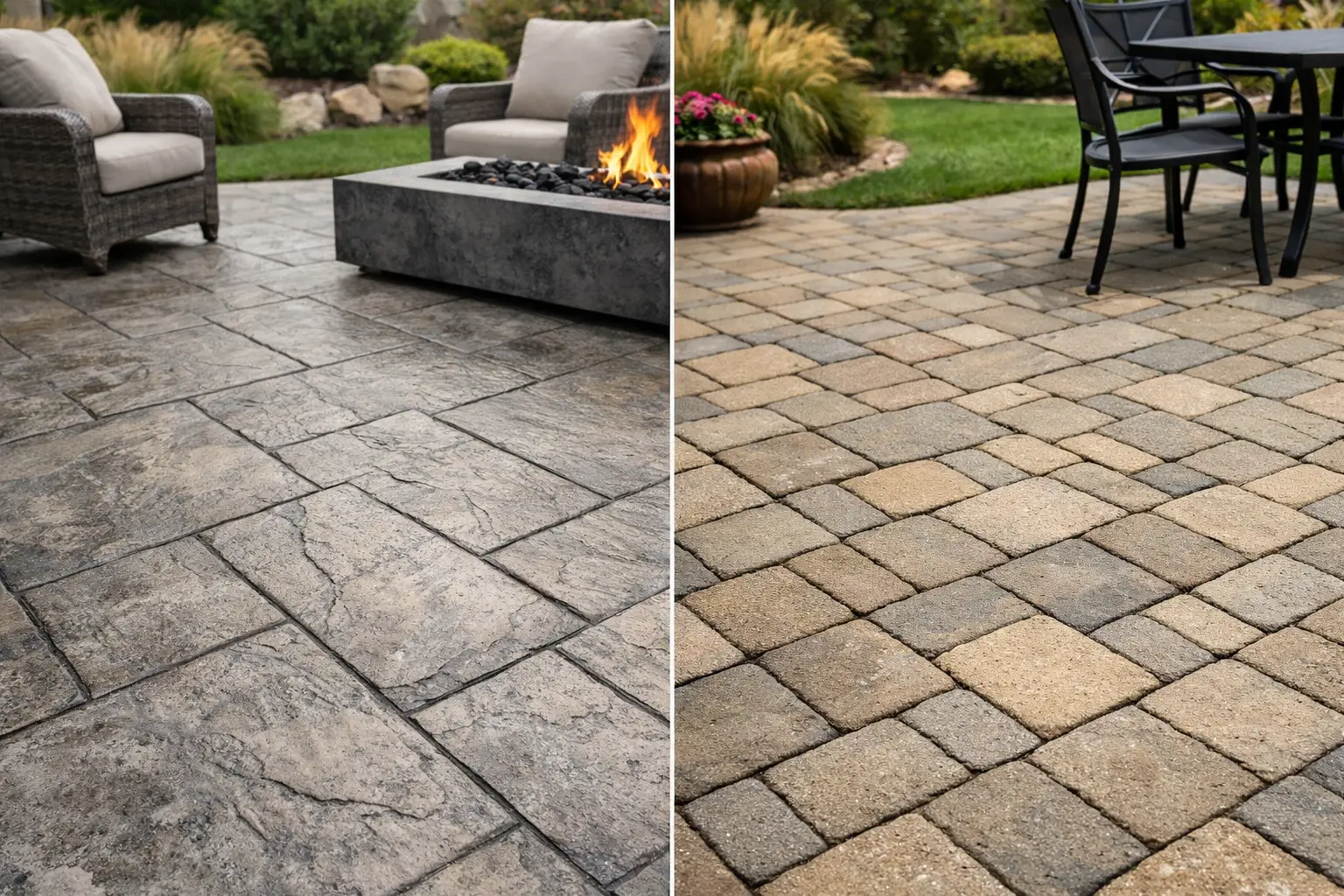
A new patio, driveway, or pool deck should look great on day one and keep working hard through Bakersfield heat, dry conditions, and daily use. When homeowners compare stamped concrete vs pavers, they are usually deciding between a continuous custom surface and an installed system of individual units. Both can add curb appeal and usable outdoor space. The better choice depends on your design goals, budget, maintenance expectations, and how the area will be used.
Stamped Concrete vs Pavers at a Glance
Stamped concrete is poured as one slab, then colored and textured to resemble stone, brick, slate, tile, or wood. It offers the polished, decorative look of premium materials without the individual pieces and joints found in a paver installation.
Pavers are separate manufactured units installed over a prepared base. They can be made from concrete, brick, or natural stone and are arranged in patterns with joint material between them. Their segmented construction is a major difference, especially when repairs or future ground movement are concerns.
For a clean, custom look with fewer visible joints, stamped concrete is often the better fit. For homeowners who want a modular surface where individual pieces can be lifted and replaced, pavers have a clear advantage.
Cost: What Are You Paying For?
Stamped concrete is commonly the more cost-efficient path to a decorative hardscape. The installation involves proper grading, base preparation, reinforcement where appropriate, pouring, stamping, coloring, finishing, and curing. A skilled crew can create a high-end pattern across a large area without purchasing and placing hundreds or thousands of individual units.
Pavers tend to cost more upfront because labor and materials both add up. The ground must be excavated and prepared carefully, the base must be compacted in layers, edge restraints need to be installed, and every paver must be placed, cut, and leveled. Complex patterns, curved borders, multiple colors, and premium stone-style pavers can raise the final price further.
That said, the lowest initial price should not make the decision by itself. A straightforward stamped patio may deliver excellent value for a backyard gathering area. A paver driveway may make sense when future access to underground utilities or easy spot repairs is a priority. The right estimate accounts for the size of the area, access to the property, demolition needs, drainage, design detail, and site conditions.
Design Flexibility and Curb Appeal
Stamped concrete gives property owners a remarkable range of looks. A single installation can imitate flagstone around a pool, slate on a patio, or hand-laid brick at an entryway. Integral color, release color, borders, saw cuts, and custom layout details can help a surface coordinate with the home exterior, landscaping, and existing hardscape.
Because the surface is continuous, stamped concrete can make a smaller yard feel more open and intentional. It is also a strong choice for homeowners who like the visual character of stone but prefer a smoother, more unified walking surface.
Pavers bring a different type of design flexibility. Their patterns, colors, and borders create a classic dimensional look, and they work particularly well with traditional architecture, courtyards, and projects where a distinct modular appearance is part of the vision. A paver surface often looks more textured from a distance because every unit has its own edge and joint.
Neither material is automatically more attractive. The question is whether your property calls for a seamless custom finish or a patterned, piece-by-piece surface. A contractor should help you view samples in natural sunlight, not just under showroom lighting. Color can look very different in Bakersfield’s bright sun.
Durability in Bakersfield Conditions
Concrete and pavers can both provide long service lives when installed on a properly prepared base and maintained as recommended. The workmanship below the finished surface matters as much as the material you see.
Stamped concrete is a monolithic slab. It handles foot traffic well and works beautifully for patios, walkways, entries, and many pool deck applications. For driveways, the slab thickness, reinforcement plan, control joints, subgrade preparation, and concrete mix should be designed for vehicle use. Decorative finishes should never come at the expense of structural performance.
Pavers distribute loads across many individual units and a compacted base. They are popular for driveways because their jointed system can accommodate limited movement without one large slab cracking across the entire area. However, pavers are not maintenance-free. If the base settles, individual units can shift, creating low spots, uneven edges, or areas that hold water.
Concrete can develop cracks over time. Control joints are placed to encourage cracking along planned lines, but no contractor can honestly promise that concrete will never crack. In a decorative installation, good joint placement and a thoughtful pattern can make those lines look intentional. Pavers do not crack as one continuous slab, but they can settle or move if installation standards are poor.
Maintenance: Sealing, Weeds, and Repairs
Stamped concrete should be cleaned periodically and resealed on a schedule suited to its exposure and use. Sealer helps protect color and the decorative finish, particularly in high-traffic areas or locations exposed to sun, pool water, or outdoor spills. Over time, resealing can refresh the appearance and make cleaning easier.
The trade-off is that a crack or damaged section in stamped concrete is more difficult to disguise than a simple concrete repair. Color matching and pattern matching are possible in some situations, but repairs may remain visible. That is one reason experienced installation, proper drainage, and realistic expectations matter from the start.
Pavers make localized repairs simpler. If a unit is chipped, stained, or damaged, it can often be removed and replaced. If utility work is needed below the surface, pavers can be lifted and reinstalled. Their joints, however, need attention. Joint sand may need replenishing, and weeds can appear if windblown seeds settle into the joints. Regular sweeping, occasional treatment, and proper joint sand maintenance help keep the surface tidy.
For homeowners who want the least amount of joint maintenance, stamped concrete is appealing. For those who value individual-piece repairability, pavers may be worth the added upkeep and upfront investment.
Heat, Slip Resistance, and Pool Deck Comfort
Summer comfort matters in Kern County. Both materials absorb heat, especially in darker colors, but color selection makes a meaningful difference. Lighter shades generally stay more comfortable underfoot than charcoal, deep brown, or dark red finishes.
Stamped concrete can be finished with textures that improve traction around a pool or outdoor kitchen area. The sealer choice also matters. A high-gloss sealer may look striking, but a properly specified slip-resistant additive can be a smarter choice for wet locations.
Pavers have joints that can provide a bit more natural texture, but they can still become hot in direct sun and slick when wet if the wrong surface is selected. A pool deck should be planned around shade, drainage, coping details, foot traffic, and the needs of children, guests, and pets, not appearance alone.
Drainage Can Decide the Project
A beautiful hardscape becomes a frustrating one if water drains toward the house, pools at the gate, or runs where it should not. Before choosing stamped concrete or pavers, consider slope, existing downspouts, soil conditions, and where water needs to go during a heavy rain.
Concrete is typically formed with deliberate slope and may include drains, swales, or other drainage solutions. Pavers are often described as more permeable because of their joints, but standard paver joints do not automatically solve drainage problems. True permeable paver systems require specific materials and base design.
This is where local experience matters. A contractor who understands Bakersfield properties can plan the finished elevation and drainage path before work begins, rather than trying to correct water issues after the surface is installed.
Which Option Is Right for Your Property?
Choose stamped concrete when you want a custom decorative finish, a continuous surface, fewer joints, and strong value across a larger patio, walkway, or pool deck. It is especially compelling when the goal is to create a coordinated outdoor living area with a distinctive pattern and color.
Choose pavers when you prefer a modular look, want the option to replace individual pieces, or are planning an area where future access below the surface may be useful. They can be an excellent fit for detailed driveways, courtyards, and properties where their classic texture suits the architecture.
A good project starts with more than choosing a color sample. It starts with a site visit, clear communication, proper preparation, and a design that fits how you actually use the space. National Concrete helps Bakersfield homeowners and property owners turn that conversation into a well-built surface that brings a smile every time they pull into the driveway or step into the backyard.