
Concrete Walkway Installation Near Me in Bakersfield
July 11, 2026
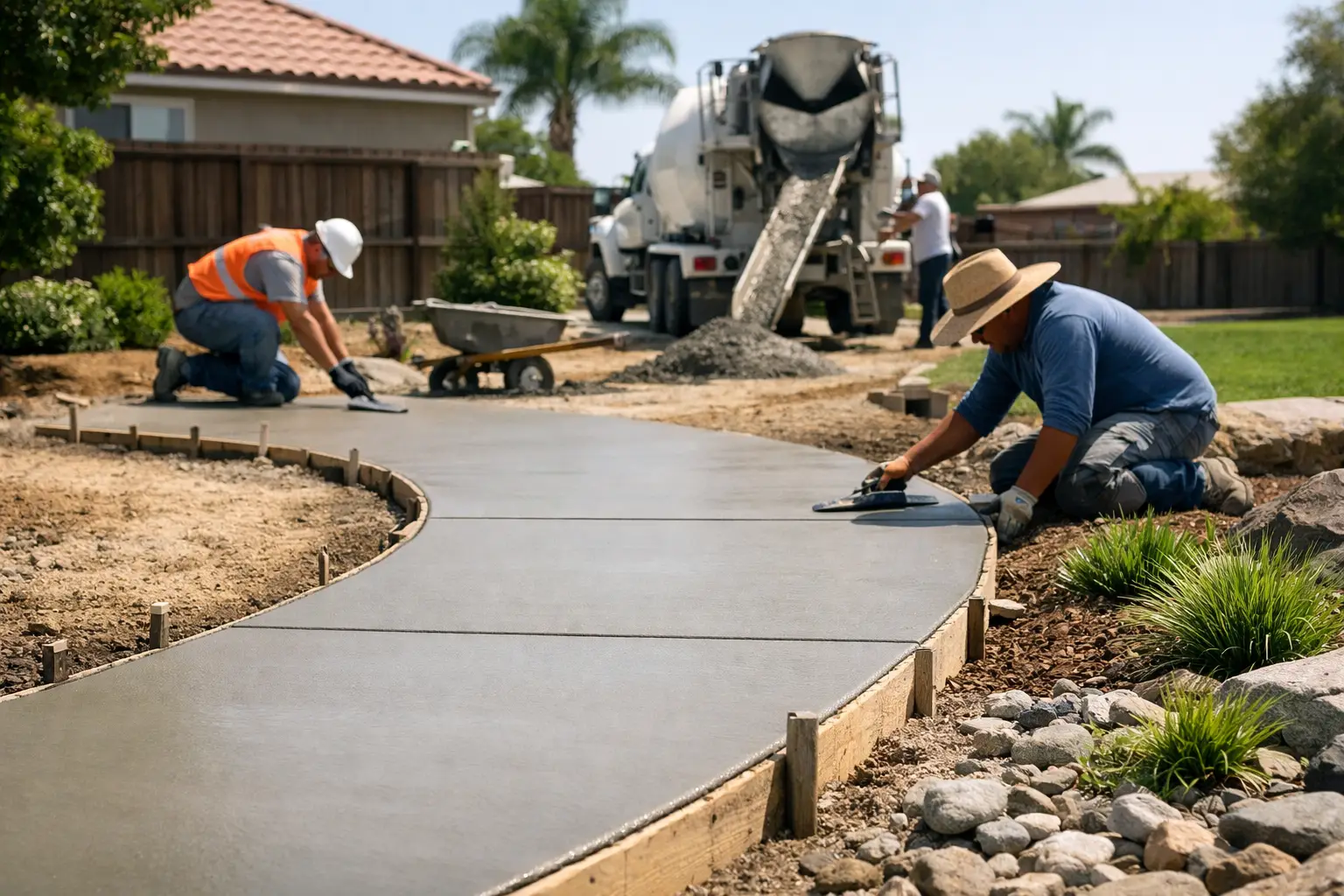
A cracked, uneven path does more than distract from a well-kept property. It can create a tripping hazard, collect water, and make the walk from the driveway to the front door feel unfinished. When you search for concrete walkway installation near me, you need more than a crew that can pour concrete. You need a local contractor who understands Bakersfield properties, plans the details correctly, and delivers a walkway built to last.
A properly installed concrete walkway adds a clean, durable connection between the areas people use most. It can lead guests to your entryway, create a safe route around a pool, connect a patio to a side yard, or improve access for tenants and customers at a commercial property. The right design makes daily movement easier while adding real curb appeal.
Why Concrete Is a Smart Choice for Bakersfield Walkways
Concrete is a practical fit for Kern County homes and commercial properties because it stands up to frequent foot traffic, sun exposure, and changing temperatures with far less upkeep than many alternatives. Unlike loose gravel, it stays in place. Unlike pavers, it does not have individual joints that can shift, settle, or allow weeds to grow through.
That does not mean every concrete walkway should look the same. A simple broom-finished path is an excellent choice for homeowners who want a clean, slip-resistant surface at an efficient price point. For properties where appearance matters just as much as function, decorative options can create a more custom result. Stamped concrete can bring texture and pattern to an entry path or backyard walkway, while color can help the concrete complement your home, landscaping, block wall, or patio.
The best option depends on where the walkway will go and how it will be used. A narrow side-yard path may call for a straightforward finish and careful drainage planning. A front walkway may deserve wider dimensions, curved lines, decorative borders, or integrated steps that make the entry feel more inviting.
What a Quality Walkway Installation Should Include
A walkway is only as reliable as what is underneath it. Concrete can look great on the day it is poured, but poor base preparation and improper grading can lead to cracking, standing water, and settling down the road. Experienced installation begins with the site, not the finish.
The area should be evaluated for soil conditions, access, existing landscaping, utility considerations, and water flow. Bakersfield properties can have dry, compacted ground, but that does not remove the need for proper excavation and a stable base. The walkway needs a planned slope so water moves away from structures and does not pool along the path.
Thickness also matters. Most residential footpaths do not need the same slab thickness as a driveway, but they still need enough strength for their purpose. A path that will regularly carry wheelbarrows, landscape equipment, or heavier use may need a different approach than a simple front-entry walkway. Control joints are also placed intentionally to help manage normal concrete movement and reduce the appearance of random cracking.
Finishing work should match the location. A broom finish offers dependable traction, especially near sprinklers, pool areas, and outdoor entries. Decorative finishes can add character, but they should still be selected with safety and maintenance in mind. A beautiful walkway should also be comfortable and secure to walk on.
Concrete Walkway Installation Near Me: Choosing the Right Design
Before requesting an estimate, think about the purpose of the path. This helps shape the layout and gives your contractor a clearer picture of what will serve the property best.
A front walkway should create an obvious, welcoming route from the driveway or sidewalk to the front door. In many cases, widening an undersized path makes the home feel more polished and makes it easier for two people to walk side by side. Curved edges can soften the look of a landscape-heavy yard, while straight lines often fit modern homes and clean architectural styles.
Backyard walkways are often more functional. They may connect a patio to a pool deck, an outdoor kitchen, a detached garage, or a gate. Here, the right path reduces dirt being tracked into the house and protects lawn areas from becoming worn foot trails. A route around the side of the home can also make trash-bin access, gardening, and maintenance much easier.
For commercial properties, a walkway has to support safe, efficient movement for customers, employees, residents, and visitors. Visibility, drainage, access requirements, and the expected volume of use all influence the design. Property managers and builders benefit from working with a contractor who can coordinate the walkway as part of a larger concrete project, including curbing, ramps, parking areas, foundations, and site improvements.
The Installation Process Should Feel Clear and Easy
Concrete work is a construction project, but it should not feel confusing or drawn out. A dependable contractor starts by listening to how you use the space, reviewing the project area, and providing a clear recommendation based on the property rather than pushing a one-size-fits-all solution.
After the layout and finish are selected, the work typically begins with removal or excavation where needed. The crew prepares and grades the base, sets forms to establish the walkway shape and elevation, and addresses reinforcement or additional support when the project calls for it. Once the concrete is placed, it is finished carefully, control joints are cut or tooled, and the surface is cured according to the needs of the project.
Homeowners should expect a little disruption during the work, especially if the path runs through an active entry or side yard. Good planning keeps that disruption manageable. Ask your contractor how access will be handled, when the new walkway can be walked on, and whether landscaping, irrigation heads, gates, or adjacent surfaces need special attention.
Cost Factors for a New Concrete Walkway
There is no honest single price for every walkway because the details drive the scope. The length and width of the path matter, but so do demolition, site access, grading, base preparation, curves, steps, drainage needs, thickness, reinforcement, and decorative finishes.
A basic straight walkway on an open, level site will generally be simpler than a custom curved path with stamped texture, color, multiple elevation changes, and removal of existing damaged concrete. Neither choice is automatically better. The right investment is the one that fits the property, the expected use, and the look you want to enjoy for years.
The lowest quote is not always the best value if it leaves out important preparation or uses vague language about what is included. A detailed estimate should help you understand the scope: where the walkway will go, what surface finish is planned, what existing material will be removed, and how the site will be left after work is complete. Clear expectations protect both the customer and the finished project.
Common Walkway Mistakes to Avoid
One common mistake is treating the walkway as an afterthought once a driveway, patio, or landscaping project is already complete. Planning the route early can prevent awkward transitions, unnecessary cuts into finished surfaces, and drainage issues that could have been avoided.
Another is choosing a design based only on appearance. A highly textured decorative finish may look great near an entry, but the surface still needs to provide appropriate traction. Similarly, a very narrow path may save some upfront cost but feel inconvenient every day. Details such as width, slope, edges, and transitions deserve as much attention as color or pattern.
It is also wise not to ignore small cracks or settled sections in an existing walkway. Minor wear can sometimes be addressed, but widespread cracking, severe movement, or a path that drains toward the home may point to a deeper base or grading problem. Replacing the slab without correcting the cause can lead to the same frustration later.
Work With a Local Team That Builds for the Long Term
Your walkway should feel like a natural part of your property, not a temporary patch between two spaces. Whether you need a simple concrete path, a custom decorative entryway, or a larger commercial access solution, the work should be planned around durability, safety, and the way people actually move through the site.
National Concrete brings experienced craftsmanship, design flexibility, and a straightforward customer experience to concrete projects throughout Bakersfield and surrounding Kern County communities. From the first estimate to the final finish, the goal is simple: quality concrete work that makes your property easier to use and better to see.
A new walkway is a small change that can improve every trip to the front door, backyard, gate, or parking area. Start with a clear plan, choose a finish that fits your space, and work with a contractor who treats the foundation beneath the concrete as seriously as the surface you see.