Stamped Concrete Maintenance Guide for Kern County
September 29, 2026
A stamped patio can look like hand-laid stone, brick, slate, or wood – until dusty winds, intense sun, pool splashes, and daily traffic start dulling the finish. This stamped concrete maintenance guide gives Bakersfield and Kern County property owners a practical way to protect the color, texture, and value of their concrete without turning upkeep into a full-time project.
Stamped concrete is still concrete, so it needs sensible care. The decorative pattern and protective sealer add visual appeal, but they also make cleaning methods, de-icing products, and resealing schedules matter more than they would on a basic broom-finish slab. A little preventative care is far less expensive than correcting stains, peeling sealer, or surface damage later.
Start With Routine Cleaning
Most stamped concrete problems begin with grime that sits too long. Dust, leaves, lawn debris, fertilizer, grease, and pool chemicals can settle into textured low spots. On patios and walkways, sweep regularly and rinse the surface with a garden hose as needed. For driveways, remove dirt and vehicle residue before it gets ground into the finish.
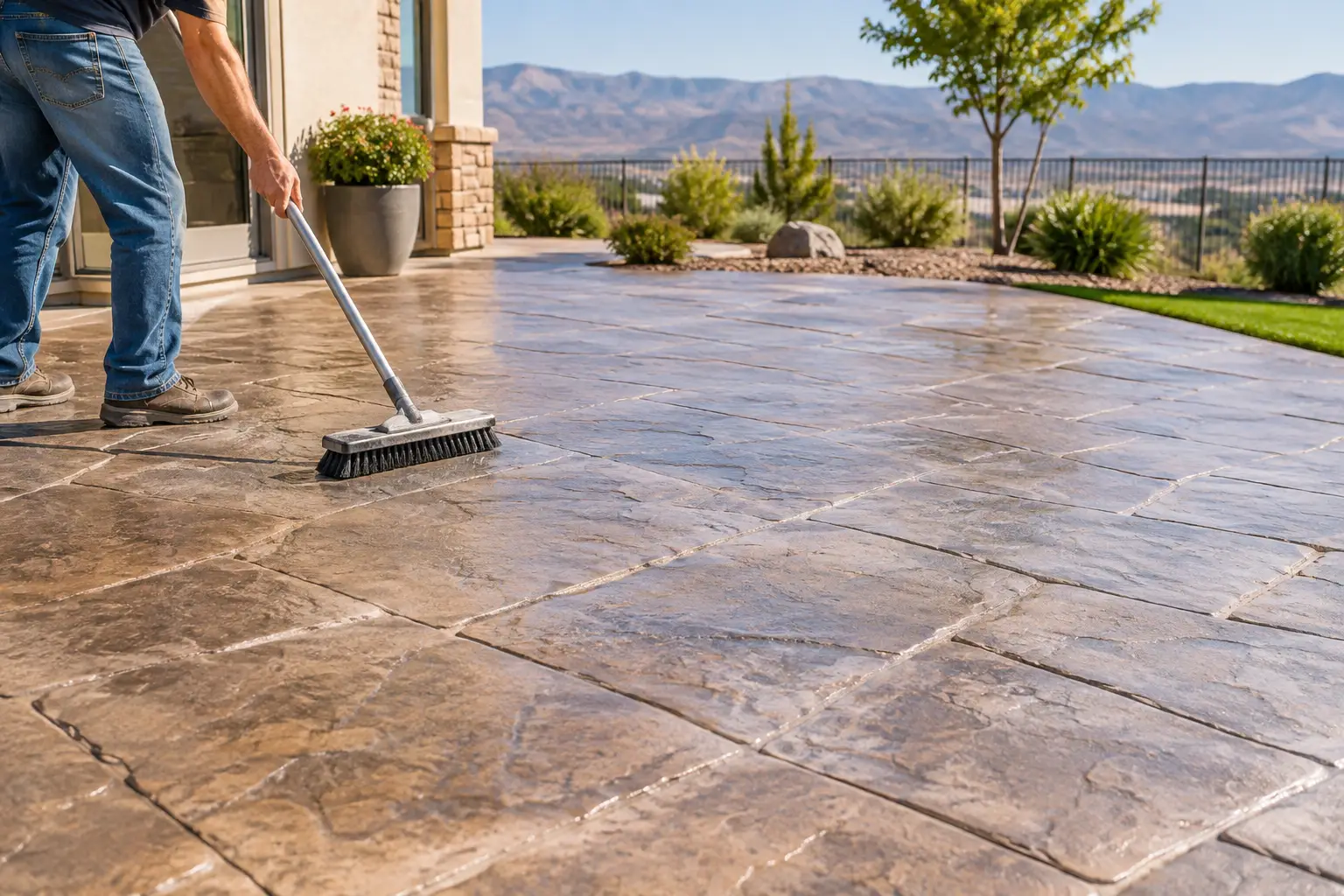
When a deeper cleaning is needed, use a mild pH-neutral concrete cleaner mixed according to its label. Work in manageable sections with a soft-bristle push broom, then rinse thoroughly. This approach is usually enough for normal dust, tracked-in dirt, and light organic buildup.
Pressure washing can help, but it is not automatically better. Excessive pressure or a nozzle held too close can scar the surface, strip sealer, or leave visible cleaning lines across the stamped texture. If you use a pressure washer, keep the pressure moderate, use a wide fan tip, and maintain a consistent distance from the concrete. For a large decorative driveway or a pool deck with aging sealer, professional cleaning is often the safer choice.
Address Spills Before They Set
Oil, barbecue grease, wine, rust, paint, and pet stains are easier to handle when they are fresh. Blot liquid spills rather than aggressively rubbing them into the texture. Then clean the affected area with an appropriate concrete-safe product and rinse it well.
Avoid reaching for harsh acids, bleach-heavy mixes, or abrasive wire brushes as a first response. They may change the color, create pale spots, or weaken the sealer. A cleaner that works well on an unsealed garage floor may not be right for a colored and sealed patio.
Protect the Sealer From Bakersfield Sun and Wear
Sealer is the working layer that helps stamped concrete resist moisture, staining, fading, and abrasion. It also gives the surface its color depth, whether you prefer a natural matte look or a richer low-sheen finish. In Bakersfield, long periods of heat and sun can gradually break down that protection.
How often should stamped concrete be resealed? It depends on the location, amount of direct sun, foot or vehicle traffic, drainage, and the type of sealer already on the slab. A shaded backyard walkway may hold its finish longer than a south-facing driveway used by multiple vehicles every day. Many residential surfaces benefit from evaluation every two to three years, though some high-exposure areas need attention sooner.
Look for warning signs instead of relying only on a calendar. Color that appears chalky or faded, water that no longer beads on the surface, worn patches in traffic lanes, and a finish that looks uneven after cleaning can all signal that the sealer is losing effectiveness. Peeling, whitening, or flaking calls for a closer assessment. Applying more sealer over a failing coat without proper preparation can trap the problem underneath and create an uneven result.
A professional can determine whether the concrete needs cleaning and a fresh coat, sealer removal and replacement, or a minor repair before sealing. The right preparation is what keeps a resealed surface looking intentional rather than patchy.
The Stamped Concrete Maintenance Guide for Seasonal Care
Kern County weather does not bring the freeze-thaw stress seen in colder climates, but local conditions create their own challenges. Summer heat, dry winds, irrigation overspray, and dust are the big ones. Build care around those realities.
During hot months, keep an eye on irrigation. Constant sprinkler overspray can leave mineral deposits, encourage algae in shaded sections, and cause uneven discoloration over time. Adjust sprinkler heads so they do not repeatedly soak the patio, driveway, or pool deck. If hard-water spots appear, use a product formulated for sealed decorative concrete rather than an aggressive household acid.
After windy days, sweep away abrasive sand and grit, especially around entry paths and outdoor living areas. Fine debris acts like sandpaper under shoes, patio furniture, and tires. It may not cause immediate damage, but repeated abrasion can wear down the sealer in the highest-use areas.
For pool decks, rinse away chemical splashes and standing water. A properly finished deck is designed for outdoor use, but chlorine, salt, sunscreen, and wet foot traffic deserve more frequent cleaning. Keep furniture feet clean and consider protective pads under metal furniture to reduce scuffs and rust transfer.
Prevent Cracks, Chips, and Drainage Problems
Stamped concrete is durable, not indestructible. Small hairline cracks can occur as concrete cures and moves with the ground. They are not always structural failures, but they should be monitored. Cracks that widen, shift in height, or collect water deserve prompt attention from a qualified concrete contractor.
Drainage is one of the best forms of maintenance. Water should move away from the home, not pond along an edge or sit over low areas after irrigation or rain. Standing water can stain the surface, expose weak points in the sealer, and make a pool deck or walkway slippery. Keep nearby drains clear and do not allow soil, mulch, or landscaping to build up above the concrete edge.
Be careful when moving heavy planters, grills, dumpsters, or equipment across decorative concrete. Lift when possible instead of dragging. For driveways, avoid parking heavy equipment in the same spot for long periods unless the slab was designed for that load. Decorative concrete can serve demanding spaces, but thickness, reinforcement, subgrade preparation, and intended use all matter.
What Not to Use on Stamped Concrete
Some shortcuts create more work than they save. Do not use rock salt or harsh de-icers unless a concrete professional confirms they are appropriate for your specific surface. While freezing conditions are uncommon around Bakersfield, certain chemical products can still damage concrete and sealed finishes.
Skip abrasive cleaners, steel brushes, and strong solvents unless they are specifically approved for decorative concrete. Also avoid adding a glossy sealer just to make an older slab look wet again. A high-gloss finish can become too slippery near pools or shaded walkways, and it may not match the original appearance. The right finish should fit the location, safety needs, and existing sealer system.
When to Call a Concrete Professional
Routine sweeping and cleaning are homeowner-friendly. Sealer failure, color touch-ups, crack repair, surface scaling, and widespread staining are different jobs. They require identifying the cause first, not simply covering it up.
National Concrete helps Bakersfield-area homeowners and property owners evaluate stamped patios, driveways, walkways, and pool decks with an experienced eye. If the surface looks tired, a clear assessment can separate normal maintenance from a repair that needs prompt attention.
Treat your stamped concrete like the finished outdoor feature it is. A few minutes of regular care, smart water management, and timely resealing can keep the pattern crisp and the color inviting for the gatherings, curb appeal, and everyday use you built it for.