How to Clean Oil Stains From Concrete Safely
October 1, 2026
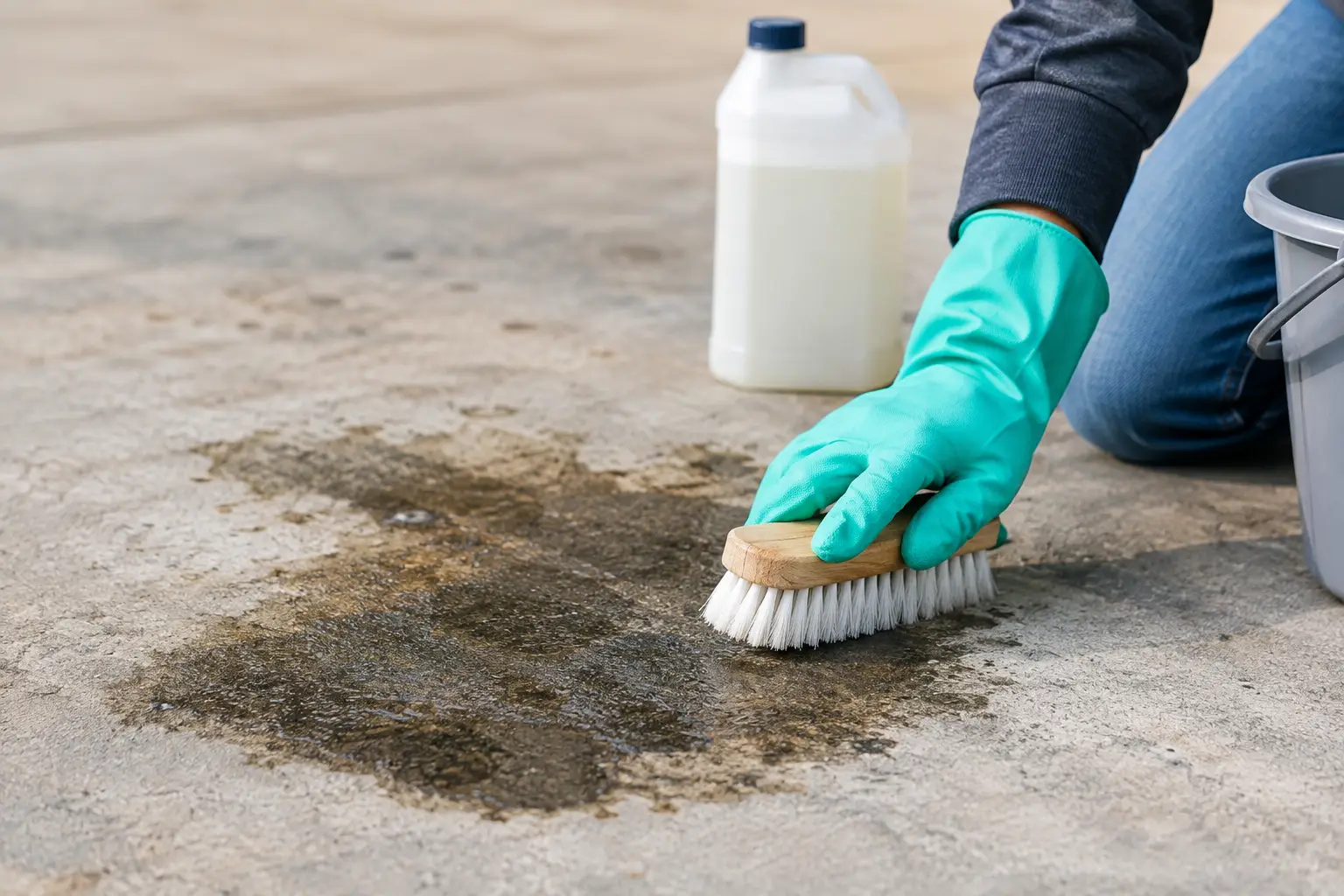
A dark oil spot can make an otherwise clean driveway look neglected fast. The good news is that knowing how to clean oil stains from concrete is less about brute force and more about treating the stain at the right time, with the right product, and without damaging the surface beneath it.
For Bakersfield homeowners and property managers, oil stains are especially common on driveways, garage slabs, parking areas, and workspaces. Heat, vehicle traffic, and porous concrete can cause fresh drips to soak in quickly. Acting early gives you the best chance of restoring a clean, even-looking surface.
Why Oil Stains Are Hard on Concrete
Concrete looks solid, but it is naturally porous. Oil does not simply sit on top of the slab. It can work down into tiny openings in the surface, where water alone cannot reach it. Older concrete and unsealed concrete usually absorb oil more quickly than a newer, properly sealed driveway or patio.
A fresh spill may clean up with absorbent material and a quality degreaser. A stain that has been sitting for months or years may need repeated treatment. That does not always mean the concrete is damaged. It means the oil has traveled deeper and needs time to be drawn back out.
The goal is not to attack the slab with the harshest cleaner available. The goal is to lift and absorb the petroleum residue while preserving the finish, color, and texture of your concrete.
How to Clean Oil Stains From Concrete Step by Step
Start by checking whether the stain is fresh, tacky, or old and dry. Fresh oil responds best to absorption. Older marks generally need a degreasing treatment followed by more absorption.
1. Absorb Fresh Oil Before It Spreads
If the spill is recent, cover it immediately with an absorbent material such as clay-based cat litter, oil-dry granules, baking soda, or a commercial spill absorbent. Avoid clumping cat litter, which can become sticky when wet and make cleanup harder.
Let the material sit for several hours, or overnight when possible. Grind it gently into the stain with the sole of an old shoe or a stiff broom, then sweep it up. This step removes oil before it has the chance to sink deeper into the concrete.
Do not hose down a fresh spill. Water can spread the oil across a wider area and send contaminated runoff toward the street, landscaping, or storm drains.
2. Apply a Concrete-Safe Degreaser
After sweeping away the absorbent, use a degreaser labeled for concrete and petroleum-based stains. Read the product directions carefully, especially if you have decorative, colored, stamped, or sealed concrete. Some strong cleaners can dull a sealer or affect the appearance of colored surfaces.
Apply the degreaser to the stained area and allow it to dwell for the time recommended on the label. This gives the cleaner time to break down the oil. Do not let it dry out completely, particularly during a hot Bakersfield afternoon. Work in the cooler morning hours when possible, or keep the area lightly damp as directed by the manufacturer.
3. Scrub Without Damaging the Surface
Use a stiff nylon-bristle brush to work the degreaser into the concrete. A nylon brush provides enough agitation to loosen residue without aggressively scratching the surface. For most driveway stains, scrub in several directions rather than concentrating all your effort in one small spot.
Avoid wire brushes, grinders, or abrasive sanding tools unless you are prepared for a visible change in the concrete finish. These methods can leave a lighter, rougher patch that stands out just as much as the original stain.
4. Rinse Carefully and Collect the Runoff
Rinse the area with a controlled amount of water, directing runoff away from drains and landscaping. For a small residential stain, a garden hose with a spray nozzle is usually enough. Use absorbent pads or more oil-dry material if oily water collects around the cleaned area.
For commercial properties, larger spills, or stains near storm drains, runoff control matters even more. Oil-contaminated water should not be washed into the gutter. Follow local site requirements and use a professional cleaning service when the spill is beyond a small, contained area.
5. Repeat if the Shadow Remains
A faint shadow after the first cleaning is normal. The visible surface oil may be gone while residue remains below the surface. Repeat the degreaser and scrubbing process before assuming the stain is permanent.
For stubborn, older stains, a poultice-style cleaner may work better. These products are designed to pull oil upward as they dry. Apply the material as directed, let it cure, then scrape or sweep away the dried residue. Deep stains may take two or three rounds of treatment.
What Not to Use on an Oil-Stained Driveway
The wrong cleanup method can create a bigger problem than the stain itself. Skip gasoline, diesel fuel, paint thinner, and other solvents. They may dissolve some oil temporarily, but they can push it deeper into the slab, create a fire hazard, and produce harmful runoff.
Bleach is also not an oil remover. It may brighten surrounding dirt or mildew, but it does not effectively break down petroleum stains. Acid-based cleaners should be used with extreme caution, if at all. Acid can etch concrete, expose aggregate, weaken the surface paste, and leave obvious color differences.
Pressure washing has a place in concrete maintenance, but pressure alone rarely removes deeply absorbed oil. Used incorrectly, it can spread the stain, scar softer concrete, or force oily water into joints and nearby landscaping. Degrease first, then use moderate pressure only as a finishing step if the concrete condition allows it.
Special Care for Stamped, Colored, and Sealed Concrete
Decorative concrete deserves a more conservative approach. Stamped patios, colored driveways, and sealed pool decks can be damaged by aggressive degreasers, harsh solvents, or high-pressure washing. Always test a cleaner in a small, hidden area before treating the main stain.
If the sealer has been affected, the cleaned spot may look duller or lighter than the surrounding surface. In that case, the solution may involve cleaning the entire section consistently and reapplying a compatible sealer. Trying to touch up one small area without matching the existing finish can create a patchy result.
This is one of those situations where professional advice is worth getting before experimenting. Decorative concrete is an investment, and preserving its color and texture is usually more important than chasing a perfectly invisible stain with overly harsh products.
When an Oil Stain Calls for Professional Help
Most small driveway drips can be handled with patience and the right materials. Consider calling a concrete professional when the stain covers a large area, has soaked into an unfinished garage floor, keeps returning after cleaning, or sits on a decorative surface.
You may also need help if the concrete is already flaking, soft, cracked, or heavily pitted. Cleaning will not repair existing surface damage, and aggressive methods can make those issues worse. In some cases, the best long-term answer is surface repair, a protective coating, or replacement of a damaged section rather than repeated cleaning attempts.
For property owners planning a new driveway, patio, or commercial slab, prevention starts with the installation. Proper concrete mix design, finishing, drainage, and a suitable sealer can make future cleanup far easier. A sealed surface will not make oil spills disappear, but it gives you more time to clean them before they penetrate.
National Concrete helps Bakersfield and Kern County property owners protect the look and function of their concrete, from durable new installations to practical guidance for maintaining the surfaces they already have. When a stain will not budge, protect the slab first, then choose the repair or cleaning approach that keeps your property looking cared for.