
How to Calculate Concrete Thickness Correctly
November 20, 2026
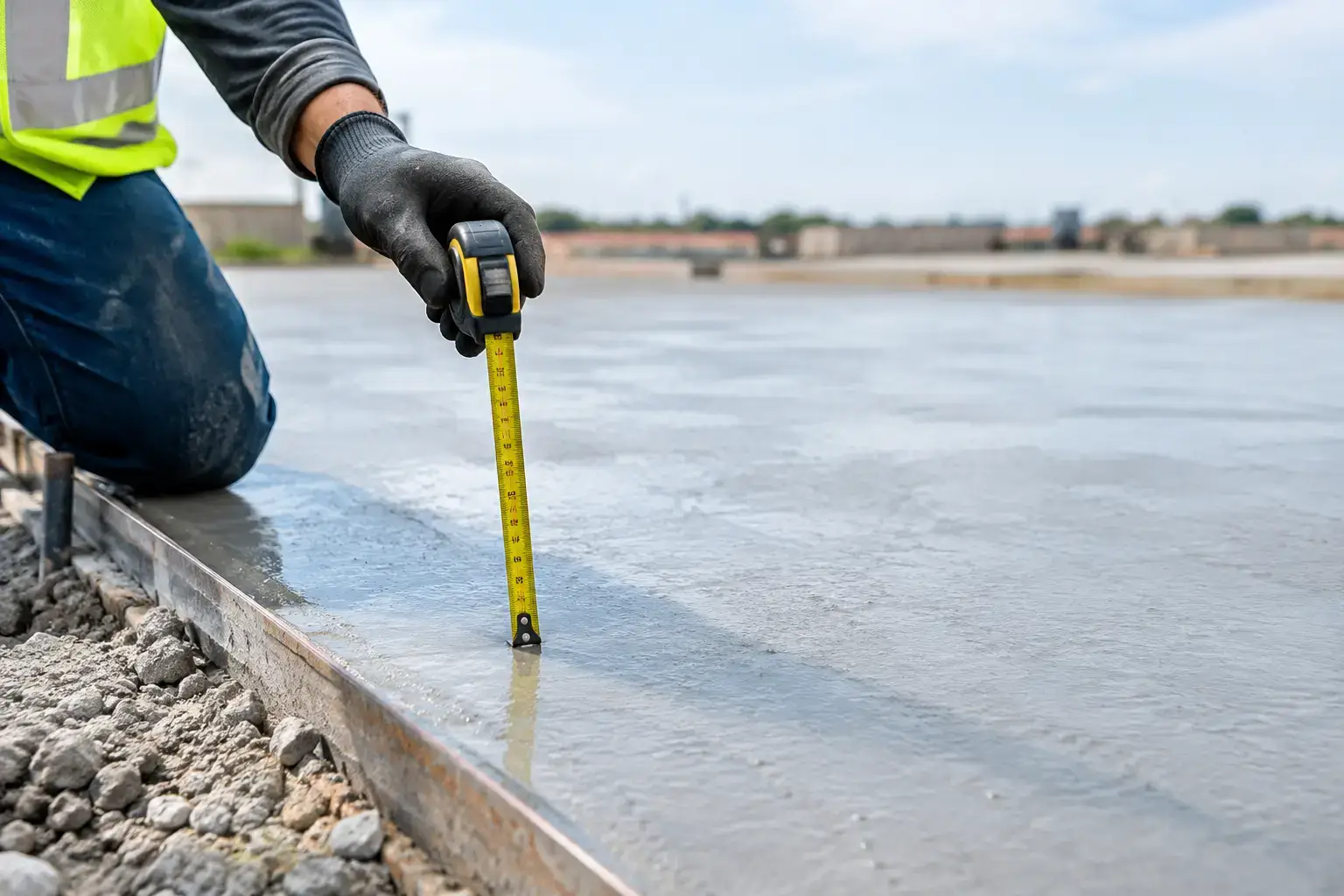
A concrete slab that looks great on day one can crack, settle, or fail early if it is too thin for the job underneath it. Knowing how to calculate concrete thickness starts with more than measuring square footage. In Bakersfield and across Kern County, the right thickness depends on how the slab will be used, the soil below it, the base preparation, and the weight it needs to carry.
For a backyard patio, the calculation may be straightforward. For a driveway, RV parking pad, commercial access area, or foundation, it deserves a closer look. A little planning before concrete is poured is far less expensive than repairing a failed slab later.
How to Calculate Concrete Thickness for Your Project
Start by identifying the slab’s purpose and the loads it will support. Concrete thickness is measured from the prepared base to the finished surface, not from the top of loose soil. The heavier the traffic and the less stable the soil, the more thickness and preparation the project may require.
For many residential projects, these are common starting points. They are planning guidelines, not a replacement for an on-site assessment or structural requirements.
| Project type | Common starting thickness | Typical use | |—|—:|—| | Walkway | 4 inches | Foot traffic, garden paths, side yards | | Patio | 4 inches | Outdoor furniture, grills, normal residential use | | Passenger-vehicle driveway | 4 to 5 inches | Cars, pickups, and light household traffic | | RV or heavy-vehicle pad | 5 to 6 inches or more | RVs, trailers, work trucks, repeated heavy loads | | Commercial slab or foundation | Engineer-designed | Business traffic, building loads, equipment, or code-driven work |
A 4-inch patio and a 4-inch driveway may sound similar, but they are not always built the same way. A driveway experiences concentrated tire loads, turning forces, and repeated use. A patio typically carries distributed, lighter loads. If a driveway will regularly hold large pickups, delivery vehicles, trailers, or an RV, increasing thickness is often the smarter investment.
Measure the use, not just the area
Square footage tells you how much concrete you need. It does not tell you how thick the concrete should be. Ask practical questions first: Will vehicles cross the slab? Will a dumpster, work truck, or trailer sit on it? Is this a pool deck where drainage and comfort underfoot matter? Is the slab supporting walls, a structure, or mechanical equipment?
For foundations, retaining walls, commercial work, and slabs supporting buildings, thickness is only one part of the design. Footing dimensions, reinforcement, soil capacity, local building requirements, and the structure’s load all matter. Those projects should be evaluated according to the applicable plans and code requirements rather than estimated from a general chart.
Evaluate soil and base conditions
In Kern County, site conditions can vary significantly from one property to another. Dry, compacted soil may perform differently from disturbed fill, poorly drained ground, or soil that expands and contracts with moisture changes. A thick slab placed on an unstable base can still crack or settle.
A properly prepared base creates consistent support under the concrete. Depending on the project, that can include removing unsuitable material, grading for drainage, compacting subgrade, and installing compacted aggregate base. The goal is not simply to make the ground look level. The goal is to prevent soft spots that allow one area of the slab to move differently from another.
Do not use extra concrete thickness as a substitute for base preparation. Both matter. On the other hand, a well-prepared base does not automatically mean every slab can be poured thinner. The slab still needs enough depth for its intended load.
Calculate Concrete Volume After Choosing Thickness
Once you have selected an appropriate thickness, calculating the amount of concrete is simple. Use this formula:
Length in feet × width in feet × thickness in feet = cubic feet of concrete
Then divide cubic feet by 27 to convert the total into cubic yards, which is how ready-mix concrete is commonly ordered.
Because thickness is usually given in inches, divide it by 12 to convert it to feet. For example, a 4-inch slab is 4 ÷ 12, or 0.333 feet.
Here is a practical example. Say you are planning a 20-foot by 30-foot patio at 4 inches thick:
20 × 30 × 0.333 = approximately 200 cubic feet
200 ÷ 27 = approximately 7.4 cubic yards
For a project like this, ordering around 8 cubic yards may be appropriate after allowing for grade variations, form irregularities, minor waste, and the fact that concrete is not something you want to run short on during a pour. The exact overage depends on the shape of the project and how accurately the site has been graded.
If the same 20-by-30-foot area changes from 4 inches to 5 inches thick, the volume rises to about 9.3 cubic yards before overage. That difference shows why choosing the right thickness early is useful for both performance and budget.
Check thickness at several points
Concrete forms establish the finished slab depth, but the ground below the slab must be excavated and graded consistently. Checking one corner is not enough. A slab can appear to have a 4-inch form while sections in the middle are thin because the subgrade rises underneath it.
During preparation, measure from the top of the form down to the compacted base at multiple locations. This helps confirm that the finished concrete will maintain the specified thickness across the entire area. It is especially important on larger driveways, sloped yards, and projects with transitions near garages, gates, sidewalks, or drainage areas.
Thickness Is Only Part of a Durable Concrete Installation
A concrete slab is a system, not just a layer of material. Proper thickness works alongside reinforcement, joints, drainage, finishing, and curing.
Rebar or wire reinforcement can help hold a cracked slab together and improve performance in certain applications, but it does not turn an undersized driveway into a heavy-duty slab. Reinforcement needs to be placed at the correct height within the concrete, not left sitting at the bottom where it offers limited benefit.
Control joints are equally important. Concrete shrinks as it cures, and joints encourage cracks to form in planned locations instead of wandering across the slab. Joint spacing, depth, and layout should be considered before the pour, particularly on decorative concrete where random cracking can affect the finished appearance.
Drainage also deserves attention. Water should move away from the home, garage, or building rather than collect against the slab edge. A good slope can protect the property and reduce the risk of standing water, erosion, and moisture-related soil movement.
When a Standard Thickness Is Not Enough
Some projects need more than a typical residential rule of thumb. Consider a professional evaluation when the slab will carry unusually heavy loads, the property has visible soil movement or prior settling, or the work is tied to structural construction.
Other situations that deserve added planning include a driveway with steep grades, a slab connecting to an existing cracked surface, a pool deck near coping and drainage features, or a decorative stamped concrete project where thickness and joint placement must support both durability and appearance. For commercial properties, vehicle types, loading frequency, site access, and business operations can all affect the recommended design.
A qualified contractor can inspect the site, ask the right load-related questions, and explain where spending more on thickness or base work will provide real value. That is better than applying the same 4-inch answer to every project.
National Concrete helps Bakersfield-area homeowners and commercial property owners build slabs that fit the way their properties are actually used. From a clean backyard patio to a durable driveway or custom concrete installation, the best result begins with an honest evaluation of the ground, the load, and the details that will matter years after the pour.
Before setting forms or ordering concrete, take the time to match the slab thickness to the job it needs to do. A clear plan at the start gives your concrete the strength, appearance, and long-term value your property deserves.