
10 Best Concrete Patio Designs for Homes
July 9, 2026
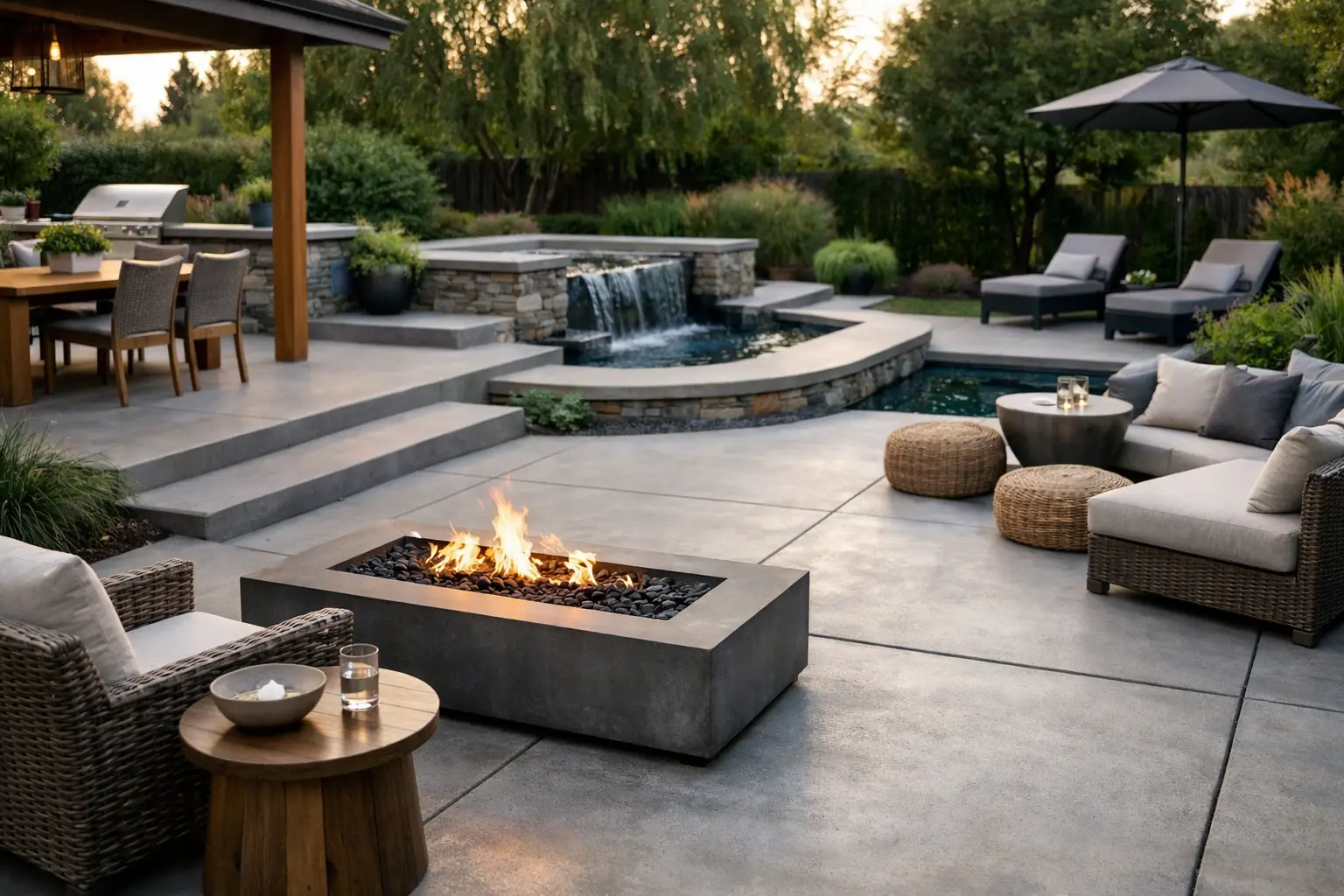
A plain gray slab can do the job, but it rarely becomes the part of the backyard people talk about. The best concrete patio designs turn a basic outdoor area into a place where you actually want to spend time – grilling on weekends, hosting family, or just getting a little shade after a long Bakersfield day. Good design matters, but so does choosing a patio that fits your home, your lot, and the way you plan to use the space.
Concrete gives property owners a lot more flexibility than many people expect. It can be clean and modern, textured and decorative, warm and natural-looking, or built around heavy use with easy maintenance in mind. The right patio design is not only about appearance. It also needs to hold up to sun, foot traffic, furniture, and changing needs over time.
What makes the best concrete patio designs work
The strongest patio designs strike a balance between looks and performance. A beautiful pattern will not feel like a great investment if the layout is too small for seating, if drainage was overlooked, or if the finish becomes slippery around a pool or outdoor kitchen.
That is why the best results usually start with a few practical questions. How much direct sun does the yard get? Will the patio be used for dining, entertaining, or a walkway connection between different parts of the property? Is the goal to create a standout feature or keep the patio understated and timeless?
In Bakersfield and across Kern County, climate also plays a role. Heat and long sun exposure can influence color choices, surface texture, and how comfortable a patio feels during the hottest months. Lighter tones often stay cooler, while textured finishes can improve traction and add visual depth.
1. Stamped concrete that mimics stone
Stamped concrete remains one of the most popular choices for homeowners who want a high-end look without the higher price and upkeep of natural stone. This design works especially well when you want a patio that feels custom but still practical for everyday use.
Patterns can resemble flagstone, slate, brick, or wood plank surfaces. The benefit is visual character with the durability of poured concrete. For many homes, stamped concrete hits the sweet spot between decorative appeal and long-term value.
The trade-off is that installation quality matters a lot. If the pattern spacing, coloring, or sealing is rushed, the final look can feel artificial. Done well, though, stamped concrete can give a backyard a finished, upscale appearance that stands out.
2. Modern smooth-finish patios with clean lines
For newer homes and updated properties, a smooth-finish patio with sharp edges and a simple layout can look exceptionally strong. This style works best when the goal is a clean outdoor living space that feels organized, open, and easy to furnish.
The design itself is often minimal, but the details matter. Straight borders, large rectangular shapes, integrated steps, and a restrained color palette help the patio feel intentional instead of plain. It pairs well with black metal patio furniture, minimalist landscaping, and modern shade structures.
This look is ideal for homeowners who want a contemporary backyard, but it is not the best fit for every property. On more traditional homes, a very sleek patio can sometimes feel out of place unless it is softened with planters, texture, or border accents.
3. Broom-finish patios built for everyday use
Not every great patio design needs decorative stamping or multiple colors. A broom-finish patio is one of the most dependable options for homeowners who care about durability, slip resistance, and clean appearance.
The texture gives the surface traction, which is especially helpful in family yards, near pools, or around areas that see regular foot traffic. It is also one of the easier finishes to maintain over time. If your priority is function first with a neat finished look, this style deserves serious consideration.
What makes it one of the best concrete patio designs is its versatility. It can be kept simple for a straightforward backyard improvement, or elevated with borders, saw cuts, and custom shapes that make it feel more designed.
4. Two-tone patios with contrasting borders
A border can completely change the look of a concrete patio. Adding a contrasting color or finish around the perimeter gives the slab more definition and makes the entire installation look more custom.
This is a smart option for homeowners who want decorative impact without going all-in on an elaborate stamped pattern. A patio with a subtle field color and a darker border can feel polished, balanced, and visually larger. It also helps tie the patio into nearby walkways, pool decks, or driveways.
For Bakersfield properties, this approach works well because it adds character while still keeping maintenance manageable. It is one of those upgrades that looks thoughtful without becoming too busy.
5. Patio designs with built-in curves
Most people picture patios as square or rectangular, but curved concrete layouts can soften a backyard and make it feel more natural. This style is especially effective when the patio wraps around a lawn, garden bed, fire pit, or pool area.
Curves help break up rigid yard lines and can make smaller outdoor spaces feel more inviting. They also work well on properties where a straight slab would look too harsh against the landscaping or the shape of the home.
There is a practical side to this choice too. Curved patios can improve flow, guiding people naturally from one area to another. The main consideration is planning. A curved design should look purposeful, not random, so layout expertise is important.
6. Outdoor living patios with room zones
Some of the best patio projects are not centered on finish alone. They are built around how the space will actually be used. A larger concrete patio can be designed with separate zones for dining, lounging, grilling, or gathering around a fire feature.
This is often the right choice for families who entertain often or want their backyard to feel like an extension of the home. The concrete itself can define these zones through shape changes, scoring, borders, or mixed finishes.
When done right, a zoned patio feels comfortable and spacious, even on a moderate-sized lot. It is a practical way to get more use out of the space instead of just pouring one big rectangle and hoping it all comes together later.
7. Wood-look concrete for warmth without wood maintenance
Wood-look stamped concrete is a strong option for property owners who like the appearance of timber but do not want to deal with warping, staining, splinters, or frequent upkeep. It brings warmth to the backyard while keeping the structural strength of concrete.
This design fits especially well in transitional homes that mix traditional and modern elements. It can also be a nice contrast against stucco exteriors and desert-style landscaping common in this region.
The key here is realism. Better color variation and pattern placement create a more natural appearance. If the texture and coloring are too uniform, the look can feel flat. Quality craftsmanship makes the difference.
8. Patios that blend into pool decks
For homes with pools, a patio should not feel like a separate afterthought. The most effective design often ties the patio and pool deck together through shared color tones, coordinated texture, and a layout that supports movement between seating, water, and shade areas.
Slip resistance matters here, but so does comfort underfoot. Surface choice becomes more important in full sun, where darker finishes can get noticeably hotter. A lighter decorative finish with enough texture can give you a safer and more comfortable space.
This is one area where design and function have to work together. A patio may look great in photos, but if it is too slick or too hot in July, it will not perform the way you want.
9. Decorative scored concrete for a custom look
Scored concrete uses cut lines or joint patterns to create a more tailored appearance. It is a great choice for homeowners who want something more refined than a basic slab but more understated than stamped concrete.
Squares, rectangles, and geometric patterns can make the surface feel cleaner and more architectural. This is particularly effective on larger patios where a plain expanse of concrete might otherwise feel too broad or unfinished.
Scoring also gives designers flexibility. It can support a modern look, a classic grid pattern, or a subtle decorative touch depending on the home style. For many properties, it offers just enough personality without overpowering the yard.
10. Custom patios designed around the property
The best design is often the one that does not come from a catalog. A custom concrete patio can be built around grade changes, existing landscaping, outdoor kitchens, patio covers, or the specific way a family uses its backyard.
That could mean steps integrated into a hillside yard, widened sections for entertaining, or decorative finishes that connect with nearby concrete features. It could also mean keeping the design simple but getting the proportions exactly right so the patio feels balanced with the house.
That is where working with an experienced local contractor pays off. A good installer can help you avoid common mistakes, like making the patio too small, choosing a finish that does not fit the home, or overlooking drainage. National Concrete often sees that the strongest results come from pairing design flexibility with practical planning from the start.
How to choose the right patio design for your property
If you are deciding between several styles, start with use before appearance. A patio for large gatherings needs a different layout than a quiet sitting area off the back door. A poolside patio has different traction and heat concerns than a covered patio used mostly for dining.
Next, think about how bold you want the design to be. Some homeowners want decorative stamped finishes that become a focal point. Others want a classic surface that blends in and still looks good years from now. Neither approach is wrong. It depends on your home, your budget, and what you want the finished space to feel like.
Finally, consider long-term maintenance and workmanship. Decorative concrete can look excellent, but only when it is installed with care. The pattern, color, grading, and finish all have to be handled correctly. A patio is only as good as the crew that builds it.
A well-designed concrete patio should feel easy to live with. It should look right with your home, handle daily use, and make your outdoor space more enjoyable year after year. If you keep that standard in mind, the right design usually becomes a lot clearer.