Epoxy Versus Concrete Coating: Which Lasts?
October 25, 2026
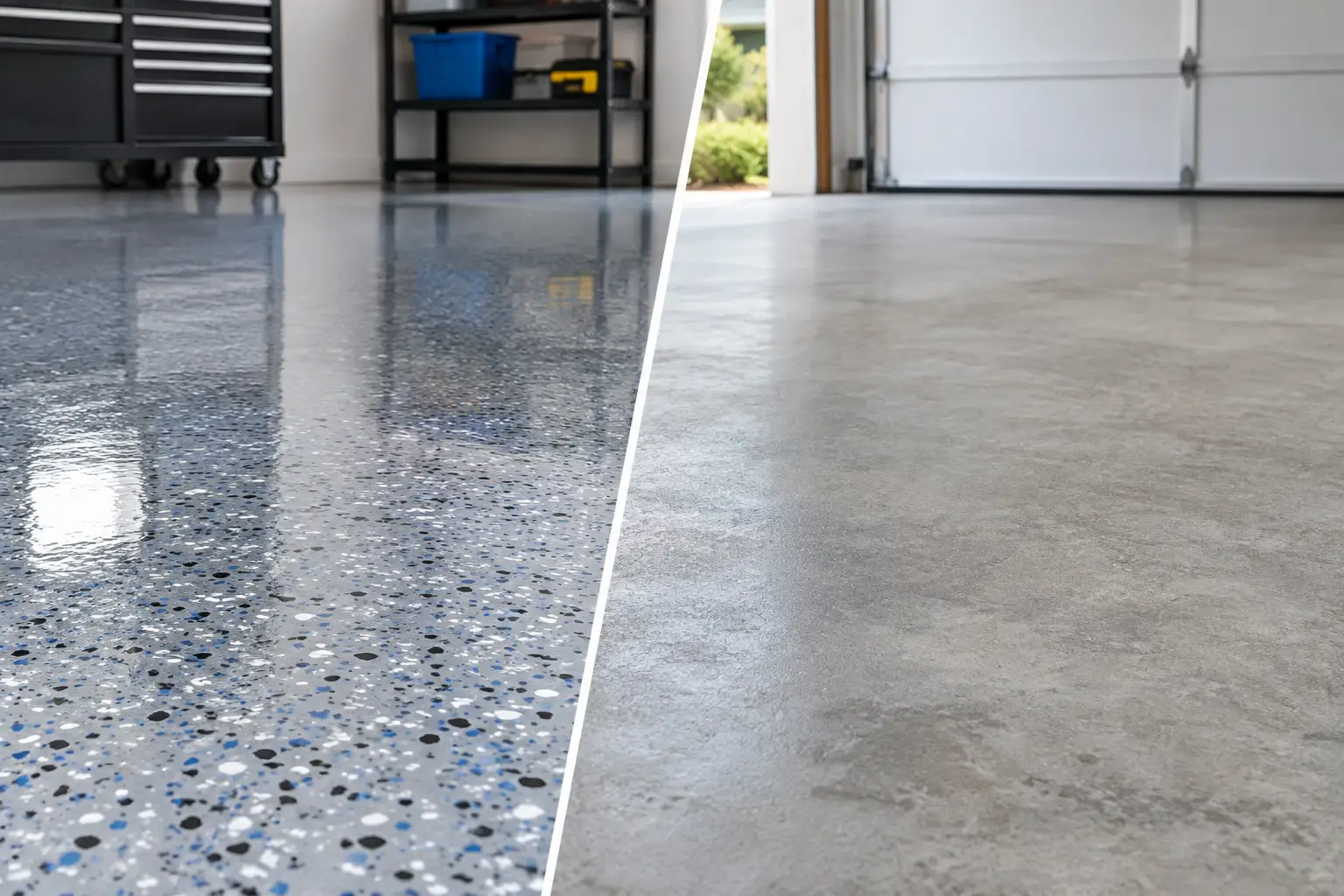
A garage floor that peels after one Bakersfield summer is more than an eyesore. It is a sign that the product, preparation, or both were not right for the slab. When homeowners ask about epoxy versus concrete coating, the first thing to clear up is that epoxy is a type of concrete coating. The better question is which coating system fits the surface, exposure, budget, and look you want.
For a clean, durable finish, the coating itself matters. So does the condition of the concrete underneath it. A quality installation starts with an honest evaluation of the slab, not a one-size-fits-all product recommendation.
What Does “Concrete Coating” Actually Mean?
Concrete coating is a broad term for products applied over cured concrete to improve appearance, protect the surface, or both. These can include epoxy, polyurea, polyurethane, acrylic sealers, and cement-based overlays. They do not perform the same way, and they are not interchangeable.
Some coatings are designed for indoor garage floors and workshops. Others are better suited for exterior patios, pool decks, walkways, or commercial areas exposed to sunlight, water, and regular foot traffic. The best choice depends on how the slab is used every day.
A coating should also not be confused with a decorative concrete finish installed during a new project. Stamped concrete, integral color, exposed aggregate, and decorative overlays are concrete solutions with their own strengths. Coatings are usually applied after the slab has cured, often as a way to refresh or protect an existing surface.
Epoxy Versus Concrete Coating: The Key Differences
Epoxy earns its reputation for a reason. It creates a hard, thick, resin-based surface that bonds well to properly prepared concrete. It can resist many automotive fluids, household chemicals, abrasion, and impacts. That makes it a popular choice for garages, workshops, utility rooms, and certain commercial interiors.
But “concrete coating” covers options that may outperform epoxy in specific conditions. Polyurea and polyurethane topcoats, for example, are often selected where flexibility, faster curing, or better UV stability is needed. Acrylic sealers are more affordable and simple to reapply, although they generally offer less protection than a high-build coating system.
The real comparison is not epoxy against some mysterious alternative. It is epoxy against the right coating technology for your concrete and environment.
Epoxy: Strong protection for the right setting
Epoxy is usually a strong candidate when a floor needs chemical resistance and a polished, easy-to-clean finish. A properly installed epoxy system can be built up in multiple coats and customized with decorative flakes, metallic effects, or a solid color. For a garage where vehicles, tools, oil drips, and storage are part of daily life, that can be a major upgrade.
There are trade-offs. Traditional epoxy can yellow or fade when exposed to direct UV light. It is also less flexible than some newer coating systems, so movement in the slab or major temperature swings can lead to cracking or failure over time. Exterior use is possible in some applications, but it requires the correct system and realistic expectations.
Epoxy is only as dependable as the surface preparation beneath it. Applying it over dusty, smooth, damp, contaminated, or unsound concrete is a shortcut that often ends with peeling.
Polyurea and polyurethane: Better tolerance for sun and movement
Polyurea and polyurethane coatings are often used as alternatives to, or topcoats over, epoxy. They tend to handle UV exposure better, making them useful for areas with sunlight. They can also offer more flexibility, which can help when concrete expands and contracts in Kern County heat.
These products cure quickly, which can shorten downtime for a garage or commercial floor. That advantage comes with a practical consideration: fast-curing materials require experienced installation. There is less room to correct mistakes once application begins.
For an outdoor concrete area, a UV-stable system with a slip-resistant texture is often more practical than a basic epoxy finish. Pool decks and patios need special attention because bare glossy coatings can become slippery when wet. Comfort underfoot and heat exposure matter just as much as color.
Acrylic sealers: Practical maintenance for decorative concrete
Acrylic sealers are frequently used to enhance and protect decorative concrete, including stamped patios, walkways, and colored concrete. They can deepen color, add a satin or glossy finish, and provide a layer of protection from moisture and staining.
They are not a substitute for a heavy-duty garage coating. Acrylic sealers generally need more frequent maintenance, especially outside where sun, sprinklers, traffic, and weather wear on the surface. Still, they can be a smart, cost-conscious option for homeowners who want to protect decorative concrete without changing its character.
Start With the Concrete, Not the Color Chart
The most attractive coating will not fix a failing slab. Before recommending a system, a professional should look for cracks, spalling, uneven areas, previous coatings, moisture issues, oil contamination, and weak surface concrete.
Hairline cracks may be repairable before coating. Wider cracks or signs of settlement may call for a closer look at the underlying concrete. If moisture vapor is moving up through the slab, certain coatings can lose adhesion or blister. This is especially relevant in garages, enclosed spaces, and slabs with drainage concerns.
Preparation usually involves cleaning, repairing, and mechanically profiling the concrete so the coating can bond. Acid washing is not always enough. Diamond grinding or shot blasting may be needed for high-performance systems, particularly in commercial settings or heavily used residential garages.
This is where professional workmanship protects your investment. Good preparation is not the glamorous part of the job, but it is often the difference between a floor that performs for years and one that needs to be redone early.
Which Option Fits Your Space?
A garage floor with daily vehicle traffic usually benefits from an epoxy-based or polyurea-based system built for chemicals and abrasion. Decorative flakes can help conceal dust and tire marks while adding texture. If the garage receives significant direct sunlight, a UV-stable topcoat is worth considering.
For patios, walkways, and pool decks, the priority changes. Sun exposure, wet conditions, surface temperature, and slip resistance should lead the decision. A breathable sealer or exterior-rated decorative coating may be the better fit, depending on the slab and desired finish. In many cases, restoring or resealing existing decorative concrete is more sensible than applying a thick garage-style coating.
For commercial properties, the use case is everything. A showroom, restaurant patio, warehouse, medical office, and retail entry all place different demands on the floor. Foot traffic, carts, cleaning chemicals, oil, food spills, safety requirements, and allowable downtime should be considered before selecting a system.
Cost: Look Beyond the Initial Price
A lower upfront price can be tempting, especially with do-it-yourself coating kits. The issue is that many budget kits go onto concrete with limited preparation and thin material coverage. They may look good at first, then lift under hot tires, wear through in traffic paths, or peel around cracks.
Professional coating costs vary based on square footage, slab repairs, preparation needs, product system, design details, and access to the area. An empty, sound garage is very different from a commercial floor with existing coatings and operational restrictions.
The best value is not automatically the thickest coating or the lowest estimate. It is a system matched to the actual conditions, installed with proper prep, and maintained as recommended. A quality concrete contractor should be direct about what the product can do and where its limits are.
Maintenance That Helps Coatings Last
Most coated floors are easy to maintain, but they are not maintenance-free. Sweep grit regularly because sand and debris can act like sandpaper under tires and foot traffic. Clean spills promptly, especially oil, fertilizer, and harsh chemicals. Use a mild cleaner instead of aggressive solvents unless the coating manufacturer specifically allows them.
For exterior decorative concrete, keep drainage working and avoid letting standing water collect at edges or low spots. Resealing on the appropriate schedule helps preserve color and protect the surface from the Bakersfield sun.
If you are unsure whether your slab needs a coating, a sealer, repairs, or a complete concrete upgrade, start with a site-specific evaluation. National Concrete helps Bakersfield-area property owners choose practical solutions that look right, hold up to daily use, and make the project easier from the first estimate to the final walkthrough.