
Concrete Versus Asphalt for Bakersfield Driveways
September 5, 2026
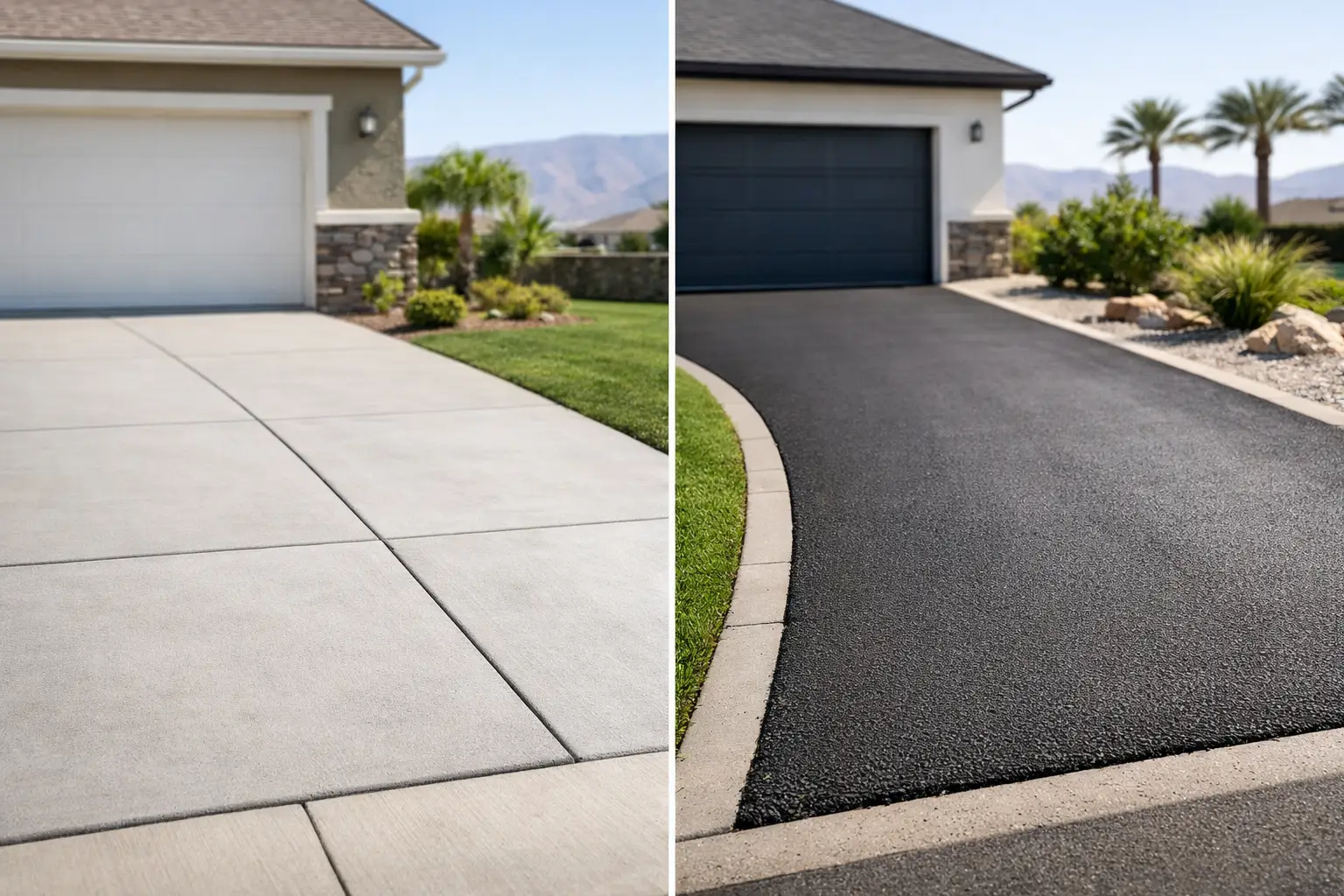
A driveway has to handle more than parked cars in Bakersfield. It faces intense summer heat, dust, daily traffic, oil drips, and the first impression of your property. When comparing concrete versus asphalt, the right answer is not simply which material costs less this week. It is which surface fits your property, your expected use, and the level of maintenance you are comfortable taking on for years ahead.
For many homeowners and commercial property owners in Kern County, concrete is the stronger long-term choice because it offers structural strength, a clean finished appearance, and more room for custom design. Asphalt can still be a practical option in certain situations, especially when upfront budget and fast installation are the main priorities. Here is how the decision breaks down.
Concrete Versus Asphalt: The Key Differences
Concrete and asphalt are both common paving materials, but they perform very differently. Concrete is a rigid slab made from cement, aggregates, water, and reinforcing materials when the project calls for them. Asphalt is a flexible, petroleum-based paving mixture installed in layers over a prepared base.
That basic difference affects nearly everything: appearance, maintenance, repair methods, heat response, lifespan, and the way each surface carries weight. A well-built driveway of either material starts with proper site preparation and base work. Skipping that step is where many paving problems begin, regardless of the material selected.
Upfront Cost Versus Long-Term Value
Asphalt often has a lower initial price for large paved areas. It can be an appealing choice when a property needs a broad driving surface quickly or when the immediate budget is tight. However, the lower starting cost does not tell the whole story.
Concrete generally costs more to install because the work requires forming, finishing, curing, and careful joint placement. Yet a properly installed concrete driveway can provide decades of service with relatively routine care. Asphalt usually requires periodic sealcoating and may need more frequent patching, resurfacing, or replacement as it ages.
For a homeowner planning to stay in the property for years, concrete often delivers better value over its service life. For a commercial owner, that value can also show up in a more polished property appearance and fewer recurring maintenance disruptions.
Bakersfield Heat Changes the Equation
Bakersfield summers are not gentle on exterior surfaces. Asphalt absorbs heat and can become exceptionally hot under direct sun. In high temperatures, it may soften, scuff, or develop impressions under heavy vehicle loads, particularly where cars sit in the same position every day.
Concrete also gets hot in the sun, but it remains more stable under normal driveway traffic. Light-colored concrete can reflect more sunlight than black asphalt, which may help the surface feel less punishing around entryways, walkways, and outdoor living areas. For pool decks and patios, concrete is usually the clear practical choice because it can be finished with texture, color, and slip-resistant features suited to foot traffic.
Heat alone should not decide the project, but it is a meaningful local consideration. A surface that performs well in a mild climate may need more attention under Kern County sun.
Which Surface Lasts Longer?
Concrete usually has the edge in lifespan when installed on a properly prepared base and maintained appropriately. Residential concrete driveways commonly last 30 years or more, depending on vehicle weight, drainage, soil conditions, and installation quality. Commercial applications may require thicker slabs or engineered specifications to support delivery vehicles, equipment, and consistent traffic.
Asphalt can last many years as well, but it is more vulnerable to oxidation, sun exposure, vehicle fluids, and softening during extreme heat. Regular sealcoating helps protect it, but sealcoating is an ongoing obligation, not a one-time solution.
Concrete is not maintenance-free. It can stain, crack, or settle if drainage and subgrade conditions are ignored. The difference is that concrete is built for long-term rigidity. Strategic control joints help manage natural movement and encourage cracking to occur in planned locations. A contractor should never promise that concrete will never crack, but skilled installation greatly improves how the slab performs and how clean it looks over time.
Repairs Look Different
Asphalt repairs are often simpler at first. Small cracks can be filled, damaged areas can be patched, and an aging surface can sometimes be overlaid. The trade-off is that patches and seams may remain visible, and a driveway can gradually take on a pieced-together appearance.
Concrete repairs take more planning because color, texture, and finish can be difficult to match exactly on an older slab. Small cracks may be addressed with repair materials or sealing, while significant settlement often requires removing and replacing the affected section. The benefit is that a sound concrete driveway does not need routine resurfacing just to retain its basic look.
The best repair strategy starts before the pour. Proper grading, drainage, reinforcement where appropriate, expansion details, and a compacted base reduce the likelihood of premature cracking and settlement.
Appearance and Design Flexibility
This is where concrete stands apart. Asphalt has a straightforward black finish, which works for many parking areas but offers limited design potential. Concrete can be clean and simple, but it can also be shaped around the character of the property.
Homeowners can choose broom-finished concrete for dependable traction, decorative borders to frame a driveway, colored concrete for a warmer look, or stamped concrete that resembles stone, brick, or tile. Concrete can also create a coordinated look across driveways, patios, walkways, curbing, and pool deck areas.
That flexibility matters when curb appeal is part of the investment. A driveway is a large visual element at the front of a home. On commercial properties, a clean concrete entry, sidewalk, or loading area can signal that the property is cared for and professionally maintained.
Vehicle Weight, Drainage, and Property Use
The material should match the job. A typical residential driveway carrying passenger vehicles has different needs than a commercial yard, apartment complex, or property with frequent service trucks. Heavier traffic may call for thicker concrete, reinforcing steel, stronger base preparation, or a different paving design altogether.
Drainage deserves equal attention. Water that pools along a driveway edge or flows beneath a slab can weaken the supporting soil and contribute to movement. Asphalt also suffers when water infiltrates its base. Before selecting a material, consider the slope of the property, downspout locations, existing drainage issues, gates, garage elevations, and where vehicles enter and turn.
This is why an on-site estimate is more useful than a generic price per square foot. The right recommendation depends on the condition of the existing surface, soil, access, demolition needs, drainage, and the intended use of the finished area.
When Asphalt May Be the Better Fit
Asphalt is not automatically the wrong choice. It can make sense for a large, utilitarian parking or access area where appearance is secondary and a lower initial cost is necessary. It is also installed and opened to traffic faster than concrete in many cases, which can matter when downtime needs to be limited.
Still, property owners should factor in future sealcoating, repairs, heat exposure, and the visual impact of the surface. For a front driveway, a custom patio, a pool deck, or a high-visibility commercial entrance, concrete often provides a more durable and refined result.
Choosing a Concrete Contractor in Bakersfield
The best concrete project is built around the site, not sold as a one-size-fits-all package. Ask how the base will be prepared, how water will drain, what slab thickness is recommended, where control joints will go, and how the contractor will protect surrounding landscaping and structures during the work.
You should also discuss finish options early. A basic broom finish may be ideal for a hardworking driveway, while a decorative border or stamped design may better suit a patio or entry. Clear expectations about layout, color, access, schedule, and cleanup make the process easier from the first estimate through final walkthrough.
National Concrete helps Bakersfield-area homeowners and commercial clients plan concrete work that looks right, performs under local conditions, and adds lasting value to the property.
A new driveway is not just a place to park. It is a daily-use surface that should feel solid underfoot, hold up under traffic, and make you smile when you pull in. Choose the material based on the job it needs to do, then make sure the installation is done with the care it deserves.