
Concrete Coatings for Bakersfield Properties
August 30, 2026
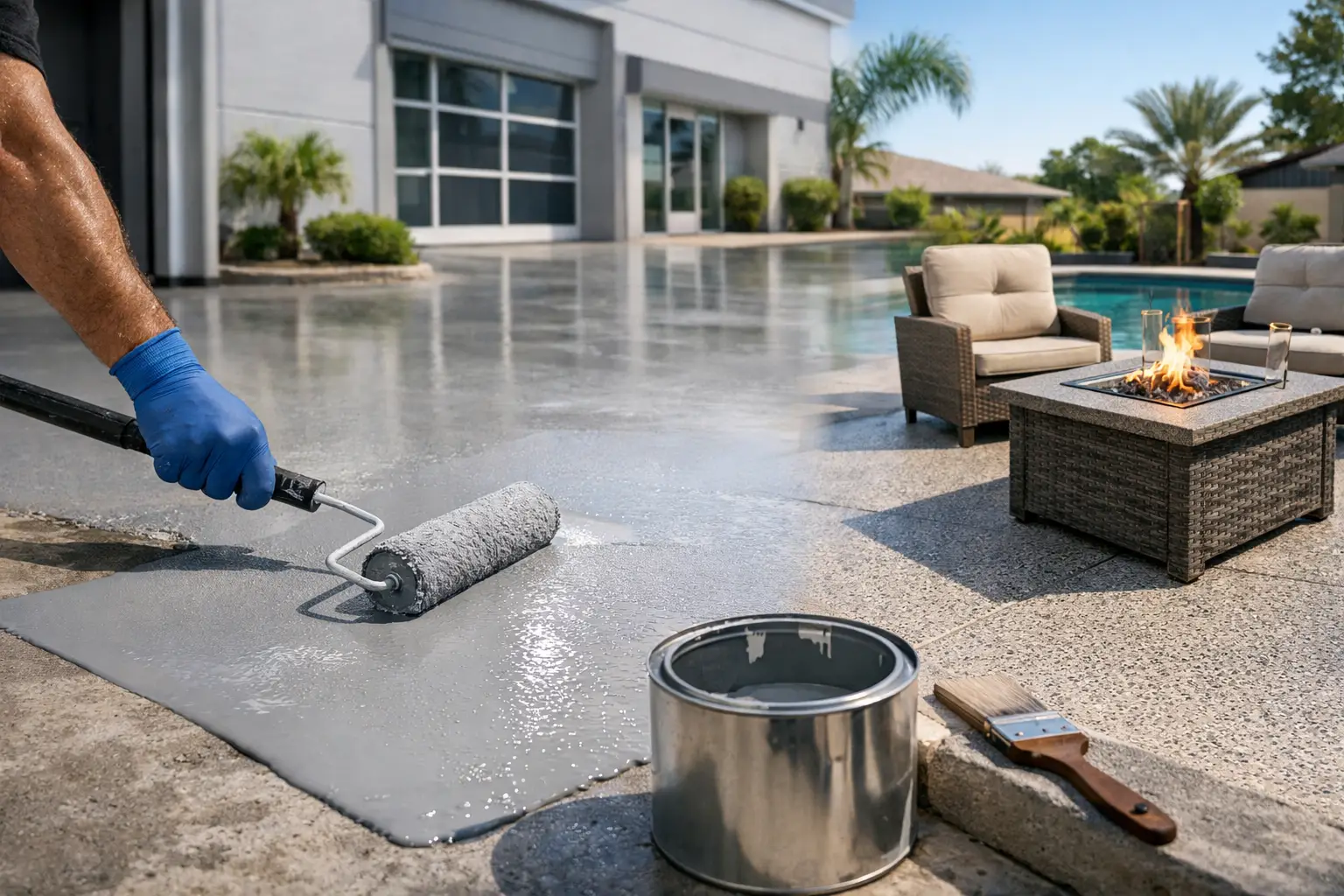
A concrete surface can look solid from a distance while quietly showing the effects of Bakersfield heat, tire traffic, pool water, oil stains, and years of everyday use. Concrete coatings give the right slab a fresh layer of protection and a cleaner appearance, but the best result starts with an honest look at the concrete underneath. A coating can improve a sound surface. It cannot permanently solve a slab that is failing, moving, or draining poorly.
For homeowners and commercial property owners, that distinction matters. The goal is not simply to cover concrete. It is to choose a finish that fits the surface, the use of the space, and the local conditions it faces.
What Concrete Coatings Do for a Property
Concrete coatings are protective finishes applied over cured concrete. Depending on the product and application, they can help reduce staining, simplify cleaning, improve color consistency, add traction, and give a worn slab a more finished look. They are commonly considered for garage floors, patios, walkways, pool-adjacent areas, entryways, shop floors, and certain commercial spaces.
A quality coating can make a basic slab feel more intentional. A garage floor may be easier to maintain after spills. A patio can take on a richer color or decorative finish. A commercial floor may benefit from a surface designed for regular foot traffic or light vehicle use.
The trade-off is that coatings are not all built for the same job. A product that works well inside a garage may not be the right choice for a sun-exposed patio. A smooth decorative finish may look great at first but create a slipping concern around water if texture is not considered. The right system should be selected around performance first, then appearance.
Start With the Condition of the Concrete
Before discussing color, gloss, or decorative flakes, inspect the slab. This is where experienced concrete guidance saves property owners time and money.
Hairline surface cracking is common in concrete and may be manageable with proper preparation and repair. Wider cracks, heaving, settling, spalling, deep scaling, or areas that hold water deserve closer attention. These can point to movement, moisture, drainage, or base issues that a coating alone will not correct.
Concrete also needs to be clean, dry enough for the selected system, and properly prepared. Oil, old paint, curing compounds, sealers, dust, and weak surface material can interfere with adhesion. Skipping preparation may seem like a shortcut, but it often leads to peeling, bubbling, or uneven wear later.
For an older driveway or patio with widespread damage, replacement may be the smarter long-term investment. For a structurally sound slab that mainly looks faded, stained, or unfinished, a coating or decorative surface treatment can be an excellent upgrade. The best recommendation depends on the slab, not a one-size-fits-all sales pitch.
Common Types of Concrete Coatings
The category includes several products and systems, each with different strengths. Knowing the basic differences helps you ask better questions before committing to a finish.
Epoxy Coatings
Epoxy is well known for garage floors and indoor work areas. It can create a durable, attractive surface that resists many common stains and can be finished in solid colors or decorative flake systems. Properly installed epoxy can make maintenance much easier in spaces that see tools, vehicles, and regular activity.
However, epoxy is not automatically the best exterior option. Direct sun exposure and UV light can affect some epoxy finishes over time, particularly if the system is not designed with a protective topcoat. Surface prep and moisture conditions are also critical.
Polyaspartic and Polyurea Systems
Polyaspartic and polyurea coatings are often selected for their fast curing times and strong performance characteristics. They can be a good fit for garages and other spaces where a shorter return-to-service time matters. Many systems also offer better UV stability than standard epoxy alone.
That does not mean every fast-cure system belongs on every slab. Application timing, temperature, concrete moisture, and installer experience still affect the result. A coating that cures quickly leaves less room for error during installation.
Acrylic and Decorative Concrete Finishes
Acrylic-based products, stains, and decorative finishes can be useful when the goal is primarily visual enhancement with practical protection. They may be considered for patios, walkways, and outdoor living areas where color and design matter. These options can complement stamped concrete or custom concrete features when the surface is in suitable condition.
Exterior surfaces usually need thoughtful planning around sun exposure, water runoff, and traction. A finish should support how the space is actually used, whether that means backyard entertaining, a pool deck, or a front entry that receives daily foot traffic.
Penetrating Sealers
Penetrating sealers work differently from film-forming coatings. Instead of creating a visible layer on top of the slab, they absorb into the concrete to help reduce water and contaminant intrusion. They are often a practical option when you want to preserve a more natural concrete appearance.
They generally will not deliver the dramatic color change or decorative look of a coating system, but they can be a sensible maintenance choice for driveways, walkways, and other exterior concrete where protection matters more than a glossy finish.
Choosing a Coating for Bakersfield Conditions
Kern County properties deal with intense sunlight, high summer temperatures, dust, and occasional heavy use. Those conditions should shape the conversation.
For exterior areas, UV resistance and slip resistance are usually high priorities. A dark color may absorb more heat under direct sun. A very smooth finish near a pool, hose bib, or shaded walkway can become slick when wet. Decorative texture or an anti-slip additive may be worth considering, even if it changes the feel of the finished surface slightly.
Drainage also deserves attention. Coatings follow the concrete they are applied to. If water already runs toward the house, collects near a door, or ponds in low spots, applying a new finish will not change that slope. Correcting the drainage issue before coating protects both the surface and the surrounding property.
For garages and commercial areas, think about the type of traffic. Passenger vehicles, forklifts, carts, equipment, chemical exposure, and frequent cleaning each place different demands on a floor. Be clear about how the area will be used. The better the information at the beginning, the better the finish can be matched to the job.
Preparation Is the Difference Between a Good Look and a Lasting Finish
The most attractive coating product will still underperform if it is applied over weak or contaminated concrete. Professional preparation may include cleaning, degreasing, mechanical grinding, crack repair, edge work, and careful moisture evaluation. The goal is to create a clean, sound surface that can accept the selected material.
This stage can feel less exciting than choosing colors, but it is where quality is built. It also gives the contractor a chance to identify issues that may affect the project before the finish goes down.
Property owners should be cautious about quick coating promises that do not address preparation. A low upfront price can become expensive if the coating fails early and needs to be removed, repaired, and reapplied. Clear expectations about prep work, cure time, surface limitations, and maintenance make the process much easier.
When a New Concrete Installation Makes More Sense
Sometimes the right answer is not a coating. If a slab has major cracking, poor drainage, severe surface breakdown, or an outdated layout, a new concrete installation may provide more value. This is especially true when you want to expand a patio, redesign a pool deck, improve driveway access, or add a custom stamped concrete feature.
New concrete gives you the opportunity to address grade, thickness, reinforcement, joints, and design from the ground up. It may cost more than refinishing an existing slab, but it can prevent repeated repairs on a surface that has reached the end of its useful life.
National Concrete helps Bakersfield-area property owners evaluate both paths, from straightforward slab improvements to custom concrete projects. The focus should always be on a recommendation that serves the property well, not on pushing a finish where it does not belong.
Keep the Finished Surface Looking Its Best
Once the work is complete, simple maintenance helps protect the investment. Sweep away dirt and grit, clean spills reasonably quickly, and use cleaning products that are appropriate for the specific finish. Avoid dragging sharp metal items across coated garage floors, and use care with harsh chemicals unless the installed system is rated for them.
Outdoor surfaces benefit from regular checks as well. Keep drainage paths clear, watch for new cracks or areas of wear, and address small concerns before they become larger repairs. A well-chosen finish paired with sensible care can keep a concrete space looking clean, useful, and welcoming for years.
If you are considering concrete coatings, start by looking past the color sample. A finish should match the condition of your slab, the demands of the space, and the way you want to enjoy your property. That is how a concrete upgrade becomes a decision you can feel good about every time you pull into the driveway, step onto the patio, or open the garage door.