Commercial Concrete Sitework Guide for Bakersfield
October 17, 2026
A commercial property can look finished long before it is ready to perform. The parking area may be striped, the storefront may be open, and the landscaping may be installed, but weak base preparation, poor drainage, or incorrectly placed concrete can create costly problems fast. This commercial concrete sitework guide helps Bakersfield property owners, builders, and managers understand the decisions that protect their investment from the ground up.
Commercial concrete is more than placing a slab. It is a coordinated part of the entire site: vehicle access, pedestrian movement, drainage, underground utilities, building elevations, and local requirements all have to work together. A dependable contractor helps make that process clear, organized, and easier to manage.
Commercial Concrete Sitework Guide: Start With the Site Plan
Before concrete is poured, the site plan needs to answer practical questions. Where will vehicles enter, turn, park, and load? How will customers, employees, and tenants safely reach the building? Where does stormwater travel during a heavy rain? And what concrete elements need to connect cleanly with existing pavement, structures, or future phases of construction?
For a small retail pad, the work may include sidewalks, accessible ramps, curbing, equipment pads, and a dumpster enclosure slab. For a larger development, sitework can also involve parking lots, drive aisles, truck aprons, foundations, retaining walls, drainage structures, and long runs of curb and gutter. The right scope depends on the use of the property, not simply the square footage of concrete.
This planning stage is where experienced concrete work saves time later. A curb line that looks simple on paper can affect drainage flow and parking layout. A sidewalk elevation can determine whether an entry feels accessible and comfortable. A loading area may need a much different concrete design than a customer parking space because the loads, turning forces, and daily wear are greater.
For Bakersfield projects, heat and dry conditions also deserve attention. Concrete work should be scheduled and managed with the weather, site exposure, and curing needs in mind. Fast surface drying can affect finish quality and long-term performance when it is not handled correctly.
Site Preparation Is Where Durability Begins
Concrete is only as dependable as the material beneath it. A well-finished surface cannot make up for soft soil, unaddressed moisture issues, poor compaction, or a base that does not match the expected traffic load.
The process typically begins with clearing, excavation, and establishing the required grades. The subgrade is shaped to support the planned concrete elevation and move water where it needs to go. Then the base material is placed and compacted as required by the project specifications. On some sites, soil conditions, engineered plans, or inspections may call for additional stabilization or testing.
This is not the place to guess. A light-duty walkway and a truck-access route should not automatically receive the same preparation. It depends on soil conditions, thickness requirements, the type of traffic, and whether the area will experience repeated heavy loads. Spending appropriately on preparation can prevent settlement, ponding water, and premature cracking that costs far more to correct after the property is occupied.
Underground coordination matters just as much. Utilities, irrigation sleeves, electrical conduits, drain lines, and cleanouts should be located before forms are set. Once concrete is in place, moving a missed line becomes disruptive and expensive. Clear communication between the concrete contractor, general contractor, utility crews, and property owner keeps the work moving in the right order.
Choose the Right Concrete for Each Area
Commercial sites rarely have one concrete need. Sidewalks, curbs, foundations, drive lanes, and equipment pads each serve different purposes. Matching the concrete design and placement details to the application is one of the most practical ways to protect the project.
A pedestrian walkway needs a stable, slip-conscious finish, clean transitions, and proper slope. A parking lot entry must handle vehicle movement without creating a trip hazard or trapping water. Curbs need accurate alignment and consistent height to define traffic flow and protect landscaped areas. Foundations and structural elements must follow the approved engineering requirements exactly.
Thickness is another project-specific decision. More concrete is not always the answer, but insufficient thickness for the intended load is a problem waiting to happen. Heavy delivery vehicles, service trucks, dumpsters, forklifts, and frequent turning traffic can place serious stress on slabs and aprons. The contractor should review how the space will actually be used, rather than base the decision only on what the area looks like today.
Reinforcement, joints, and edges also play a major role. Concrete naturally shrinks as it cures, so control joints help guide cracking into planned locations. Proper joint layout should work with the slab shape, columns, drains, corners, and changes in direction. Well-planned joints do not eliminate every crack, but they improve the appearance and help the concrete perform as intended.
Drainage and Accessibility Cannot Be Afterthoughts
Water is one of the most common reasons commercial concrete fails early. When water stands against a building, settles in a drive lane, or drains across a pedestrian path, it can create maintenance issues and safety concerns. Good sitework creates controlled slopes that move water toward the planned drainage system without making the property difficult to use.
The goal is balance. Too little slope can leave puddles. Too much slope can make a walkway uncomfortable, complicate accessibility, or cause water to move too quickly. Drain locations, gutter lines, catch basins, and surrounding grades should all be considered before concrete placement begins.
Accessibility is equally important. Commercial walkways, ramps, curb ramps, landings, and accessible parking areas need to be planned around applicable requirements and approved project documents. Details such as slopes, cross slopes, detectable warnings, transitions, and clear paths of travel should be handled with care. Requirements can vary by project and jurisdiction, so qualified professionals should verify the current standards before construction.
Plan the Pour for Quality, Not Just Speed
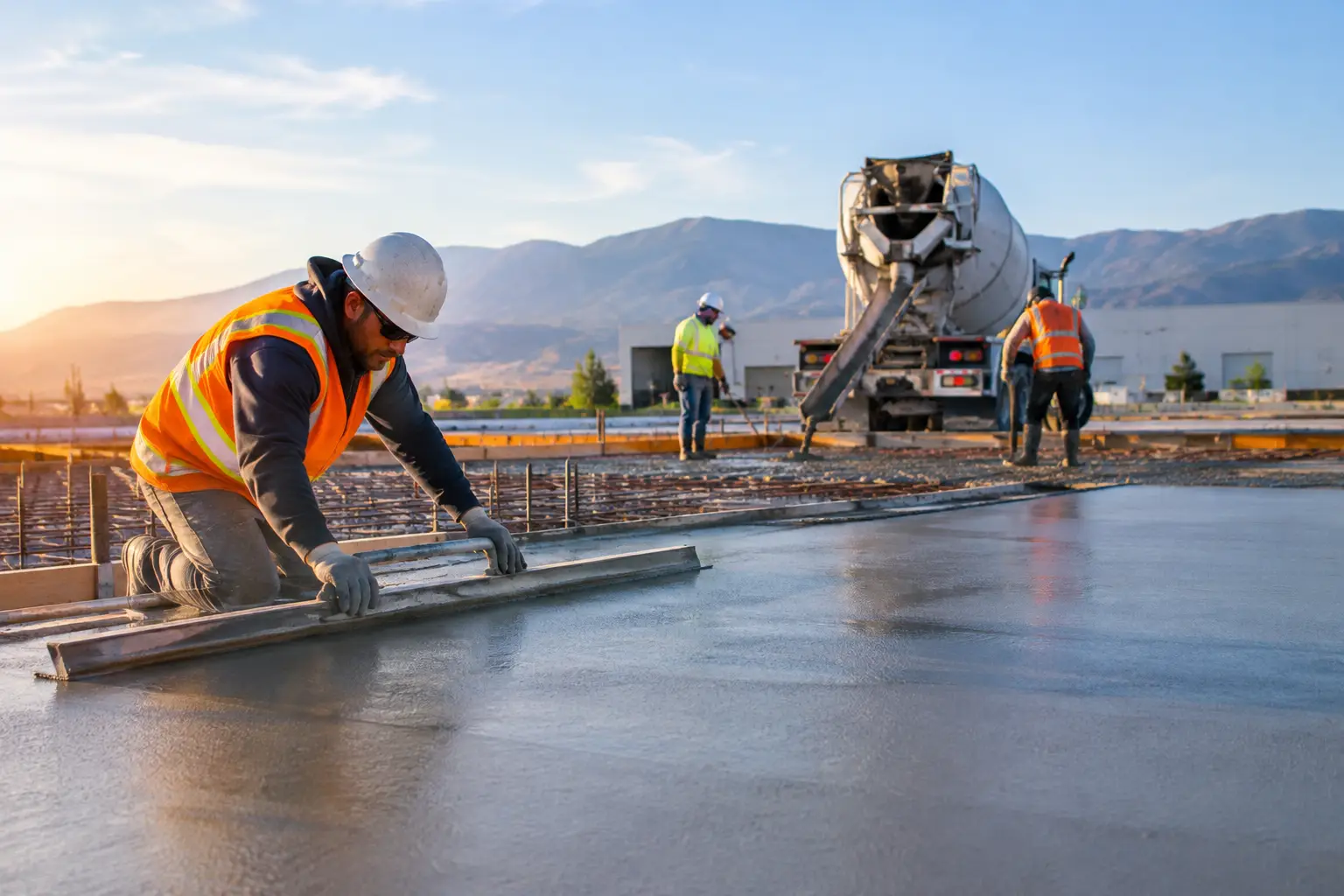
A commercial pour is a scheduled operation, not a casual delivery. The crew needs forms, reinforcement, access routes, equipment, labor, finishing plans, and concrete delivery timing lined up before the first truck arrives. For larger placements, sequencing is especially important because delays can affect finish quality and joint placement.
The finished surface should fit the use of the space. A broom finish often provides dependable traction for sidewalks and exterior flatwork. Hard-troweled finishes may suit certain interior or protected applications. Decorative treatments can add visual impact around storefronts, entryways, or gathering spaces, but they should be selected with maintenance, traffic, and slip resistance in mind.
Curing is part of the installation, not a final detail to skip. Fresh concrete needs protection while it gains strength. The exact approach depends on weather, mix design, finish, and project requirements, but the principle is simple: allowing concrete to cure properly supports the durability the project was designed to deliver.
Work With a Contractor Who Understands the Full Scope
Commercial sitework moves best when the contractor can read the plans, identify field conflicts early, communicate clearly, and perform the work with consistent craftsmanship. The lowest initial price can become expensive when it leaves out needed preparation, coordination, or details that affect performance.
Before selecting a concrete contractor, discuss the site use, schedule, access limitations, drainage plan, concrete finishes, and inspection requirements. Ask how the crew handles changes in the field and how they coordinate with other trades. A clear written scope should identify what is included, what is excluded, and which project documents govern the work.
For Bakersfield and Kern County clients, National Concrete brings local experience to commercial projects that need both dependable construction and a professional finished appearance. From curbing and sidewalks to foundations, flatwork, and custom concrete features, the focus should remain on quality work, honest communication, and a smooth customer experience.
A well-built commercial site does more than meet opening-day expectations. It gives tenants, customers, employees, and property owners a safer, cleaner, and more reliable place to do business for years to come. Start with an accurate site plan, choose materials and details that fit the real use of the property, and bring in a qualified concrete team before small questions become expensive changes.