
Commercial Loading Dock Concrete Guide for Owners
September 23, 2026
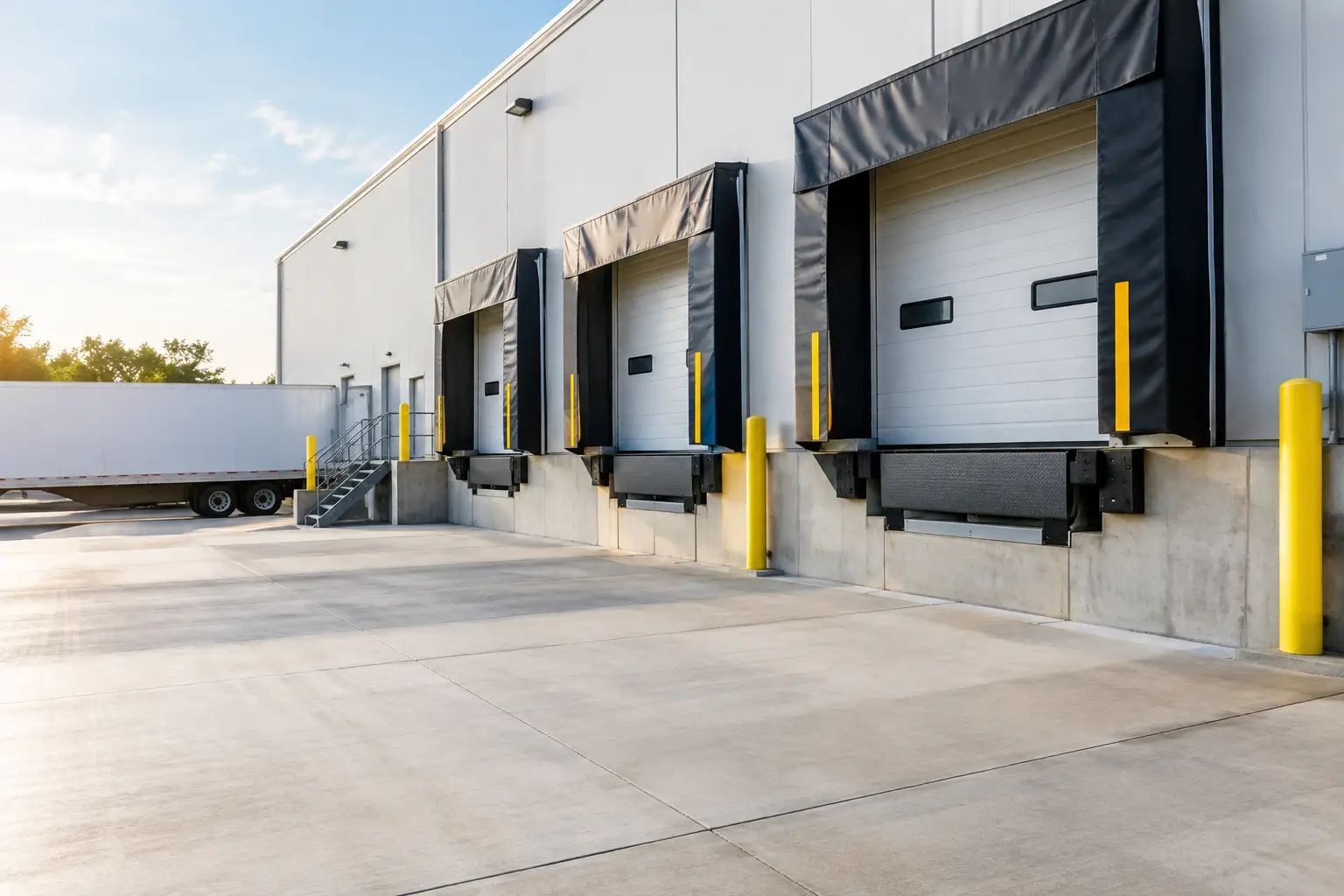
A loading dock can look like a simple concrete slab until the first fully loaded trailer backs in, a forklift crosses the threshold hundreds of times, or water begins collecting at the building line. This commercial loading dock concrete guide helps Bakersfield and Kern County property owners plan for the forces that actually determine whether a dock holds up or becomes a recurring repair expense.
For commercial concrete, the goal is not simply to pour a thicker slab. A successful dock starts with the right use assumptions, stable subgrade, drainage plan, reinforcement details, and construction sequencing. Get those decisions right before concrete arrives, and the finished surface has a far better chance of serving your operation for years.
Start With How the Dock Will Be Used
Every loading dock has a different workload. A small receiving area for light box trucks has very different demands than a distribution center handling repeated semi-trailer traffic, pallet jacks, forklifts, and loaded deliveries throughout the day.
Before design and pricing begin, identify the vehicles that will use the dock, their expected frequency, the heaviest wheel loads, and where those loads will concentrate. Forklift travel paths matter just as much as truck traffic. Repeated hard turns, braking zones, and trailer landing gear can create localized stress that a generic slab design may not handle well.
Dock equipment also changes the equation. Levelers, dock locks, wheel restraints, bumpers, trench drains, bollards, and ramps all need to be accounted for before placement. Cutting into a new slab later can weaken it, interfere with reinforcement, and create more places for water to enter.
A qualified concrete contractor can coordinate with your engineer, architect, and equipment provider so the concrete scope supports the full loading system rather than becoming an afterthought.
The Commercial Loading Dock Concrete Guide to Slab Design
Thickness, concrete strength, and reinforcement should be based on the actual loading conditions and local project requirements. There is no responsible one-size-fits-all thickness for every commercial dock. A slab that performs well for a low-volume warehouse may be inadequate for frequent tractor-trailer use or heavy industrial equipment.
The supporting soil is equally important. Concrete is strong in compression, but it depends on uniform support underneath. Soft spots, loose fill, organic material, or poorly compacted base can allow the slab to settle and crack even when the concrete itself was placed correctly.
Subgrade and Base Preparation
Preparation begins by removing unsuitable material and bringing the site to proper grade. The exposed subgrade should be evaluated for stability, then compacted as required for the project. Depending on soil conditions, a properly compacted aggregate base may be needed to improve support, drainage, and grade control.
In Bakersfield, dry weather can make a site appear stable when the soil condition still needs attention. Areas disturbed by utility work, previous paving, irrigation leaks, or old construction often deserve closer review. A good contractor does not pour over questionable ground just to keep the schedule moving.
Reinforcement and Joint Planning
Reinforcement helps manage cracking and maintain slab integrity, but it does not replace correct thickness or proper base preparation. The reinforcement approach should follow the approved design and intended use of the dock.
Control joints are also part of the plan, not cosmetic lines added at the end of the day. Concrete naturally shrinks as it cures. Properly spaced joints help encourage cracking to occur in planned locations. Construction joints, isolation joints near walls or columns, and joint protection in high-traffic areas may all be needed depending on the dock layout.
The details matter most at slab edges, ramps, door openings, and equipment pits. These are common stress points, especially where forklifts repeatedly travel from one elevation to another.
Drainage Is a Concrete Protection Plan
Standing water at a loading dock is more than an inconvenience. It creates slip hazards, affects operations, carries debris into drains, and can work its way into joints and edges over time. Water that flows toward the building can create much larger problems than a stained slab.
The finished concrete should be placed with intentional slope so water moves toward approved drainage points and away from the structure. The right slope depends on the overall site layout, door elevations, drainage system, and accessibility requirements. It is a balancing act: water must drain, but forklift movement and dock operations still need a practical, stable surface.
Where water exposure is frequent, trench drains or area drains may be appropriate. Drainage components need to be set to correct elevation before placement, with concrete finishing carefully matched to grates and frames. A drain that sits too high can catch wheels. One that sits too low can collect water and debris.
Pay Close Attention to Dock Edges and Ramps
Dock edges take a beating from trailer contact, wheel loads, and impact from dock equipment. Heavy-duty bumpers and properly positioned restraints can reduce direct impact on the concrete, but the slab and edge details still need to be prepared for their role.
Ramps require similar care. Their slope must work for the equipment using them, while the concrete surface needs enough traction for safe movement. An overly smooth finish can become slick when wet. An excessively rough finish can make carts, pallet jacks, and forklifts harder to operate.
For exterior approaches, transition areas between asphalt and concrete deserve attention as well. Differential movement between materials can lead to broken edges and trip hazards when there is no proper transition or joint detail.
Placement and Curing Affect Long-Term Performance
Even a well-designed dock can be compromised by rushed installation. Concrete must be placed, consolidated, finished, and cured in a way that matches the mix design, weather conditions, and required performance.
Bakersfield heat is a real factor in commercial concrete work. Hot, dry, or windy conditions can cause rapid moisture loss, making timing critical during finishing and curing. If the surface dries too quickly, it may become more vulnerable to cracking, dusting, or reduced durability.
A professional crew plans around weather, delivery timing, access, and the size of the pour. Proper curing is especially important because concrete gains strength over time. Opening a dock to heavy traffic too early can damage edges, joints, or the surface before it is ready for service.
Plan Access and Downtime Before Work Begins
For an active business, the biggest challenge may not be the concrete itself. It may be keeping deliveries, employees, tenants, and customers moving while work is underway.
A clear preconstruction plan should establish which dock doors will be out of service, where trucks will enter, how material will be staged, and when the new concrete can safely handle traffic. In some cases, phased work is the best way to limit disruption. In others, a short planned shutdown is safer and more efficient than trying to work around constant vehicle movement.
Property managers should also confirm underground utilities, fire lanes, drainage requirements, permits, and site-specific safety procedures before demolition begins. These steps reduce surprises that can delay the project and increase cost.
Know When Repair Is Enough and When Replacement Makes Sense
Small surface defects, isolated joint damage, or minor spalling may be repairable if the slab remains stable and the underlying support is sound. Repairs can be a smart investment when they stop water intrusion and prevent a localized issue from spreading.
Full replacement becomes more practical when there is widespread cracking, settlement, faulting, recurring edge failure, major drainage problems, or a dock layout that no longer fits current operations. Patching a slab with failing subgrade may improve appearances temporarily, but it rarely solves the reason it failed.
A reliable contractor should explain what is causing the damage, not just recommend the largest possible scope. That straightforward approach helps owners make decisions based on operational needs, budget, and long-term value.
Your loading dock is a working surface that supports every shipment, delivery, and movement through the building. When you are ready to improve an existing dock or build a new commercial concrete area in Bakersfield or Kern County, National Concrete can help you evaluate the site, plan the work clearly, and move forward with proven craftsmanship and a hassle-free process.