
Poured Concrete Versus Precast Concrete Compared
September 27, 2026
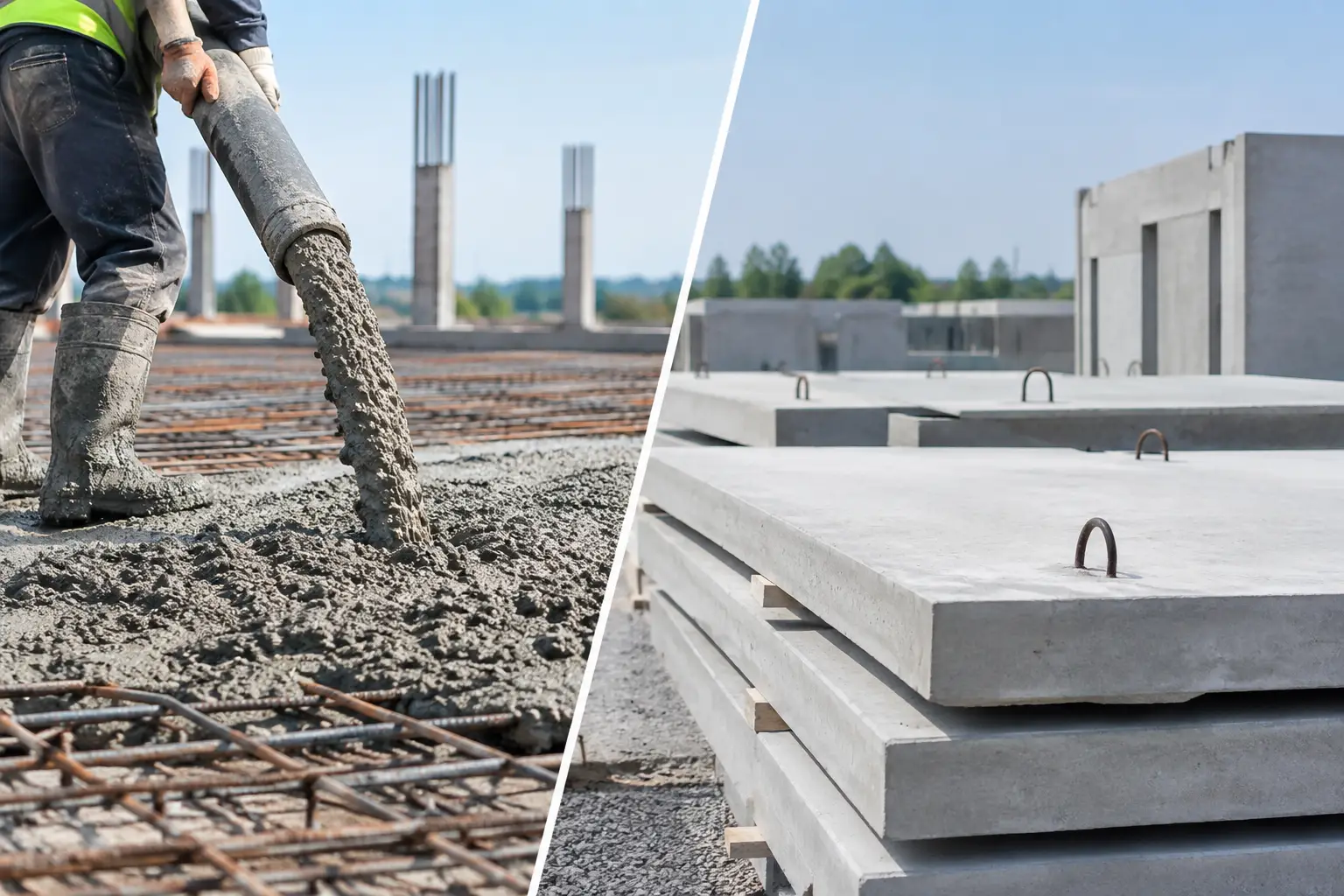
A driveway that follows an uneven lot, a stamped patio built around a pool, and a standard precast wall panel may all be made of concrete, but they are not built the same way. When comparing poured concrete versus precast concrete, the better choice comes down to your project’s shape, structural needs, schedule, site access, and desired finish. For many Bakersfield homes and commercial properties, poured concrete provides the flexibility that makes the project look and perform right for the space.
Concrete is a long-term investment. Choosing the installation method before the design and site conditions are understood can lead to unnecessary costs, limited options, or a finished surface that does not match your goals. Here is a practical look at how each option works and where it makes the most sense.
Poured Concrete Versus Precast Concrete: The Difference
Poured concrete, also called cast-in-place concrete, is mixed and delivered to the job site, then placed into forms built specifically for the project. The crew levels, reinforces, shapes, finishes, and cures the concrete on site. This is the method commonly used for driveways, patios, walkways, pool decks, foundations, curbs, footings, and custom flatwork.
Precast concrete is cast and cured in a controlled plant before it arrives at the property. Once the piece reaches sufficient strength, it is transported to the site and installed, often with a crane or other lifting equipment. Precast products can include wall panels, steps, drainage structures, utility vaults, parking stops, and certain structural components.
Neither method is automatically better. Precast brings factory consistency and can shorten on-site installation for repeatable components. Poured concrete gives a contractor more control over fit, elevation, reinforcement, drainage, color, texture, and custom layout.
When Poured Concrete Is the Better Fit
Most residential concrete improvements need to fit a real property, not an idealized rectangle. A driveway may need to meet an existing garage slab. A patio may wrap around a pool, accommodate a cover, or transition into landscaping. A walkway may need gentle slopes for drainage and accessibility. Poured concrete is especially effective because forms are built for those exact conditions.
Custom design and curb appeal
Poured concrete gives property owners far more freedom with shape and finish. Curved walkways, expanded entertainment patios, decorative borders, integral color, exposed aggregate, broom finishes, and stamped concrete patterns are all easier to create when concrete is placed on site.
That flexibility matters in Bakersfield, where outdoor areas get used hard for much of the year. A well-planned patio or pool deck should feel connected to the home, direct water away from structures, and hold up to sun, foot traffic, patio furniture, and everyday use. A custom pour allows the crew to address all of those details at once.
Better adaptation to site conditions
Every site has its own grade, soil conditions, access limitations, and existing structures. With poured concrete, a qualified contractor can prepare the subgrade, install the right base where needed, place reinforcement according to the project, and build forms that manage slopes and transitions accurately.
This is particularly useful for replacement driveways. Removing old concrete often reveals drainage issues, weak areas in the base, or elevations that must be corrected before new concrete is placed. Precast slabs are generally not the practical answer for these site-specific repairs. A poured replacement can be designed around the actual conditions found on the property.
A continuous, tailored surface
Poured concrete creates a continuous surface with planned control joints. Those joints help guide normal shrinkage cracking into less noticeable locations. Good joint placement, proper thickness, solid preparation, and curing all influence the finished result.
Precast components have joints between pieces by design. That is not a flaw when precast is used for the right application, but it can be less desirable for a broad patio, decorative pool deck, or driveway where homeowners want a unified appearance.
Where Precast Concrete Makes Sense
Precast concrete earns its place on many commercial and infrastructure projects. It is a smart option when the project uses standardized, repeatable components and site installation needs to move quickly after materials arrive.
For example, a commercial development may use precast drainage boxes, utility structures, wall panels, steps, or barrier units. Because these components are made in controlled conditions, the production process can be efficient and consistent. Installation can also occur in weather conditions that might delay a large on-site pour, provided the site is ready and equipment access is available.
Precast can be a good choice when the design is already standardized, the components can be transported safely, and there is adequate room for delivery trucks and lifting equipment. For larger structural systems, engineering requirements, connection details, and installation tolerances deserve careful planning from the start.
The trade-off is less flexibility after fabrication. If field measurements change or an obstacle appears, modifying a finished precast component is more complicated than adjusting forms before a concrete pour.
Cost: Look Beyond the Initial Quote
It is tempting to compare only the first number on two estimates. With concrete, that rarely tells the whole story. The real cost includes preparation, reinforcement, forming, transportation, equipment, installation labor, finishing, cleanup, and the expected life of the work.
Poured concrete can be cost-effective for custom residential work because it avoids the transportation and crane needs associated with large precast pieces. It also reduces the need to force a property into standard component dimensions. For driveways, patios, sidewalks, curbing, and foundations, site-cast work is often the more direct solution.
Precast may offer cost advantages when many identical pieces are needed. A contractor or developer using repeated wall panels or utility components can benefit from factory production and faster placement. However, delivery logistics and heavy equipment can quickly change the budget, especially on tight residential lots or developed commercial sites.
Ask for an estimate that explains the scope rather than simply comparing square-foot pricing. A lower number is not a value if it leaves out demolition, base work, drainage corrections, reinforcement, finish details, or proper jointing.
Durability Depends on Installation, Not Just the Method
People sometimes assume precast is always stronger because it is made in a plant, or that poured concrete is more vulnerable because it cures outside. The more accurate answer is that durability depends on design, materials, placement, curing, and site preparation.
A properly produced precast piece can be extremely durable. A properly installed poured driveway or foundation can also provide decades of service. The weak point is often not the concrete itself. It may be poor subgrade preparation, insufficient thickness for vehicle loads, inadequate drainage, improper reinforcement placement, or rushed finishing and curing.
Bakersfield heat deserves special attention. Hot, dry weather can cause fresh concrete to lose moisture too quickly if the placement and curing process are not managed correctly. Experienced crews plan pours around conditions, protect the slab during curing, and avoid shortcuts that compromise surface performance.
For residential flatwork, the foundation beneath the concrete is just as important as the surface you see. A driveway needs a stable base and the right thickness for the vehicles using it. A patio needs drainage that moves water away from the home. A pool deck needs a finish selected for comfort, traction, and maintenance. Those are field decisions that favor a hands-on, project-specific poured concrete approach.
How to Choose for Your Property
Start with the function of the concrete. If you need a custom driveway, patio, walkway, pool deck, foundation, curb, or decorative surface, poured concrete is usually the natural choice. It can be shaped to the property and finished to match the look you want.
If your project calls for a standardized structural or utility component that can be delivered and set efficiently, precast may be worth considering. Commercial clients should also evaluate access for trucks and cranes, staging space, connection requirements, and whether the project schedule benefits from off-site fabrication.
The best decision is not about picking the method with the most appealing label. It is about matching the concrete system to the site, load requirements, appearance, timeline, and budget. An experienced local contractor can evaluate those details before work begins, rather than trying to solve them after materials are on site.
For homeowners and property managers throughout Bakersfield and Kern County, a clear estimate and a thoughtful site review make the decision much easier. National Concrete approaches each project with that practical mindset: build it to fit the property, build it to last, and make the process easy to understand from the first conversation onward.