
How to Prepare for a Patio Pour in Bakersfield
September 25, 2026
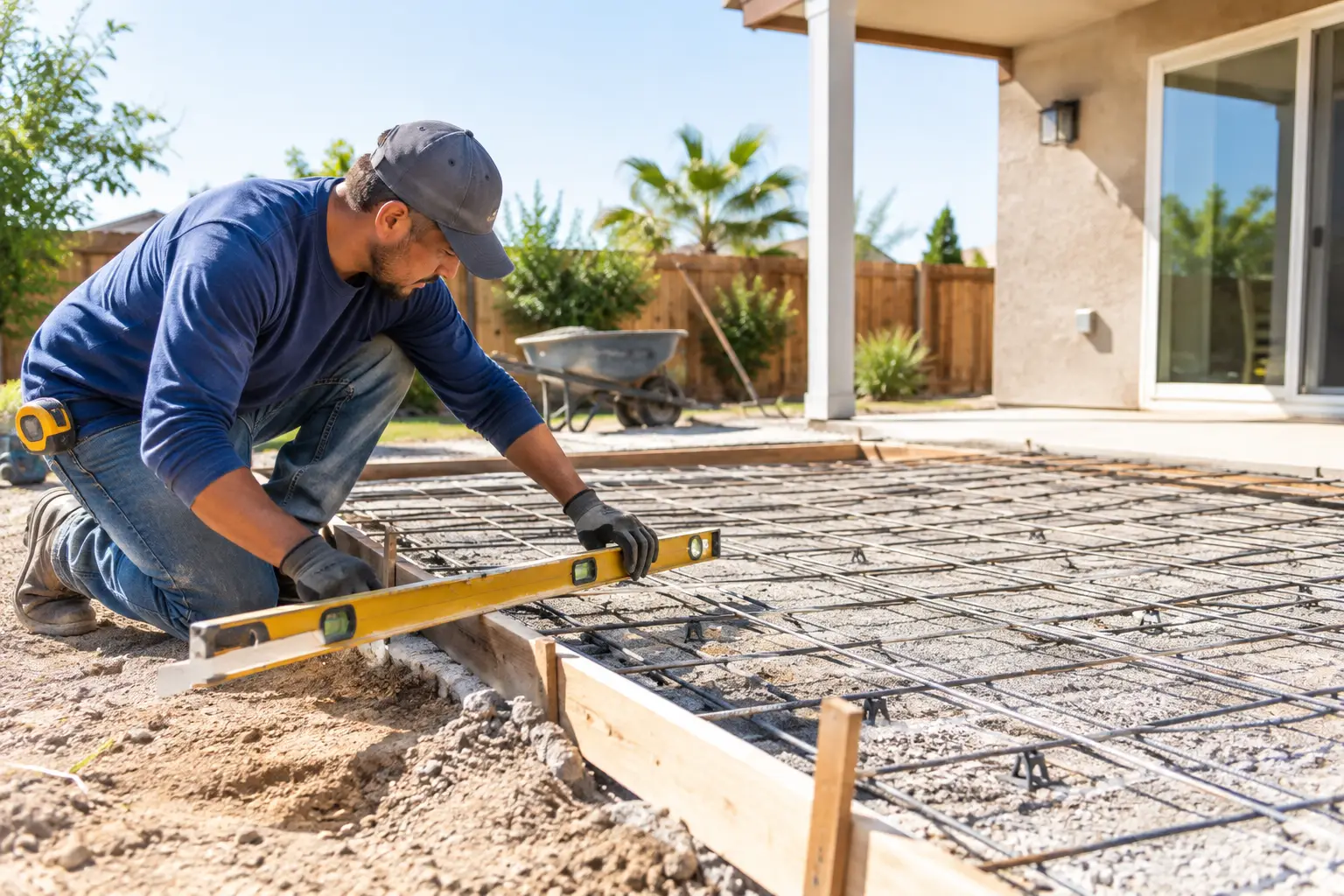
A patio pour is the day your outdoor space starts becoming usable – but the concrete truck is only one part of the job. A great finished patio depends on what happens before the crew arrives: clear access, correct drainage, solid base preparation, and decisions made early enough to keep the work moving. If you are planning how to prepare for a patio pour in Bakersfield, this checklist helps you avoid the surprises that can delay a project or affect its long-term performance.
Start With the Patio’s Purpose and Layout
Before excavation begins, be clear about how you will use the patio. A small furniture pad, a covered entertaining area, an outdoor kitchen, and a poolside gathering space may all use concrete, but they do not need the same layout, thickness, reinforcement, or finish.
Walk the proposed area at different times of day. Consider sun exposure, prevailing wind, privacy, doors, walkways, and where people will naturally enter and leave the space. In Bakersfield, afternoon sun can make a patio uncomfortable without a shade plan, while a patio placed too close to a door threshold can create drainage concerns.
Mark the general patio footprint with spray paint, stakes, or string. This gives you a chance to stand in the space and confirm that it feels right before work begins. It is much easier to adjust the size or shape before demolition and base work than after concrete is in place.
If you want curves, steps, borders, a fire pit area, built-in seating, or decorative stamped concrete, make those choices early. Custom features can affect the forming plan, joints, reinforcement, and scheduling. A dependable concrete contractor will walk the site with you, confirm dimensions, and explain where practical adjustments may be needed.
Check Permits, Property Lines, and HOA Rules
Not every patio project requires the same approvals. Requirements can depend on the patio’s size, location, drainage changes, attached structures, electrical work, or whether it is part of a larger backyard renovation. Your property may also have easements or setback requirements that affect where concrete can be installed.
If you live in a neighborhood with an HOA, review its exterior improvement rules before scheduling the work. Some associations require a submittal for patio expansions, colors, finishes, or changes visible from common areas. Approval timelines vary, so this is not a detail to leave until the week before the pour.
For commercial properties, coordinate early with the property manager, tenant, or site superintendent. Access routes, pedestrian safety, business hours, parking impacts, and required inspections should be addressed before equipment and materials arrive.
Make Access Easy for the Crew and Concrete Truck
Concrete work moves on a schedule. Once the truck arrives, the crew needs a clear, safe path to place and finish the material. Restricted access does not make a patio impossible, but it can change the equipment, labor, and time required.
Move vehicles from the driveway and street area near the project. Clear patio furniture, grills, planters, toys, hoses, and loose yard décor from the work zone. If access is through a side yard, remove obstacles and let the contractor know about narrow gates, low rooflines, overhead branches, or slopes ahead of time.
Keep pets indoors or in a secured area well away from the worksite. Concrete crews will be moving tools, wheelbarrows, forms, and heavy materials throughout the day. Children should also stay out of the work area until the patio has cured enough for normal use.
If a gate needs to be removed temporarily or a neighbor’s driveway access is involved, handle those arrangements before work begins. A little preparation prevents a busy pour day from turning into an avoidable delay.
Protect Utilities, Irrigation, and Nearby Features
Your backyard may contain more below-grade infrastructure than you realize. Irrigation lines, landscape lighting wires, drainage piping, gas lines, electrical conduit, and pool equipment connections can all be affected by excavation or grade changes.
Point out sprinkler heads, valves, cleanouts, outdoor outlets, septic components, and any known utility routes during the site visit. If you are not sure where a line runs, say so. It is better to investigate before digging than to discover an irrigation break when the forms are already in place.
Decide what will happen to landscaping around the patio edge. Shrubs, turf, decorative rock, and tree roots can affect the final shape of the project. Mature tree roots deserve special consideration. Removing roots carelessly can damage the tree, while pouring over active root zones can lead to future slab movement. The right approach depends on the tree, the patio location, and the condition of the site.
You should also protect nearby surfaces from dust and construction traffic. Move portable items yourself when possible, and discuss protection for gates, walls, pool equipment, or finished landscaping that will remain close to the project area.
Plan the Grade Before Concrete Is Poured
Drainage is one of the most important parts of patio preparation. Concrete should be graded so water moves away from the home and does not collect along walls, doorways, or low spots. The goal is not simply a level-looking patio. The goal is a patio that performs correctly in real weather.
A proper slope is often subtle enough that you will barely notice it once the patio is finished. Yet that slope can make the difference between a clean, dry surface and standing water after a storm or after washing down the patio.
Discuss where runoff will go before the project starts. Depending on the property, that may mean directing water toward a landscaped area, a yard drain, or another approved drainage route. Do not assume the existing yard grade is correct, especially if the home has had prior landscaping, pool work, or additions.
In Kern County’s dry climate, people sometimes overlook drainage because heavy rain is not an everyday concern. When significant rain does arrive, however, water will find the lowest point. Planning for it now protects the patio and the area around your home.
Prepare the Ground the Right Way
A durable patio starts below the slab. Loose soil, organic material, buried debris, and poorly compacted fill can contribute to settling and cracks over time. Concrete naturally develops control joints and may experience minor cracking, but thoughtful base preparation helps manage risk and support the slab properly.
The exact preparation depends on soil conditions, patio size, expected use, and site elevation. A basic backyard patio has different needs than a pad supporting a heavy outdoor kitchen, spa, or vehicle access. Your contractor may excavate to the needed depth, establish the grade, install and compact base material where appropriate, then set forms and reinforcement according to the project plan.
Avoid adding loose soil or decorative gravel to the area just before the crew arrives unless your contractor has instructed you to do so. Well-intended last-minute changes can alter the grade or create extra work. If you notice soft spots, erosion, or water pooling in the proposed patio area, mention it during planning rather than trying to cover it up.
Finalize Finish, Color, and Joint Decisions
The finish is more than an appearance choice. A broom-finished patio offers reliable traction and a clean, classic look. A smooth trowel finish may be appropriate for certain designs but can be slicker when wet. Stamped concrete adds character and can complement the architecture of your home, but it requires a clear plan for pattern, color, border details, and release colors before pour day.
Ask where control joints will be placed. These intentional cuts help guide natural concrete shrinkage cracking into planned lines. Joint placement should consider the patio’s shape, corners, columns, steps, and decorative layout. They are a necessary performance feature, not a sign of poor workmanship.
If the patio will meet an existing slab, pool deck, wall, or foundation, discuss the transition. Height differences, expansion material, and drainage at these connection points all matter. A clean connection looks better and helps the patio function as intended.
Know What Happens After the Pour
A patio does not become ready for full use the minute the crew leaves. Fresh concrete needs time to cure and gain strength. Your contractor should provide project-specific guidance based on the weather, finish, and intended use.
As a general rule, keep foot traffic, furniture, grills, and planters off the new patio until you receive the go-ahead. Avoid dragging anything across the surface during the early curing period. If decorative concrete is installed, follow the recommended cleaning and sealing schedule to preserve its color and finish.
Bakersfield heat, sun, and wind can affect curing conditions, which is why experienced timing and curing practices matter. A professional crew plans around the forecast and takes steps to protect fresh concrete when conditions demand it. You can help by keeping sprinklers off the new work and limiting activity around the area.
A well-prepared patio project feels straightforward because the details were handled before the truck arrives. When the layout, access, drainage, and design are all clear, the pour day can stay focused on what matters most: skilled craftsmanship and a patio your family or customers will be proud to use for years. For an easy, hassle-free process in Bakersfield and surrounding Kern County communities, National Concrete can help turn your patio plan into a finished outdoor space with quality and care.