
Choosing a Concrete Stairs Installation Contractor
July 20, 2026
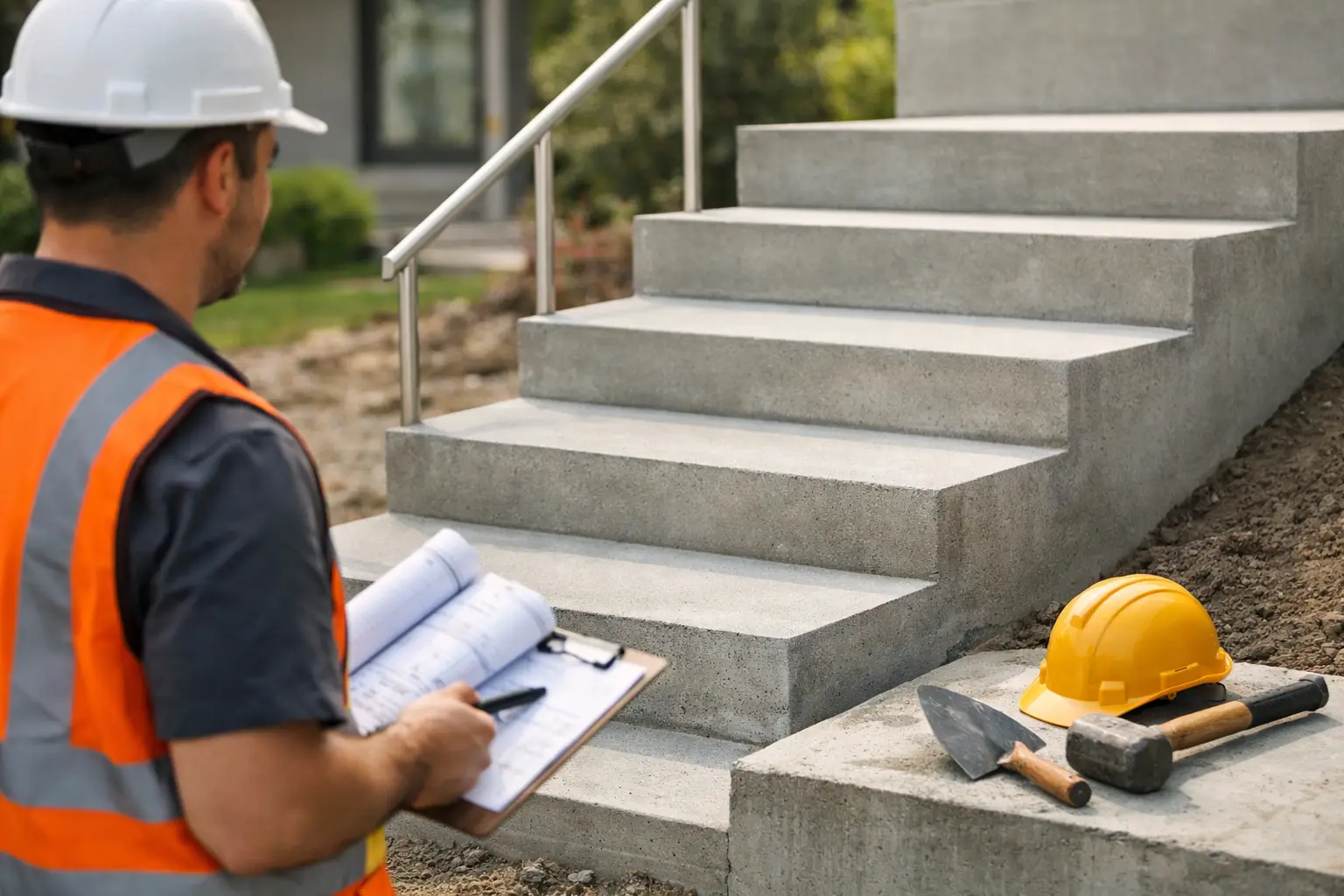
A concrete stairs installation contractor does more than pour a set of steps. The right team helps turn an awkward grade change, raised entry, patio transition, or commercial access point into a safe, durable feature that looks like it belongs on the property. In Bakersfield and throughout Kern County, concrete stairs must stand up to daily traffic, intense sun, shifting soil conditions, and the way people actually use a space.
Concrete steps are a practical investment, but they are not a one-size-fits-all project. The number of risers, landing size, drainage plan, reinforcement, finish, and connection to nearby concrete all affect the final result. A well-built stairway feels solid underfoot, sheds water correctly, and creates a clean path from one level to the next.
Why Concrete Stairs Need Professional Planning
A stairway can look simple from the street, yet small errors can create big problems. Uneven step heights are uncomfortable and can become a trip hazard. A landing that is too small can make an entry feel cramped. Poor drainage may allow water to collect at the base of the steps, leading to staining, erosion, or premature wear around the surrounding concrete.
Professional planning starts with the site itself. The contractor evaluates the elevation change, existing walkways or driveways, door clearances, slope, access, and where water will travel after a storm or irrigation cycle. For properties with an older porch, damaged steps, or settling concrete, the team also needs to determine whether the new work should tie into the existing structure or be designed as a separate installation.
This is especially important when stairs connect to a foundation, retaining wall, pool deck, or elevated patio. The goal is not simply to build steps that reach the next level. It is to create a transition that is stable, proportional, and built for the long haul.
What a Concrete Stairs Installation Contractor Should Handle
An experienced contractor should make the process easy to understand from the first estimate through final cleanup. That begins with listening to how you use the area. A front-entry stairway has different priorities than steps leading to a backyard patio. Commercial stairs may need to account for heavier traffic, access routes, site requirements, and coordination with other trades.
Once the scope is clear, the contractor should explain the recommended layout and finish. Depending on the property, that may include a broad top landing, side walls, integrated walkways, curbing, or decorative elements that complement the home or building. Straight steps are often the most efficient option, but wider stairs, wraparound landings, and custom shapes can dramatically improve both appearance and usability when the site allows.
The construction process generally includes site preparation, excavation as needed, forming, reinforcement placement, concrete placement, finishing, curing, and cleanup. Each stage matters. Proper base preparation helps support the work below grade. Forms establish consistent dimensions and crisp edges. Reinforcement adds strength where the design calls for it. Careful finishing creates a surface that looks good without becoming slick when wet.
A dependable contractor will also set realistic expectations around access, timing, cure periods, and when the stairs can safely be used. Concrete gains strength over time, so a project should not be rushed simply because it looks finished on the day it is poured.
Safety, Comfort, and Everyday Use
The best concrete stairs are easy to use without needing to think about them. Step heights and depths should feel consistent from bottom to top. Landings should provide comfortable room at doors, gates, and changes in direction. On exterior steps, a broom finish or another appropriate textured finish can improve traction while still delivering a clean appearance.
Handrails may be appropriate depending on the height, location, code requirements, and who uses the property. This is worth discussing early, particularly for rental properties, commercial sites, multi-family buildings, and homes where children or older family members use the stairs regularly. If rails will be installed, planning their placement before concrete is poured helps avoid awkward after-the-fact solutions.
Drainage deserves the same attention. Bakersfield’s dry climate does not eliminate the need for a water plan. Irrigation runoff, seasonal rain, and water from nearby roofs can all affect stairs and landings. Thoughtful grading helps direct water away from the structure and prevents it from pooling where people walk.
Design Options That Match Your Property
Concrete is known for strength, but it also offers plenty of design flexibility. A simple gray broom finish is a smart choice for many homes, side-yard steps, utility areas, and commercial applications. It is clean, durable, and practical.
For a more finished look, concrete stairs can be designed to coordinate with a stamped concrete patio, decorative walkway, pool deck, or entry. Color, texture, border details, and formed edges can help the steps feel intentional rather than added on. The key is choosing finishes that fit the surrounding surfaces and the amount of maintenance you want over time.
Custom designs can add visual impact, but they also involve trade-offs. More complex layouts, decorative finishes, curved forms, and integrated walls typically require more labor and detailed preparation. They can be the right choice for a prominent front entry or outdoor living area, while a straightforward layout may be better for a functional service entrance. A good contractor helps you decide where custom detail adds value and where simplicity makes more sense.
Questions to Ask Before You Hire
Before choosing a concrete stairs installation contractor, ask to see examples of similar work and discuss the specific conditions of your property. A contractor should be able to explain the recommended approach in plain language, not just provide a vague price.
Ask what preparation is included, how the steps will be reinforced, what finish is recommended, and how the new concrete will meet adjacent surfaces. If the work involves an entry door, foundation, retaining wall, or existing slab, ask how those connections will be handled. It is also wise to discuss drainage, expected scheduling, site access, and any permit or local requirement considerations that may apply to the project.
The lowest estimate is not always the best value. A price that leaves out excavation, base work, reinforcement, removal, finishing details, or cleanup can lead to surprises later. Clear scope matters. You should know what is included before work begins and have a contractor who responds when you have questions.
A Better Experience From Estimate to Final Finish
Concrete work can feel disruptive when it is poorly planned. Trucks, materials, forms, and cure time all need coordination. The right contractor keeps the process organized, protects the work area as much as possible, and communicates clearly about what happens next.
At National Concrete, our team brings experienced craftsmanship and a friendly, straightforward approach to stair installations across Bakersfield and nearby Kern County communities. Whether you need a few durable steps for a side entrance or a custom stairway that completes a larger patio, walkway, or commercial concrete project, the details receive the attention they deserve.
A quality concrete stairway should give you confidence every time you use it. Start with a clear on-site evaluation, choose a design that suits the property, and work with a contractor who treats your project like a lasting part of your home or business.