
Choosing Pool Deck Resurfacing Contractors
July 14, 2026
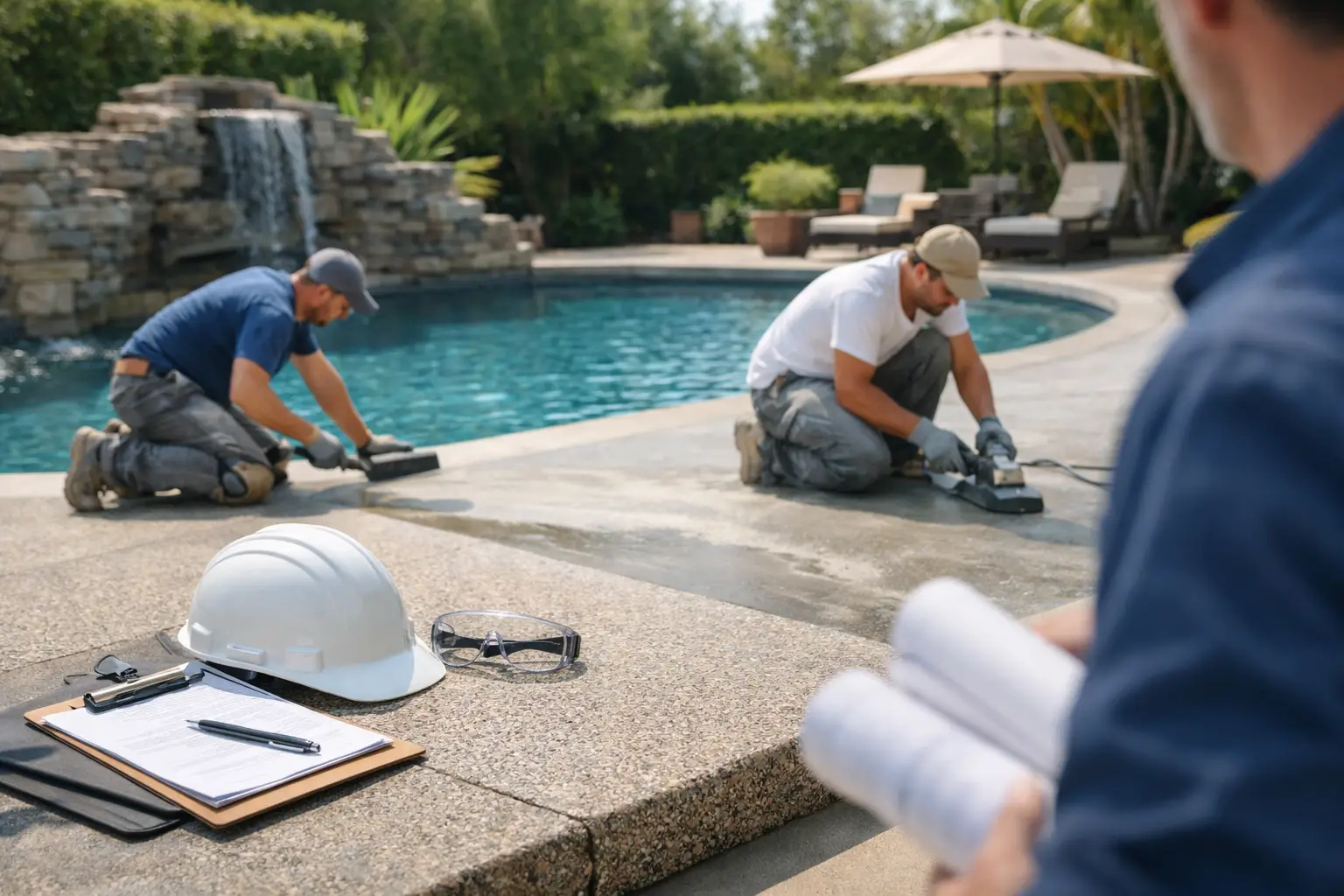
A pool deck can look tired long before the concrete has reached the end of its useful life. Faded color, rough patches, small cracks, and an outdated broom finish can make the whole backyard feel less inviting. The right pool deck resurfacing contractors can restore that surface without the cost and disruption of tearing out a sound slab, while giving your outdoor space a cleaner, safer, more finished appearance.
For Bakersfield homeowners, the decision deserves more than a quick price comparison. Summer heat, direct sun, pool chemicals, irrigation overspray, and heavy backyard use all affect how a resurfaced deck performs. A good contractor looks beyond the visible wear to recommend a solution that fits the condition of your concrete, your design goals, and the way your family actually uses the space.
When Pool Deck Resurfacing Makes Sense
Resurfacing is a practical option when the existing concrete is structurally stable but no longer looks or feels the way you want. A qualified contractor can repair minor surface damage, apply a bonded overlay, add texture for traction, and finish the deck in a color or pattern that better matches your home.
This approach often works well for pool decks with light cracking, discoloration, shallow spalling, old coatings, minor surface scaling, or a plain finish that needs an upgrade. Decorative concrete overlays can create the appearance of stone, tile, or a custom textured surface without removing the entire deck.
Resurfacing is not the answer for every pool deck. If the slab has significant settlement, widespread deep cracking, drainage failure, heaving, or movement around the pool structure, repairs may only hide a larger problem for a short time. In those cases, partial replacement or a new concrete installation may be the more responsible investment. An experienced contractor should be willing to explain that difference clearly instead of selling an overlay for a deck that needs more substantial work.
What a Quality Resurfacing Project Includes
The finish coat gets the attention, but preparation determines whether a resurfaced pool deck lasts. Concrete must be evaluated, cleaned, repaired, and profiled so the new material can bond correctly. Skipping these steps can lead to peeling, delamination, visible patch lines, and early failure.
A dependable process typically begins with an on-site evaluation. The contractor should inspect cracks, joints, low spots, existing coatings, drainage paths, and the deck’s condition near coping and pool equipment. This is also the time to discuss color, texture, edge details, and how the resurfaced deck will meet adjoining patios, walkways, or landscaping.
Next comes surface preparation. Depending on the deck, that may include pressure washing, removing failed coatings, grinding problem areas, repairing cracks, patching spalls, and mechanically preparing the concrete for a strong bond. The crew then applies the resurfacing system and creates the selected texture or decorative finish. After proper curing, a compatible sealer may be used to help protect the surface and make ongoing maintenance easier.
The best finish is not always the most decorative one. Around a pool, traction and comfort underfoot matter just as much as color. A heavily textured surface can improve grip, but it may feel rough on bare feet. A smoother finish may be more comfortable, but it can be less forgiving when wet. The right balance depends on the material, the shade around the pool, the amount of traffic, and who will use the deck.
How to Compare Pool Deck Resurfacing Contractors
A low bid can be attractive, especially when the deck looks like a straightforward cosmetic project. But resurfacing is one of those services where the details behind the number matter. Two estimates can look similar while covering very different levels of preparation, repair work, materials, and warranty support.
Start by asking contractors to explain what they see in the existing slab. A knowledgeable professional can describe whether cracks appear cosmetic or movement-related, where water is collecting, and whether the surface is suitable for an overlay. They should not promise that every crack will disappear forever. Concrete naturally moves, and a trustworthy contractor sets realistic expectations about what can be repaired and what may return over time.
Ask to see examples of completed pool decks, especially projects with comparable finishes. Photos should show clean transitions, consistent texture, thoughtful color work, and tidy edges around drains, coping, and fixtures. If you want a custom look, make sure the contractor can demonstrate decorative concrete experience rather than simply offering a standard coating.
Before choosing a contractor, make sure the written scope addresses these practical details:
- Surface preparation and whether existing coatings will be removed
- Crack, spall, and joint repair included in the estimate
- The resurfacing material, texture, color, and sealer being proposed
- Drainage corrections or limitations identified during the inspection
- Protection for the pool, landscaping, gates, and nearby structures
- Expected schedule, curing requirements, payment terms, and warranty coverage
Clear answers matter. A professional contractor should make the project easy to understand, not bury important work behind vague phrases such as “resurface pool deck.”
Design Choices That Work in Bakersfield Backyards
Bakersfield’s bright sun changes how color and texture look outdoors. A color that feels subtle in a sample can appear much lighter across a large pool deck at noon. Lighter tones often help reduce heat absorption and can make the pool area feel more open, while medium earth tones can coordinate well with stucco, brick, and natural landscaping.
Color is also a maintenance decision. Very light surfaces may show dirt, leaf stains, and irrigation marks more easily. Very dark surfaces can become uncomfortably hot in direct sun. Many homeowners land on warm sand, soft gray, tan, or muted brown tones because they offer a practical middle ground.
Texture should support the way the space is used. Families with children, frequent pool guests, or rental properties may prioritize slip resistance. Homeowners building a calmer outdoor retreat may prefer a more refined, lightly textured finish. Decorative borders, score lines, and accent colors can add character, but they should complement the house rather than compete with every other feature in the yard.
If the pool deck connects to a patio, outdoor kitchen, walkway, or driveway, consider the entire concrete layout. Matching every surface exactly is not always necessary. Coordinating color families and finish styles can create a more intentional design while still giving each area its own purpose.
Questions to Ask Before Work Begins
The estimate is the right time to resolve concerns, not after the crew arrives. Ask how long the deck will be unavailable, when it can handle foot traffic, and how long you should wait before replacing furniture or using the pool area normally. Curing times vary by product and weather, so a contractor should provide project-specific guidance.
Also ask how expansion joints and control joints will be handled. These joints serve a purpose, and coating over them without the proper approach can cause cracking or separation. A qualified crew will explain whether joints will remain visible, be filled with an appropriate material, or be incorporated into the decorative layout.
Finally, discuss maintenance honestly. A resurfaced deck is durable, but it is not maintenance-free. Regular rinsing, prompt cleanup of spills, careful use of pool chemicals, and occasional resealing when recommended can protect the finish. Avoid assuming that a coating can solve drainage issues or eliminate every future crack. Good maintenance and realistic expectations protect the value of the work.
A Better Experience Starts With a Thorough Estimate
At National Concrete, we believe a pool deck project should feel organized from the first conversation through the final walkthrough. That means listening to your goals, evaluating the concrete honestly, and recommending a finish that makes sense for your property instead of pushing a one-size-fits-all option.
A resurfaced pool deck can make a backyard feel new again, but only when the foundation for the work is sound and the details are handled with care. Take the time to choose a contractor who can explain the condition of your deck, show you the options, and give you a clear plan. Your pool area should be a place where people gather with confidence, not a surface you worry about every time it gets wet.