Patio Surfaces That Last in Bakersfield, CA
November 26, 2026
A patio has to do more than look good on installation day. In Bakersfield, patio surfaces need to stand up to intense sun, dry conditions, temperature swings, foot traffic, patio furniture, pets, and plenty of outdoor living. The right choice should fit how you use your yard while delivering the durability and visual impact your property deserves.
For many local homeowners and property owners, concrete is the clear starting point. It can be shaped around a home, pool, landscaping, or outdoor kitchen, finished in a wide range of styles, and installed to handle years of use. Still, not every concrete finish serves the same purpose. Understanding the options helps you invest with confidence instead of choosing a surface based on appearance alone.
What Makes a Good Patio Surface in Bakersfield?
The best patio material depends on your space, budget, maintenance expectations, and the look you want to achieve. A small shaded courtyard has different needs than a large backyard patio exposed to afternoon sun. A pool deck also requires more traction and heat consideration than a covered entertaining area.
Local soil and proper site preparation matter just as much as the finish on top. A beautiful patio can develop drainage issues, settling, or cracking if the base, reinforcement, joints, and slope are not planned correctly. Experienced installation protects the long-term performance of the slab, not just its first impression.
For Bakersfield properties, a smart patio surface should offer dependable durability, practical maintenance, and enough design flexibility to complement the home. It should also direct water away from the house and avoid creating a slick surface around pools, sprinklers, or outdoor cooking areas.
Concrete Patio Surfaces: The Local Favorite
Concrete remains one of the most dependable patio surfaces for Kern County homes. It offers a solid, level foundation for furniture, grills, fire features, pergolas, and outdoor kitchens. Unlike individual pavers, a professionally installed concrete patio does not have joints that invite weeds to grow through or pieces that can shift out of place over time.
A basic broom-finish concrete patio is an excellent fit when your priorities are function, traction, and cost control. The lightly textured finish creates a clean, straightforward surface that is comfortable for everyday use. It works especially well for side yards, covered patios, rental properties, and larger areas where a simple, durable finish makes the most sense.
That does not mean a concrete patio must look plain. Modern finishing techniques can give concrete color, texture, pattern, and character without giving up the strength homeowners expect from a hardscape investment.
Stamped Concrete for Custom Outdoor Living
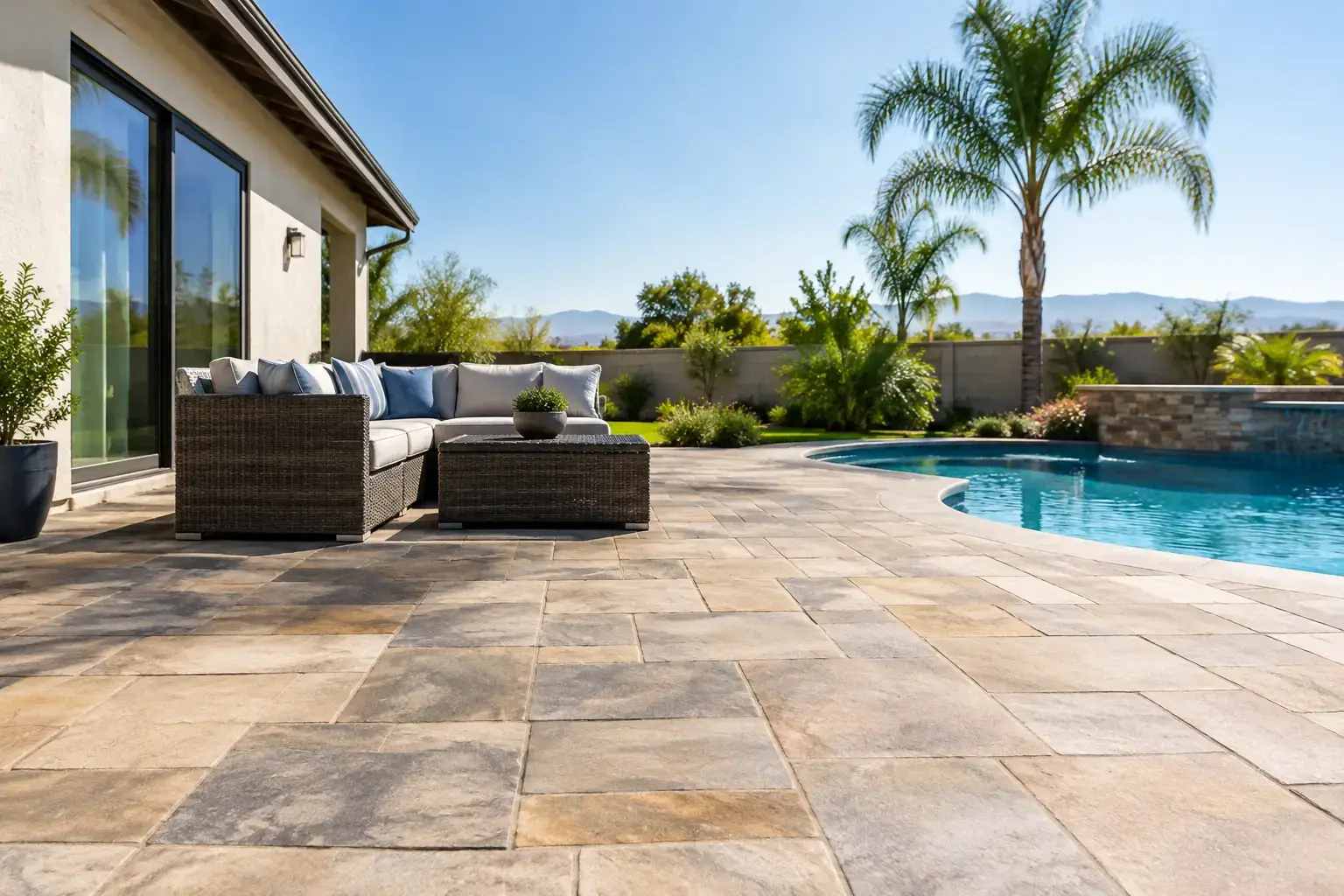
Stamped concrete is a popular choice for homeowners who want a more decorative patio without installing natural stone or individual pavers. The surface can be patterned to resemble slate, flagstone, brick, wood planks, cobblestone, and other high-end materials. Color hardeners, integral color, stains, and release colors can create depth that makes the pattern feel more natural.
This option works beautifully for entertaining patios, outdoor dining areas, front courtyards, and poolside spaces. It gives a property a custom-built appearance while keeping the surface continuous and easier to maintain than many segmented materials.
The trade-off is that stamped concrete requires careful workmanship. Pattern alignment, color application, joint placement, edge detail, and sealing all affect the final result. Poor installation can make a decorative surface look repetitive or artificial. A skilled concrete contractor plans the layout around the actual space, so the design feels intentional from every angle.
Exposed Aggregate for Texture and Grip
Exposed aggregate is another durable decorative concrete option. After placement, the top layer of cement paste is removed to reveal decorative stone within the concrete. The finished surface has natural texture and visual variation, making it a strong candidate for walkways, patios, and pool-adjacent areas.
Its texture can provide better grip than a smooth finish, but it may not be the most comfortable choice for bare feet in every setting. Stone selection also changes the final appearance and feel. This is where a contractor can help match the finish to the way the space will actually be used.
Smooth and Troweled Concrete: Use With Care
A smooth, hard-troweled finish can create a clean contemporary look, particularly beneath a covered patio where the surface stays dry. However, it is not always the right choice for exposed outdoor areas. When water is present, very smooth concrete can become slippery.
For an uncovered patio, a light texture is often the safer, more practical solution. The goal is not to make every surface rough. It is to select the right level of traction for the environment.
Patio Surface Design Should Start With Use, Not Color
Color and pattern are exciting decisions, but they should come after the functional plan. Before choosing a finish, consider where people will walk, where furniture will sit, and how water will move across the yard. A patio that looks impressive but leaves no room for a dining table, grill access, or natural traffic flow will not feel like a finished outdoor living space.
Think about the sun, too. Darker colors can absorb more heat, which may make a fully exposed patio less comfortable during Bakersfield summers. Lighter earth tones, sand colors, soft grays, and blended finishes often work well with local architecture and can feel more comfortable underfoot. Shade structures, umbrellas, landscaping, and patio covers can also make a major difference in how often you enjoy the space.
For larger patios, control joints should be part of the design rather than treated as an afterthought. Joints help manage natural concrete movement and can be placed to follow borders, pattern lines, or layout sections. Well-planned joint placement supports both performance and appearance.
Drainage and Preparation Matter More Than Most Homeowners Realize
A patio surface is only as reliable as the work underneath it. Proper grading should move water away from the home and keep it from collecting near doors, foundations, or low points in the yard. In some cases, drainage solutions or a revised patio layout may be needed before the pour begins.
The ground must be properly prepared and compacted for the specific project. Reinforcement, concrete thickness, and joint spacing should match the patio’s size and intended use. A standard residential sitting area does not have the same demands as a patio designed for heavy outdoor kitchens, masonry fireplaces, vehicles, or commercial foot traffic.
Cracks are a common concern with concrete, and honest contractors address that concern upfront. Concrete can crack as it cures and responds to soil movement, heat, and time. Proper preparation, reinforcement, curing, and control joints help manage cracking, but no contractor should promise that concrete will never crack. The right installation reduces risk and keeps the surface performing well for the long haul.
Maintenance That Protects Your Investment
Most concrete patios are low-maintenance, especially compared with surfaces that have many individual joints. Regular sweeping and occasional rinsing remove dirt, leaves, and debris. Spills from barbecue grease, oil, or food should be cleaned promptly to reduce the chance of stains.
Decorative concrete often benefits from resealing on a schedule based on sun exposure, traffic, and the type of sealer used. A quality sealer can help preserve color, improve stain resistance, and refresh the appearance of stamped or stained concrete. It is also wise to avoid harsh de-icing chemicals, even though they are rarely a major concern in Bakersfield.
When choosing a sealer for a pool deck or wet area, traction matters. Some sealers can be enhanced with an anti-slip additive so the patio maintains a polished appearance without becoming unnecessarily slick.
Choosing the Right Contractor for Patio Surfaces
A quality patio installation is not just a concrete pour. It is a coordinated process that includes consultation, design, site preparation, forming, reinforcement, placement, finishing, curing, and cleanup. The contractor should be able to explain what finish fits your goals, how drainage will be handled, and what the finished layout will look like before work starts.
Ask to see examples of similar work, especially if you are considering stamped concrete or a custom decorative finish. Look for clean edges, consistent texture, thoughtful joint placement, and designs that fit the surrounding property. Clear communication matters, too. You should know the scope of work, the estimated timeline, and what to expect as your patio takes shape.
National Concrete helps Bakersfield homeowners and commercial clients turn unused outdoor areas into durable, attractive concrete spaces with an easy, hassle-free process. Whether you want a clean broom finish or a detailed stamped design, the best result starts with a plan built around your property rather than a one-size-fits-all solution.
A well-built patio gives you a reason to step outside more often. Choose a surface that works hard in the Bakersfield heat, fits the style of your home, and lets your backyard feel like a place made for family, friends, and everyday enjoyment.