
Is Stamped Concrete Slippery? What Homeowners Should Know
July 21, 2026
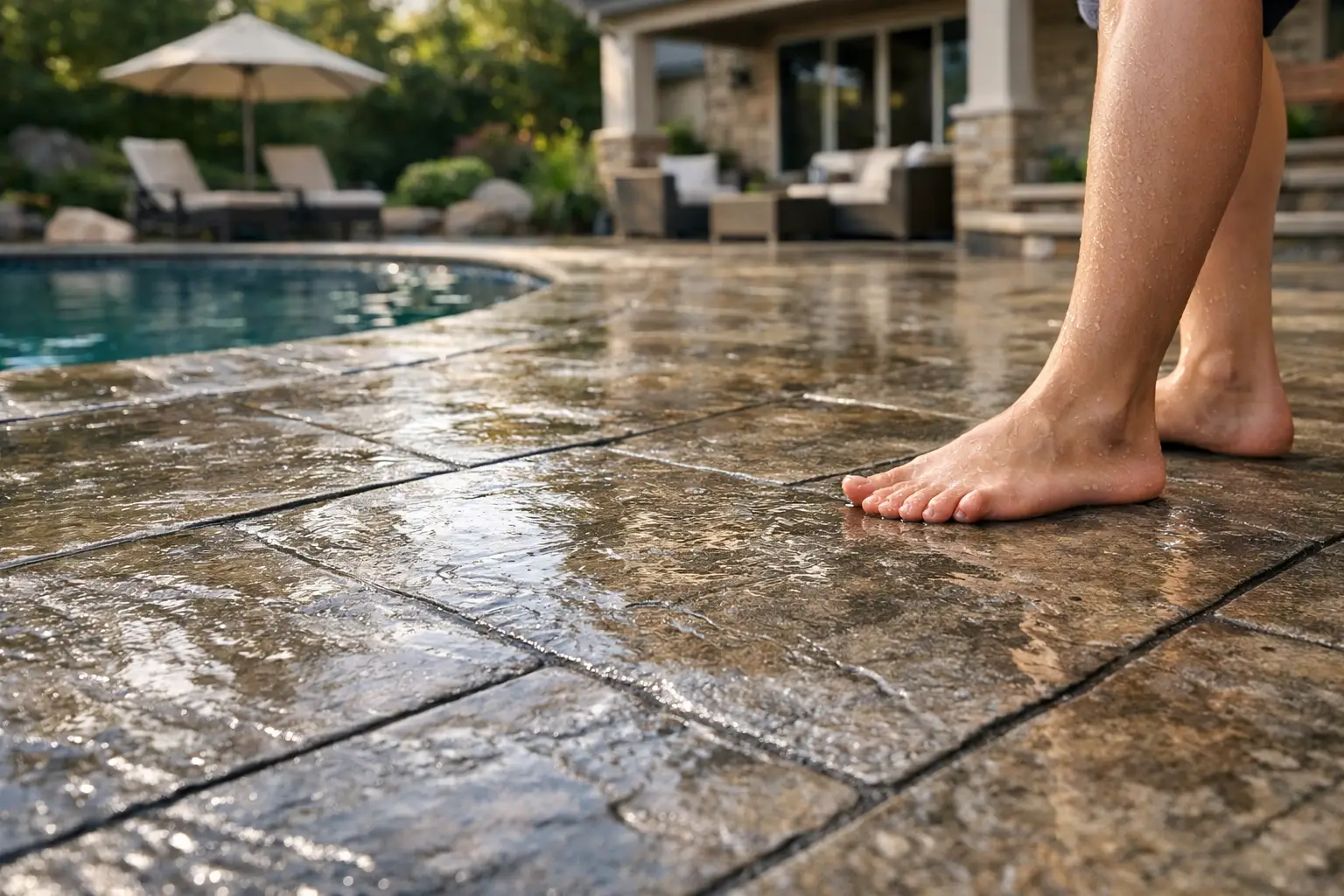
A stamped concrete patio can look like stone, brick, slate, or wood while delivering the strength and low-maintenance benefits of concrete. But homeowners often ask, is stamped concrete slippery when it gets wet? The honest answer is that it can be, but it does not have to be. The finish, texture, sealer, drainage, and maintenance all affect how much traction the surface provides.
For Bakersfield homeowners, this question matters most around pool decks, shaded walkways, entry paths, and patios exposed to irrigation overspray. A beautiful decorative surface should also feel comfortable and dependable underfoot. With the right design decisions before the pour, stamped concrete can be a practical, attractive option for outdoor living areas.
Is Stamped Concrete Slippery When Wet?
Stamped concrete is generally more slippery when wet than a heavily textured broom-finish concrete surface. That is especially true when the stamped pattern has shallow texture, the concrete is sealed with a glossy product, or water is allowed to sit on the slab.
Still, “stamped” does not automatically mean “slick.” Many stamped patterns create natural texture and grout lines that help break up the surface. A skilled contractor can also use a traction additive in the sealer, select a pattern with more pronounced relief, and plan the slope so water drains away instead of collecting where people walk.
Think of it this way: a smooth, shiny stamped patio designed to resemble polished stone will have different traction than a deeply textured slate pattern with a low-sheen sealer. The design choice matters just as much as the material itself.
What Makes a Stamped Concrete Surface Slippery?
Several conditions can reduce traction over time. Understanding them helps homeowners choose the right finish and maintain it properly.
A glossy or overly heavy sealer
Sealer protects decorative concrete from staining, weather exposure, and wear. It can also enrich the color and bring out the detail in a stamped pattern. But when a sealer is applied too heavily or has a high-gloss finish, it can create a smoother walking surface.
A satin or low-luster sealer often provides a more natural look and can be a better fit for patios, walkways, and pool areas. For locations that regularly get wet, a non-slip additive mixed into the sealer can improve grip without taking away from the finished appearance.
Smooth patterns and shallow texture
Some stamped concrete patterns are naturally more textured than others. Deep slate, rough stone, and certain wood-plank styles can offer more underfoot variation than patterns intended to imitate smooth flagstone or tile.
This does not mean every outdoor project needs the roughest possible pattern. A patio should still be easy to move furniture across and comfortable for bare feet. The goal is to match the texture to the space. A pool deck needs more traction than a covered decorative porch that rarely sees water.
Standing water and poor drainage
Water is often the biggest issue, not the stamped concrete itself. A properly installed patio or walkway needs the correct slope so rainwater, hose water, and irrigation runoff move away from the home and off the surface.
Low spots can make any concrete surface more hazardous. They also leave behind mineral deposits, dirt, and algae-friendly moisture. During project planning, drainage should be addressed as part of the installation, not treated as an afterthought.
Dirt, leaves, algae, and pool chemicals
Bakersfield’s dry climate does not eliminate slippery surface conditions. Windblown dust can mix with water from sprinklers, pool splashing, or washing and create a slick film. In shaded areas or places with frequent moisture, algae and mildew can develop as well.
Around pools, residues from sunscreen, body oils, and chemicals may also affect traction. Routine cleaning removes these films before they become a problem and keeps the stamped detail looking sharp.
How to Make Stamped Concrete Less Slippery
The best time to improve traction is before the concrete is installed. A professional contractor can recommend a stamped pattern, sealer, and layout based on how the space will actually be used.
For a pool deck, that may mean choosing a more textured pattern, using a low-sheen penetrating or acrylic sealer with a traction additive, and providing consistent drainage. For a front walkway, it may mean avoiding a highly polished appearance in favor of a finish that balances curb appeal with a secure walking surface.
If your stamped concrete is already installed and feels too slick, there are still practical options. The most common solution is to clean the surface thoroughly and reapply an appropriate sealer with a non-slip additive. This additive creates a subtle grit that helps improve traction without dramatically changing the color or pattern.
The right product and application method matter. Adding too much grit can make the surface harder to clean or uncomfortable on bare feet. Applying new sealer over dirt, failing sealer, or moisture can create appearance problems and may not solve the traction issue. It is usually worth having an experienced concrete professional evaluate the slab before moving forward.
Best Stamped Concrete Choices for Pool Decks and Patios
A stamped concrete pool deck can be a strong choice because it is durable, customizable, and easier to keep visually consistent than many individual pavers. It also gives homeowners room to choose colors and patterns that complement the home, landscaping, and pool design.
For the best balance of style and safety, prioritize texture over a mirror-like finish. Natural stone and slate-inspired patterns are popular because they add visual depth without needing an overly glossy sealer. Lighter colors can also be more comfortable underfoot during Bakersfield’s hot summers, since dark concrete surfaces tend to absorb more heat.
Pool decks deserve special attention because people are often barefoot and the surface is frequently wet. A traction-enhanced sealer, proper slope, and regular cleaning should be considered standard parts of the plan. If a family member has limited mobility, young children use the area, or the space sees heavy entertaining, discuss those needs early so the finish can be selected accordingly.
Maintenance That Helps Preserve Traction
Stamped concrete does not require complicated upkeep, but it should not be ignored. Sweep away dust, leaves, and debris regularly, especially in corners and along edges where moisture can collect. Rinse the surface as needed, and use a cleaner suited to decorative concrete when oils, sunscreen, or other residue builds up.
Avoid harsh acids and aggressive cleaning methods that can damage the sealer or dull the color hardener. Pressure washing can be helpful when done carefully, but excessive pressure at close range can wear down the protective finish.
Sealer also needs periodic attention. The timing depends on sun exposure, foot traffic, weather, product type, and how the area is used. If water no longer beads on the surface, the color looks faded, or the sealer appears worn in high-traffic areas, it may be time for maintenance. When resealing, choose a finish that supports the traction needs of the space rather than simply chasing the highest shine.
When Another Finish May Be a Better Fit
Stamped concrete is not the only option for every property. If maximum slip resistance is the top priority, a broom-finish concrete surface or a specialty textured overlay may be a better match. These finishes can be especially useful for commercial entryways, utility paths, ramps, or areas that receive constant moisture.
That said, decorative concrete does not have to be an all-or-nothing decision. A homeowner might use stamped concrete for the main patio and a more aggressively textured finish near a pool edge, outdoor shower, or side-yard walkway. Thoughtful transitions can provide the visual impact of stamped concrete where it matters while adding extra traction in the wettest areas.
National Concrete helps Bakersfield and Kern County property owners plan stamped concrete projects around real-life use, not just a photo. Whether you are building a pool deck, patio, walkway, or custom outdoor space, the right pattern, drainage plan, and sealer can make a major difference.
A stamped surface should look great on day one and still feel dependable after years of foot traffic, sun, irrigation, and weekend gatherings. Start with a design that respects how your family, guests, or customers will use the space, and you can enjoy the character of decorative concrete without overlooking safety.