
How to Test Soil Compaction Before Concrete
September 1, 2026
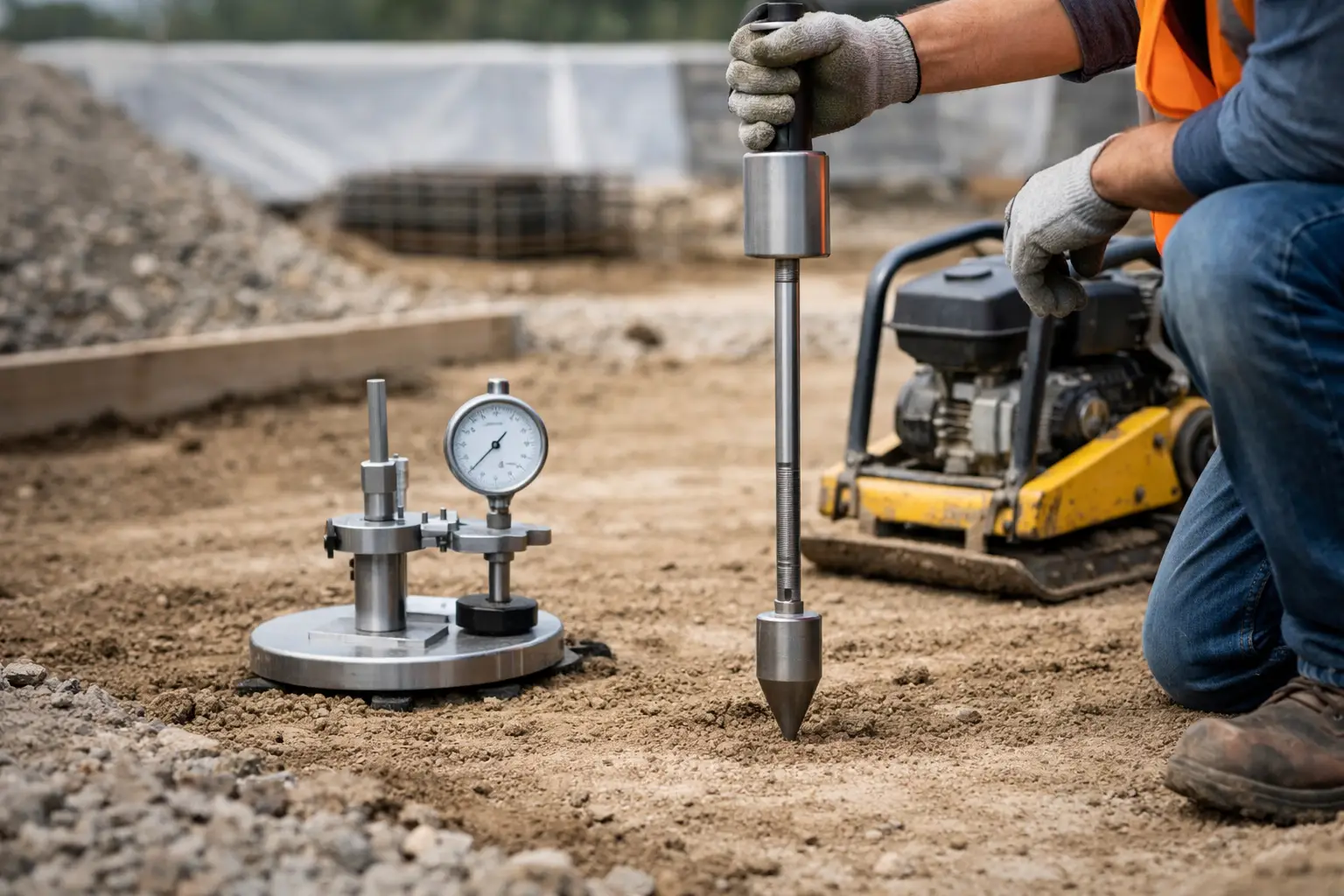
A concrete driveway can look perfect on pour day and still crack, settle, or develop low spots later if the ground beneath it was not properly prepared. Knowing how to test soil compaction helps homeowners, builders, and property managers catch a costly issue before concrete trucks arrive. In Bakersfield and across Kern County, dry soils, clay pockets, irrigation leaks, and previously disturbed fill can all affect how well a slab is supported.
Compaction is not just about making soil feel hard. It is about creating firm, uniform support at the right moisture level so the base below a driveway, patio, walkway, pool deck, or foundation does not move unevenly. A good test process combines a few practical site checks with professional verification when the project calls for it.
Why Soil Compaction Matters Before Concrete
Concrete is strong under compression, but it does not respond well to bending caused by unsupported areas. When loose soil settles beneath one section of a slab, the concrete bridges that weak spot. Over time, traffic loads, soil movement, and water can turn that stress into cracks, rocking sections, ponding water, or damaged edges.
The goal is not always to make every inch of soil as hard as possible. The goal is stable, consistent support. Over-compacting certain soils can create drainage concerns, while under-compacting fill leaves voids that can settle after the project is finished. The right preparation depends on the native soil, the planned concrete thickness, expected loads, drainage, and whether the area will carry passenger vehicles, delivery trucks, or only foot traffic.
For example, a backyard patio and a commercial loading area should not be evaluated the same way. A patio may need properly prepared subgrade and base rock, while a heavier-use driveway or foundation may require a more detailed soil report and compaction testing plan.
Start With a Site and Soil Review
Before testing, look at what is already happening on the site. Walk the area after irrigation or rain if possible. Soft spots, standing water, rutting, deep cracks in nearby pavement, and areas where sprinklers regularly oversaturate the ground deserve attention.
Ask whether the area was recently graded, excavated, or backfilled. Native undisturbed soil can behave differently from fill soil placed during construction. Fill may be perfectly suitable, but it must be installed in controlled layers and compacted as it is placed. Trying to compact a deep lift of loose dirt all at once usually leaves weak material below the surface.
Also identify utility trenches, old landscaping beds, tree roots, septic work, and removed structures. These disturbed zones often need extra excavation, moisture conditioning, and compaction before a slab goes over them.
Simple Field Checks Homeowners Can Use
A homeowner cannot confirm engineering-grade compaction with a visual inspection alone. Still, a few basic checks can reveal whether a site needs closer attention before concrete work begins.
Probe the Surface for Soft Areas
Push a long screwdriver, steel rod, or piece of rebar into the exposed soil at several points across the planned slab area. The tool should meet relatively consistent resistance. If it sinks easily in one location but stops quickly nearby, the subgrade may be uneven or contain a soft pocket.
This is a screening test, not a pass-or-fail result. Soil moisture, rock content, and the force used can change what you feel. Its value is in finding obvious differences that should be investigated.
Watch How the Ground Responds to Weight
Walk across the prepared area and look for footprints, pumping, or a spongy feel. If a loaded wheelbarrow, skid steer, or small piece of equipment leaves deep ruts in soil that is supposed to be ready for base material, more preparation is likely needed.
A firm surface should not visibly flex or push water upward under normal site traffic. Pumping is especially concerning because it suggests excess moisture and fine soil movement below the surface.
Check Moisture, Not Just Firmness
Very dry Bakersfield soil can seem hard at the surface while remaining loose below. On the other hand, soil that is too wet may compact poorly and later shrink as it dries. Contractors often adjust moisture before compaction because soil reaches its best density within a specific moisture range.
A simple hand test can offer a clue. Grab a small handful of soil and squeeze it. If it falls apart like dust, it may be too dry. If water squeezes out or the soil smears heavily, it may be too wet. The correct condition varies by soil type, so this is another indicator rather than a laboratory test.
How to Test Soil Compaction Professionally
For foundations, larger commercial projects, engineered slabs, or any site with questionable soils, professional testing provides the documentation and confidence that a field check cannot. A geotechnical engineer or qualified testing technician compares the soil’s in-place density with a target density established for that soil.
The target is commonly based on a laboratory Proctor test. This test identifies the soil’s maximum dry density and optimum moisture content under a defined compaction effort. Field results are then reported as a percentage of that maximum density. Many plans call for a specified percentage, often 90% or 95%, but the required number should come from the project plans, local requirements, or the engineer of record. There is no one percentage that fits every concrete project.
Common professional methods include:
- Nuclear density gauge testing, which provides quick readings of in-place density and moisture. It is widely used on prepared subgrade and aggregate base.
- Sand cone testing, which measures the volume of a small excavated hole and compares it with the removed soil’s density.
- Drive cylinder testing, which uses a known-volume cylinder to collect a soil sample. It can work in suitable soils but is less practical in rocky material.
- Proof rolling, where heavy equipment passes over the prepared area while trained observers watch for deflection, rutting, or pumping. This helps identify weak zones but does not replace density testing when documented results are required.
Professional testing is typically performed after the soil or base is compacted and before concrete placement. If a test fails, the area may need to be scarified, adjusted for moisture, recompacted, or removed and replaced. Retesting confirms the correction worked.
Prepare Soil in Lifts for Better Results
One of the most common compaction mistakes is placing too much material at once. Fill and aggregate base should generally be installed in manageable lifts, then compacted layer by layer with equipment appropriate for the material.
Granular base rock often responds well to vibratory plate compactors or rollers. Cohesive clay soils may require kneading action, moisture adjustment, or different equipment. The equipment that works best for crushed aggregate is not automatically the best choice for every native soil.
Uniformity matters as much as density. A driveway base that is solid at the edges but loose in the center can still lead to uneven performance. Grade the area correctly, compact it consistently, and protect it from irrigation, rain, and construction traffic before the pour.
When a Soil Test Is Worth the Extra Step
A professional compaction test is especially worthwhile when a project involves a foundation, retaining wall, commercial slab, vehicle traffic, imported fill, or a site with visible soil concerns. It is also smart when replacing a failed driveway or patio. If the old concrete cracked badly or settled, simply pouring a new slab over the same uncorrected base may repeat the problem.
For a straightforward residential patio on stable, undisturbed ground, an experienced concrete contractor may be able to evaluate the subgrade and recommend the right base preparation without formal testing. Even then, the contractor should explain what they see, what they plan to do, and why it fits the project.
Build Concrete on Ground You Can Trust
The best time to address weak soil is when it is still exposed and accessible. Once concrete is poured, correcting poor support becomes far more disruptive and expensive. A clear site evaluation, careful base preparation, and testing when conditions warrant it protect the investment you are making above ground.
If you are planning a driveway, patio, pool deck, foundation, or commercial concrete project in Bakersfield, National Concrete can help you assess the site and build a preparation plan that fits the job. Quality concrete starts well before the finish work, and a properly prepared base gives your new surface the support it deserves.