
How to Design Custom Stamped Concrete in Bakersfield
August 4, 2026
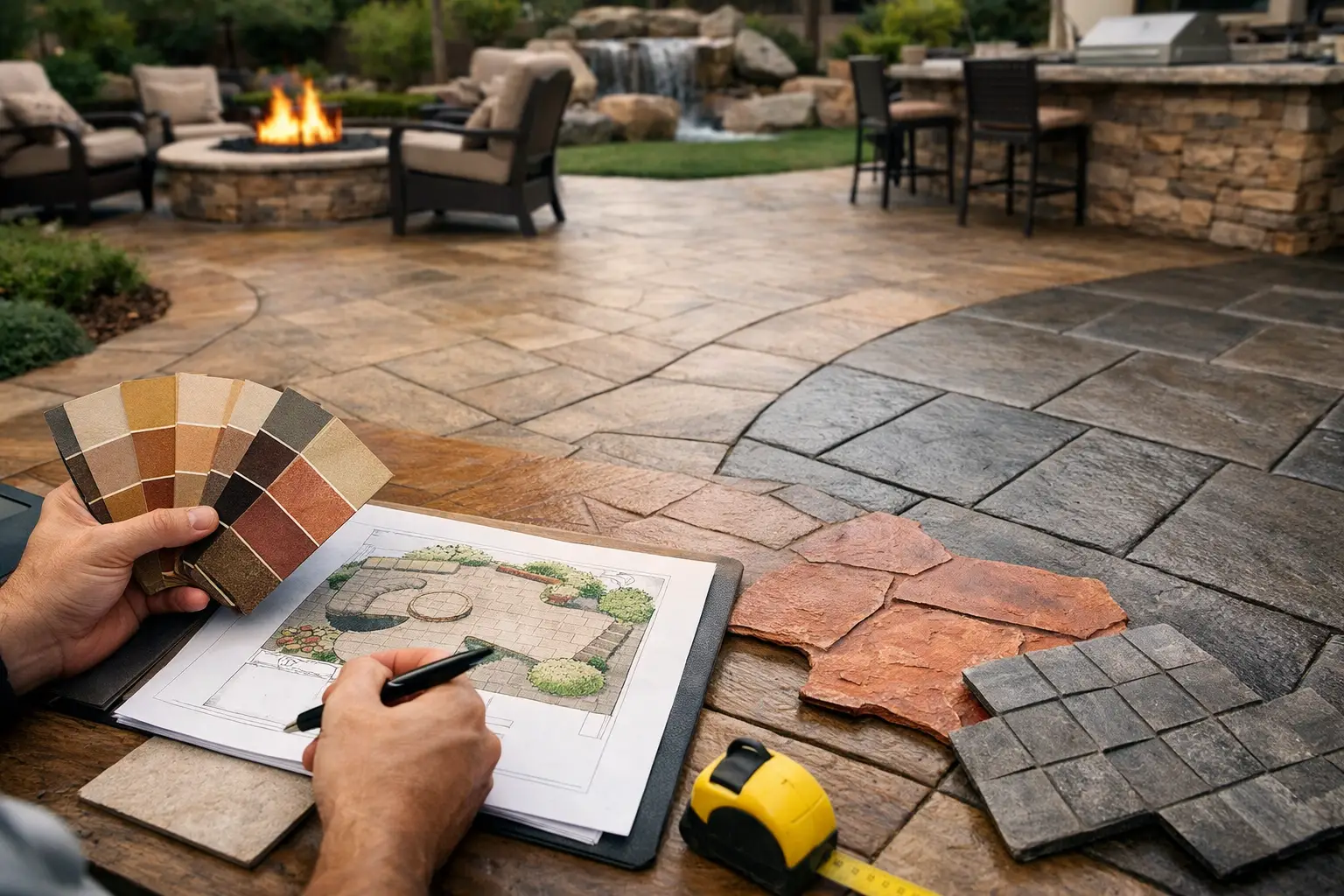
A stamped concrete project starts long before the crew pours a slab. The best results come from deciding how the space needs to work, then building a design around it. If you are learning how to design custom stamped concrete, begin with the daily use of your driveway, patio, walkway, or pool deck – not just the stamp pattern you saw online.
For Bakersfield property owners, that means planning for strong sun, summer heat, dust, foot traffic, vehicles, and the way water moves across the property. A custom finish should look like it belongs with your home or commercial site while still giving you a durable, manageable concrete surface.
Start With the Purpose of the Space
A beautiful patio that feels too small for a dining table is not a successful design. Neither is a decorative driveway that does not account for vehicle weight, turning patterns, or drainage. Before selecting colors or textures, define the job the concrete must do.
For a patio, think about furniture zones, grilling space, shade structures, door clearances, and the path from the house to the yard. A pool deck needs comfortable walking areas, safe transitions around steps, and a texture that supports better traction. Driveways and commercial entries need the right slab design, base preparation, reinforcement where appropriate, and control-joint planning to handle real-world use.
Custom stamped concrete gives you design flexibility, but the concrete still has to perform as concrete. That practical starting point helps prevent a design from becoming expensive without becoming more useful.
Choose a Pattern That Fits the Property
Stamped concrete can imitate natural stone, slate, brick, wood planks, tile, or more contemporary geometric textures. The right choice depends on the home’s architecture, the scale of the space, and how much movement you want in the finished surface.
A larger ashlar slate pattern often works well for broad patios and pool decks because it has enough scale to read clearly from a distance. Stone patterns can complement traditional homes, block walls, landscaping, and outdoor kitchens. Brick-style stamps are a smart fit when a property already has brick accents. Wood plank stamps can create a warmer look without using material that can rot, splinter, or require frequent replacement.
Pattern scale matters. A highly detailed, busy stamp can overwhelm a compact courtyard, while a small repeating pattern may get lost across a large driveway. It also helps to consider existing lines: roof tiles, siding, exterior stone, fencing, and pavers all influence whether a pattern feels coordinated or crowded.
Build a Color Plan for Bakersfield Sun
Color is where custom stamped concrete becomes personal, but it should also be a performance decision. Darker colors can look dramatic and help define a formal driveway or patio border. In direct Bakersfield sun, however, they usually absorb more heat. Lighter base colors can make a pool deck or uncovered patio more comfortable underfoot and often complement the area’s bright, dry landscape.
Most stamped concrete designs use a base color with a secondary release color or antiquing effect. The base color creates the main tone of the slab. The release color settles into low areas of the texture, helping the pattern look more like stone, brick, or weathered wood.
Instead of trying to match one small paint sample exactly, look at the full exterior palette. Consider the roof, stucco, trim, masonry, gates, and landscape materials. Warm tans, sand, soft gray, taupe, and earth tones tend to work especially well around Kern County homes because they are versatile and age gracefully. That does not mean every project needs to be neutral. A richer charcoal border or deeper brown accent can add contrast without making the whole space feel too dark.
Ask to see large color samples or completed examples in natural light when possible. Concrete color has variation by nature, and lighting changes throughout the day. That variation is part of the finished character, not a defect.
Design Borders, Bands, and Focal Areas
One of the most effective ways to make a stamped concrete surface look truly custom is to use a simple field pattern with intentional accents. Borders can frame a patio, define a driveway edge, echo the shape of a pool, or create a clean transition near landscaping.
A contrasting border does not need to be loud. It may use the same stamp pattern in a deeper color, a smooth concrete band, or a complementary texture. On larger areas, borders also help break up a wide expanse of concrete and give the design a more finished appearance.
For patios, focal areas can be built around a fire pit, outdoor kitchen, covered seating area, or dining space. For driveways, an entry panel or subtle center detail can add curb appeal without creating a surface that feels overdesigned. The goal is to guide the eye naturally. A good custom layout has a clear visual hierarchy rather than competing patterns everywhere.
Plan Joints and Drainage Early
Control joints are necessary in concrete. They help manage where cracking is most likely to occur as the slab cures and moves over time. They are not an afterthought, and they should be considered before the pattern layout is finalized.
An experienced contractor can place and detail joints to work with the design as much as possible. On some projects, joints can align with stamp lines, borders, or grout-style pattern lines. On others, their placement is driven by slab dimensions, structural needs, and drainage. The right answer depends on the site.
Drainage deserves the same attention. Patios, pool decks, walkways, and driveways should slope properly so water moves away from buildings and does not collect in low spots. Decorative concrete cannot make up for a poor drainage plan. If a yard has existing drainage challenges, they should be addressed before the pour, not after the stamped finish is complete.
Match the Finish to Foot Traffic and Safety
Stamped concrete is textured, but not every pattern provides the same level of traction. This is especially relevant around pools, outdoor steps, and commercial walkways. A smoother stamp may create a sleek look, while a more textured stone pattern can offer a more practical feel underfoot.
Sealer choice also affects appearance and traction. A gloss sealer can deepen color and create a richer, wet-look finish. A lower-sheen option may feel more natural and can be a better fit for large exterior areas. For pool decks and other walking surfaces, an appropriate traction additive can help improve slip resistance without taking away from the design.
There is always a trade-off. Heavy texture can collect more dirt and require more detailed cleaning, while very smooth finishes may need additional attention in wet areas. The best choice balances style, maintenance, and how people will use the surface.
Keep the Design Buildable
Custom does not have to mean complicated. In fact, the strongest stamped concrete designs usually use a limited palette, one primary texture, and a few well-planned details. That approach creates a polished result while keeping installation, future touch-ups, and maintenance more straightforward.
Be realistic about the condition of the site, too. Removing old concrete, correcting base issues, changing elevations, adding drains, or working around existing structures can affect the scope and budget. A clear on-site estimate should account for those details before work begins.
National Concrete helps Bakersfield homeowners and commercial clients turn ideas into practical stamped concrete plans with experienced craftsmanship and an easy, hassle-free process. The right contractor should explain what is possible, what needs to happen below the surface, and where a design decision may affect cost or long-term performance.
How to Maintain Your Custom Stamped Concrete Design
A properly installed stamped surface is durable, but it benefits from routine care. Sweep away dirt and leaves, rinse off debris, and clean spills before they set. Avoid harsh de-icing products and aggressive chemicals that can damage the surface or affect the sealer.
Resealing on an appropriate schedule helps protect color and maintain the finished appearance, especially on high-traffic driveways, sun-exposed patios, and pool areas. The timing depends on traffic, exposure, the existing sealer, and how the surface is maintained. If the finish starts to look dull, uneven, or less water-resistant, it may be time to have it evaluated.
The best design is one you will still appreciate after the furniture is in place, the landscaping grows in, and the space becomes part of everyday life. Start with function, choose details that fit the property, and let proven concrete craftsmanship carry the design from first sketch to finished surface.