
How to Budget Pool Deck Renovation Costs
September 7, 2026
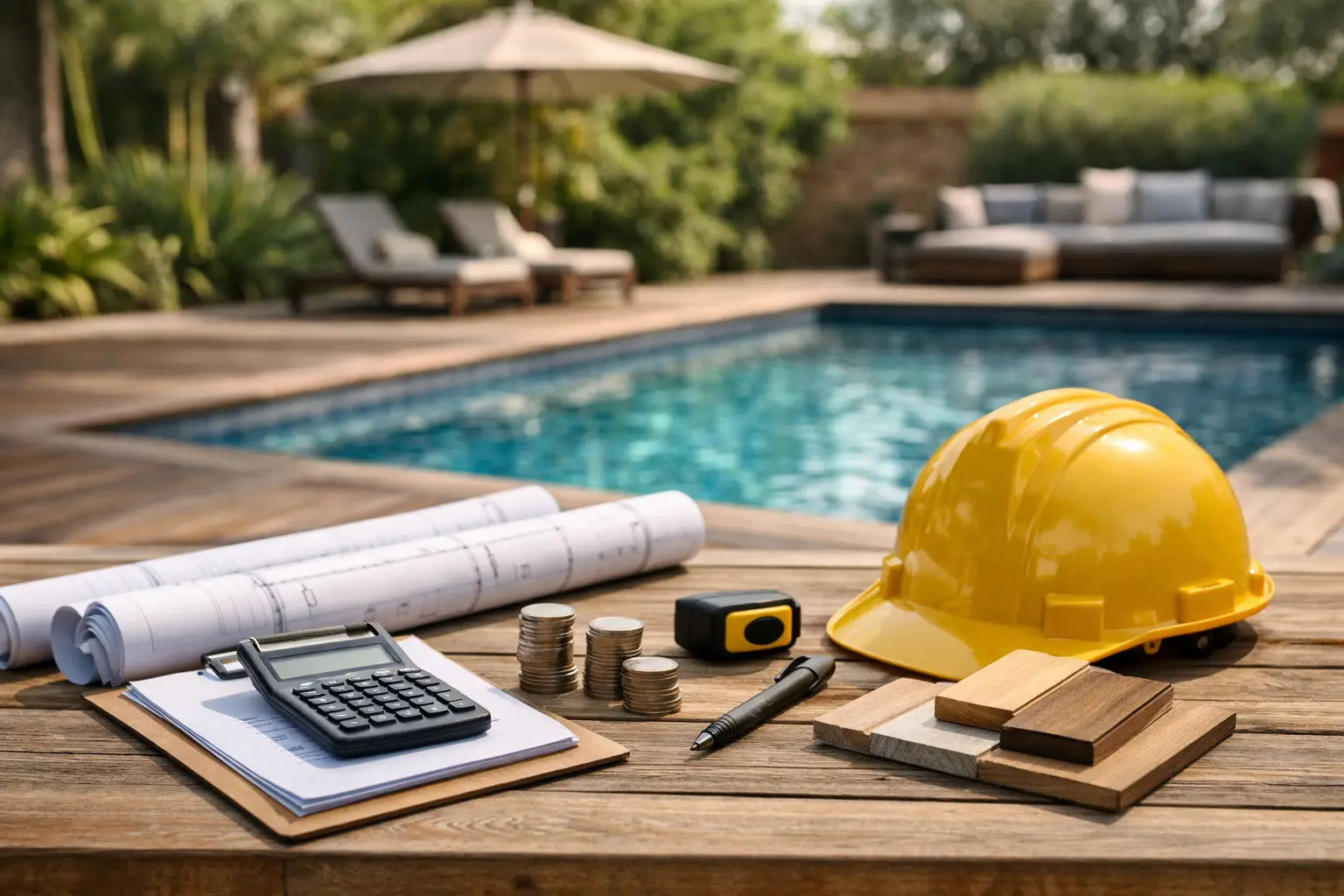
A pool deck can look like a simple slab until cracks spread, surface coatings peel, or water begins collecting near the pool edge. Learning how to budget pool deck renovation means looking beyond the finish you want and planning for the concrete work that makes that finish last. For Bakersfield property owners, the right budget accounts for heat, drainage, deck condition, safety, and the way your family or guests actually use the space.
A smart budget does not mean choosing the lowest initial number. It means setting priorities early, getting a clear scope of work, and reserving room for conditions that only become visible once an older surface is evaluated.
Start With the Condition of Your Existing Deck
Your current pool deck has the biggest influence on renovation cost. A deck with minor cosmetic wear may only need cleaning, repairs, and a new decorative surface. A deck with settling, wide cracks, drainage failures, or deteriorating concrete may need more substantial work before a new finish makes sense.
Start by walking the entire deck and noting where water stands after irrigation or a rinse-down. Look for uneven sections, cracking that changes elevation from one side to the other, loose material, peeling coatings, and areas where the concrete has pulled away from coping or adjacent structures. These are not just appearance issues. They can affect slip resistance, trip hazards, and the long-term performance of the renovation.
A contractor should help determine whether the deck can be repaired, resurfaced, overlaid, or replaced. Repairing and resurfacing can be a practical choice when the slab is structurally sound. If the base is moving or drainage is sending water where it should not go, covering the problem can lead to another renovation sooner than expected.
Build Your Budget Around the Scope, Not a Square-Foot Guess
Square footage matters, but it is only one part of the price. A small deck with complicated curves, several damaged areas, pool equipment obstacles, and detailed border work can require more labor than a larger, open rectangular deck.
For a useful preliminary budget, measure the deck area and then separate the project into the work required before the finish and the finish itself. Your estimate should identify demolition or surface preparation, crack and joint repair, leveling if needed, drainage adjustments, material selection, decorative details, sealing, and cleanup.
This approach keeps you from comparing two prices that appear similar but include very different scopes. One quote may cover a decorative overlay only, while another includes repairs, edge preparation, and a sealer designed for outdoor exposure. Ask what is included rather than assuming every contractor is pricing the same job.
Set Priorities Before Choosing a Decorative Finish
Pool deck renovations often involve a balance between appearance, comfort, traction, and cost. In Bakersfield, summer heat deserves special attention. A beautiful dark finish may absorb more heat than you want around bare feet, while a lighter color palette can help the deck feel more comfortable on hot days.
Basic broom-finished concrete or a straightforward resurfacing system may be the most budget-conscious option. Decorative concrete, such as stamped patterns, custom scoring, textured overlays, borders, and multi-color finishes, adds visual impact but also adds labor and material costs. That extra investment can be worthwhile if the pool area is a major entertaining space or needs to complement a custom patio, outdoor kitchen, or home exterior.
Do not treat traction as an optional upgrade. The deck is regularly exposed to water, sunscreen, and bare feet. A finish should be selected for its appearance and its practical slip resistance. Your contractor can explain which textures fit the intended design without creating a surface that is difficult to clean or uncomfortable to walk on.
Include the Costs Homeowners Commonly Miss
The most frustrating budget surprises are usually not decorative upgrades. They are site and repair items that were not discussed early enough. A well-planned pool deck budget should make room for the surrounding conditions, especially on an older property.
Consider these common cost factors when planning your renovation:
- Surface preparation and demolition: Removing failed coatings, loose concrete, old decking materials, or damaged sections takes time and affects how well the new surface bonds.
- Crack repair and leveling: Hairline cracks may be manageable, but wide, active, or uneven cracks can call for more extensive repair or replacement.
- Drainage corrections: Water should move away from the home and avoid pooling around the pool deck. Regrading, drains, and slope changes can add cost but protect the finished work.
- Pool coping and edges: Existing coping may need repairs, replacement, or careful integration with the new deck surface.
- Access and site conditions: Limited side-yard access, landscaping, gates, equipment, and nearby structures can affect labor and equipment needs.
- Permits or code requirements: Depending on the work, local requirements may apply to drainage, barriers, structural changes, or other site features.
Not every project needs every item on this list. That is exactly why an in-person evaluation is more valuable than a quick price based only on photos and square footage.
How to Budget Pool Deck Renovation in Phases
If your ideal design is larger than your current budget, phasing can be a sensible option. The key is to phase the project in a way that does not create rework later. For example, correcting drainage and repairing unstable concrete should come before a decorative surface, not after it.
A practical first phase might address structural repairs, trip hazards, and water management. A later phase could add decorative borders, extensions, seating areas, or a coordinating patio. This can spread costs out while allowing the essential work to be completed correctly.
There are trade-offs. Completing the entire deck at once can be more efficient because setup, material delivery, and labor are consolidated. Phasing may cost more overall, and matching colors or textures later can be more difficult. If you are considering a phased plan, ask the contractor how the first phase should be designed to support the next one.
Keep a Contingency Fund Without Overthinking It
Older concrete projects sometimes reveal hidden issues after surface preparation begins. A coating can conceal more cracks than expected. A low area may be more extensive than it first appears. Irrigation or drainage problems may become clearer when the existing surface is removed.
A reasonable contingency gives you flexibility without forcing you to cut corners. Many property owners reserve roughly 10% to 15% of the planned project cost for approved changes or unexpected repairs. The exact amount depends on the age and visible condition of the deck. A newer deck with cosmetic wear may need less cushion than a decades-old deck with multiple signs of movement.
This fund should not be an excuse for vague pricing. Your written estimate should still clearly state the base scope. The contingency is for conditions that could not reasonably be confirmed beforehand, and any changes should be discussed before additional work moves forward.
Compare Estimates for Clarity and Craftsmanship
When reviewing bids, look for more than the total. A detailed estimate helps you understand the sequence of work, the finish being installed, and who is responsible for preparation, protection, and cleanup. It also makes it easier to compare contractors fairly.
Ask about the condition of the existing slab, proposed repair methods, drainage plan, finish texture, color options, and sealing recommendations. If you are choosing stamped or decorative concrete, request clarity on pattern layout, borders, control joints, and how the final design will work with existing pool coping and landscaping.
The lowest price can be appealing, but a pool deck is not a place to gamble on incomplete preparation. Quality concrete work depends on the work below the visible finish. Proper site evaluation, experienced installation, and straightforward communication protect your investment long after the project is complete.
Plan for the Cost of Long-Term Care
Your budget should also recognize that a renovated deck needs maintenance. Cleaning the surface, keeping joints in good condition, addressing small cracks promptly, and resealing when appropriate can preserve color and help protect the concrete from pool chemicals, weather, and regular foot traffic.
Maintenance needs vary by finish. Textured and stamped surfaces may require different cleaning practices than a standard broom finish. Before work begins, ask for clear care recommendations so you know what ownership will look like after installation.
A pool deck renovation should make your backyard safer, more comfortable, and more inviting without creating financial guesswork. For Bakersfield homeowners who want a clear plan and craftsmanship built for local conditions, National Concrete can provide a detailed, no-pressure estimate that puts the right work first and the finishing details in their proper place.