
Decorative Driveway Transformation Examples
September 9, 2026
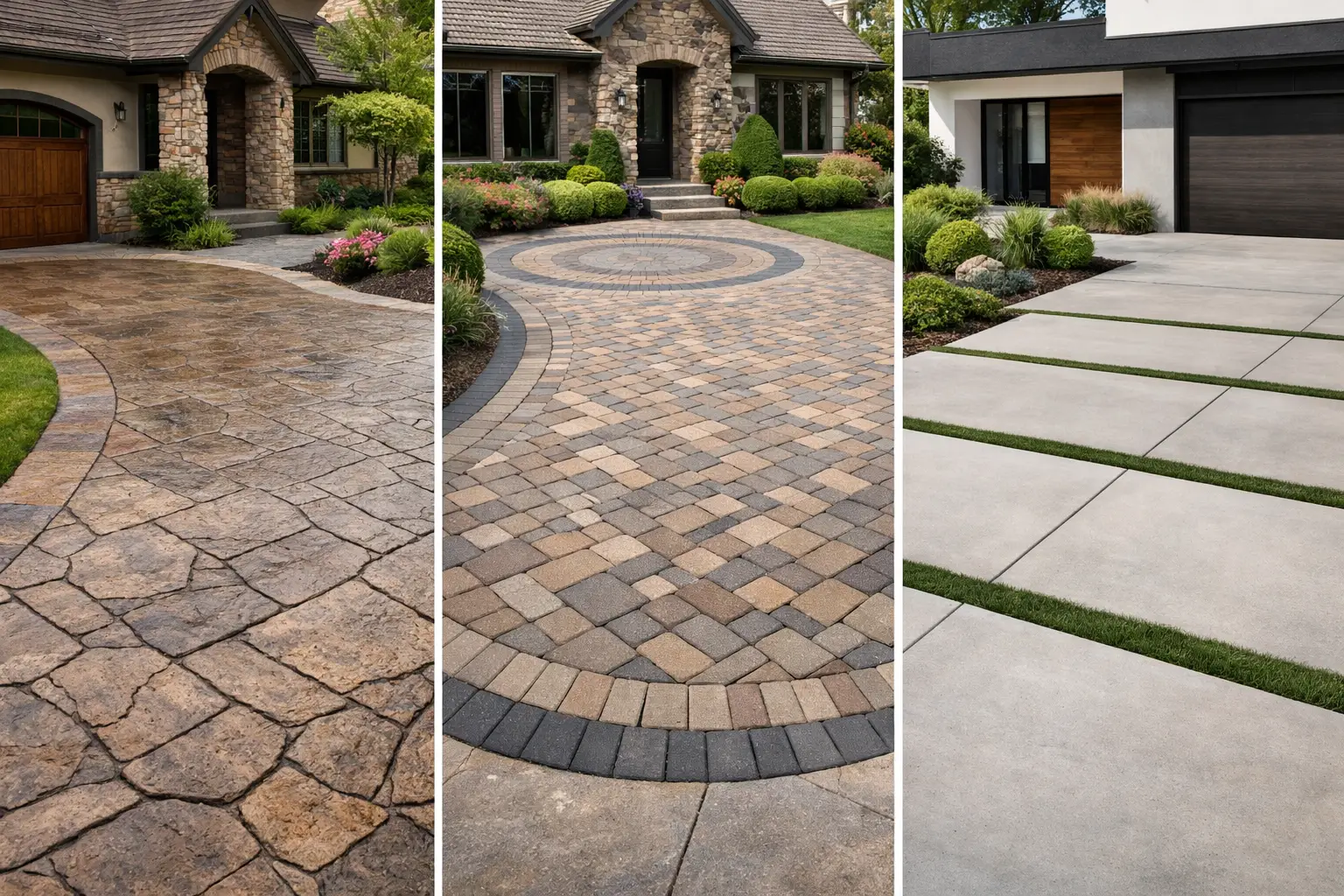
A driveway can take up more visual space than the front lawn, yet many homes still treat it as an afterthought. The best decorative driveway transformation examples show what happens when that large concrete surface is designed as part of the property instead of simply poured for parking. With the right finish, color, pattern, and layout, a driveway can sharpen curb appeal while still handling the daily demands of vehicles, heat, and foot traffic.
For Bakersfield homeowners, the goal is not decoration for decoration’s sake. It is a driveway that looks intentional, complements the home, and holds up through long, sunny summers. Here are practical ways a plain driveway can become a stronger first impression.
Decorative Driveway Transformation Examples That Work
1. Plain gray concrete with a stamped stone pattern
A stamped concrete driveway is one of the clearest transformations because it changes the surface character without giving up the strength of concrete. Patterns can resemble slate, flagstone, cobblestone, brick, or natural stone. A home with a traditional exterior may look right with a cobblestone-style pattern, while a ranch or Mediterranean-inspired home often pairs well with stone textures and warm earth tones.
This approach works especially well on large driveways, where a plain slab can feel flat and unfinished. The pattern breaks up the expanse and gives the entry more dimension. Color hardener and release color can add variation so the finish does not look like one solid painted shade.
The trade-off is detail. More pattern changes, hand work, and coloring typically mean a higher project cost than a standard broom finish. A quality installation also matters greatly. Proper prep, consistent stamping, clean joints, and careful sealing are what make the finished surface look convincing rather than overly repetitive.
2. A clean field with a contrasting decorative border
Not every driveway needs a full stamped pattern. One of the most effective decorative driveway transformation examples is a simple concrete field framed by a contrasting border. The main driveway may have a light gray or sand-colored finish, while the border is stamped and colored to resemble brick, pavers, or stone.
This creates a polished, custom look without covering the entire area in pattern. It can visually widen a narrow driveway, define the parking zone, and tie the driveway to porch columns, exterior brick, or landscaping walls. Borders are also a smart option for homeowners who want visual impact while keeping the design more restrained.
The key is proportion. A border that is too narrow may disappear from the street, while one that is too wide can crowd a smaller driveway. The home’s architecture, driveway width, and approach from the sidewalk all help determine the right layout.
3. Modern saw-cut panels with subtle color
For contemporary homes, clean geometry often makes a stronger statement than a heavy texture. A smooth or lightly textured concrete driveway can be divided into large rectangular panels using saw-cut control joints. Adding a charcoal, taupe, or warm gray integral color can give the surface a refined, architectural look.
This style complements modern stucco homes, black-framed windows, horizontal fencing, and minimalist landscaping. It also hides the visual randomness of a large uninterrupted slab by giving the driveway a deliberate grid.
A homeowner should understand that control joints are functional as well as decorative. Concrete naturally shrinks as it cures, and joints help guide where cracking is most likely to occur. A thoughtful layout can turn a necessary part of the installation into a design feature. It cannot guarantee that concrete will never crack, but it improves both performance and appearance.
4. Exposed aggregate for texture and natural color
Exposed aggregate is a strong choice for owners who prefer a natural finish with real texture. Once the top layer of cement paste is removed, the decorative stone beneath becomes visible. Depending on the selected aggregate, the finished driveway can feature warm tan, gray, brown, or mixed river-rock tones.
This finish is especially appealing around homes with drought-tolerant landscaping, natural stone accents, or a more casual California style. It offers traction underfoot and has visual depth that a standard finish does not provide.
However, exposed aggregate is not the right answer for every property. Its texture can be harder on bare feet and may be less appealing to someone who wants a sleek, smooth entry. It also takes careful finishing and washing to expose the aggregate evenly. When installed correctly, though, it creates a driveway that feels durable, grounded, and distinctly different from the typical gray slab.
5. A driveway and walkway designed as one entry
A driveway transformation is often more successful when the walkway is included in the plan. Matching or coordinating finishes between the driveway, front path, porch, and entry landing creates continuity from curb to front door. The result feels planned, not pieced together over time.
For example, a broom-finished driveway with stamped bands can connect to a stamped front walkway in the same color family. A decorative border can turn toward the porch, creating a visual path for visitors. Even a modest home gains presence when the entrance has a clear, unified design.
This option is particularly useful when an existing walkway is cracked, narrow, or visually disconnected from the driveway. Coordinating both areas can also make practical improvements easier, such as widening the path, improving transitions, or correcting drainage around the entry.
Choosing a Design for Bakersfield Conditions
Looks matter, but a decorative driveway needs to be built for the site. Bakersfield heat, soil conditions, vehicle weight, irrigation overspray, and drainage all affect long-term performance. The right design begins below the visible surface with proper grading, base preparation, reinforcement where appropriate, and a concrete thickness suited to the expected use.
Color selection deserves some practical thought as well. Darker colors can look dramatic, but they absorb more heat and may show dust more quickly in a dry climate. Lighter tans, soft grays, and variegated earth tones often stay visually comfortable and work well with many local exterior styles. A contractor can also help compare color samples against the home’s stucco, roof, brick, and landscape materials before the pour.
Keep in mind that decorative concrete is not maintenance-free. Periodic cleaning helps prevent dirt buildup and stains. Resealing on an appropriate schedule helps preserve color, improve stain resistance, and protect the decorative finish. The exact schedule depends on traffic, sun exposure, the type of sealer used, and how the driveway is maintained.
When a Full Replacement Makes More Sense
Some existing driveways can be refreshed with resurfacing or decorative overlays, but not every slab is a good candidate. If the concrete has widespread cracking, major settlement, drainage problems, failing edges, or sections that move independently, a new driveway is often the better investment.
An overlay follows the condition of the slab below it. If the base problem is still active, the new decorative surface may eventually reflect those issues. Replacement gives the project a fresh start: the old concrete can be removed, the base can be evaluated, drainage can be addressed, and the new layout can be designed around how the property is actually used.
That may mean widening a tight approach, adding a turnaround area, creating room for recreational vehicles, or improving the connection to a garage and walkway. Decorative details work best when the driveway is functional first.
Start With the View From the Street
Before choosing a stamp pattern or color, stand at the curb and look at the home as a visitor would. Notice where the eye lands, how the driveway relates to the front door, and whether the finish should quietly support the architecture or become a focal point. Bring photos of designs you like, but remain open to adjustments based on your home’s scale and the condition of the existing concrete.
National Concrete helps Bakersfield and Kern County property owners turn those ideas into practical, well-built concrete installations. A clear estimate and a design conversation early in the process can prevent costly changes later. The most rewarding driveway is not the one with the busiest pattern – it is the one that makes coming home feel better every time you pull in.