
Concrete Wall Options for Bakersfield Properties
September 13, 2026
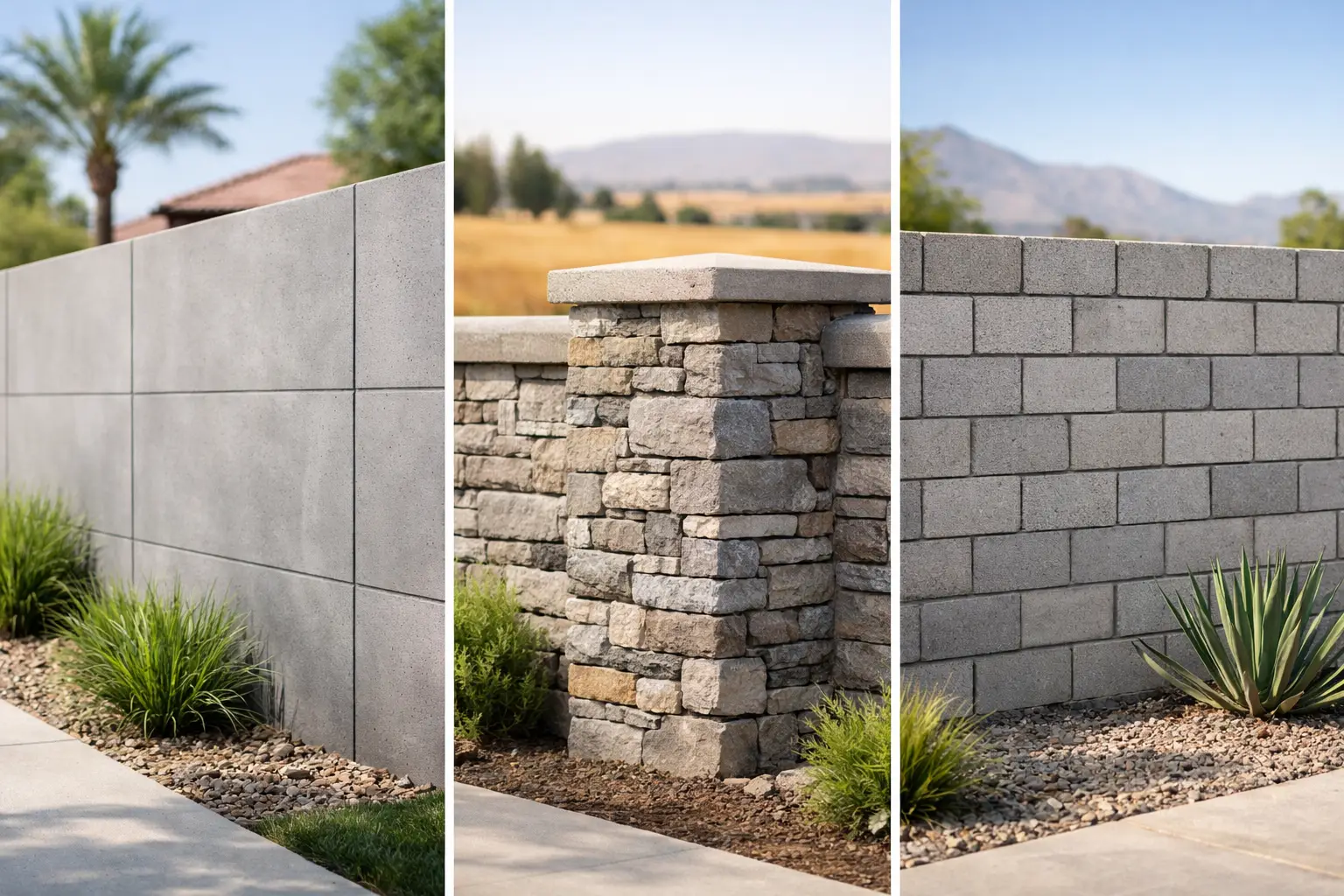
A wall has to do more than mark a property line in Bakersfield. It may need to hold back a slope, provide privacy from a neighboring yard, protect a commercial site, or create a finished backdrop for a patio and pool area. The right concrete wall options depend on what the wall must support, how it will look from both sides, and how it will handle Kern County heat, irrigation, and soil conditions over time.
Concrete is a strong choice because it can be built for function without looking purely industrial. From clean block walls to engineered retaining walls and custom decorative finishes, a well-planned installation adds lasting value while reducing the maintenance that comes with many wood or lightweight fence materials.
Concrete Wall Options That Fit the Job
Not every concrete wall is built the same way. Choosing a wall based only on appearance can lead to unnecessary costs or, worse, a wall that is not designed for the pressure it will face. The purpose of the wall should lead the decision.
Concrete Block Walls
Concrete masonry unit, or CMU, walls are the familiar block walls found around homes, apartment buildings, and commercial properties throughout Bakersfield. They are a practical option for privacy walls, boundary walls, garden enclosures, trash enclosures, and security perimeters.
Block walls are assembled in courses, reinforced with steel where required, and filled with grout in designated cells for added strength. They can be left with a clean masonry appearance, finished with smooth stucco, textured coating, paint, or decorative caps. This flexibility makes them a reliable fit when you want a wall that performs well and complements the rest of the property.
For a typical residential side or rear yard, a block wall often provides the privacy, permanence, and fire resistance homeowners want. For commercial properties, it can create a durable enclosure that stands up to frequent use and presents a more professional appearance than a temporary fence.
Poured Concrete Walls
Poured concrete walls are formed on site and installed as a continuous solid structure. This option is commonly used for foundations, basement or below-grade walls, structural site elements, and retaining applications where engineering calls for a monolithic wall.
The main advantage is strength and continuity. A properly reinforced poured wall can handle substantial loads and can be shaped to suit a custom layout. It is also a smart choice where a smooth, modern finish is part of the design goal.
That said, poured walls are not automatically the best answer for every property line or landscape wall. Formwork, reinforcement, access, and site preparation can make them more involved than a standard block wall. The best choice comes down to the wall’s height, purpose, soil conditions, and desired finish.
Retaining Walls
A retaining wall has a specific job: it holds back soil at different elevations. It may support a sloped backyard, create level space for a patio, protect a driveway, or stabilize an area near a commercial building. Because soil becomes heavy when wet and places constant lateral pressure on a wall, retaining walls require more planning than decorative landscape borders.
A quality concrete retaining wall needs the right footing, reinforcement, drainage, and backfill. Water management matters as much as the wall itself. Without drainage behind the wall, hydrostatic pressure can build up and cause cracking, leaning, or failure over time.
Retaining wall design is especially important for taller walls, walls near structures, or projects with significant grade changes. These situations may require engineering and permits. A professional contractor can evaluate the site before recommending whether reinforced block, poured concrete, or another engineered system is appropriate.
Decorative Concrete and Finished Walls
A wall can be structurally sound and still feel like an afterthought if its finish does not match the property. Decorative concrete details help turn a basic boundary or landscape feature into part of the overall design.
Homeowners may choose stucco finishes, integral color, paint, stone veneer accents, decorative caps, pilasters, or custom openings. A finished block wall can coordinate with a stamped concrete patio, pool deck, driveway, or walkway for a more intentional outdoor space. On commercial properties, a clean architectural finish can improve curb appeal around entrances, parking areas, and outdoor gathering spaces.
Decorative features should be planned early. Adding caps, columns, lighting conduits, gates, or planters after construction can be more difficult and more expensive than incorporating them into the original design.
How to Choose Between Concrete Wall Options
Start with the reason you need the wall. A six-foot privacy wall between homes is very different from a retaining wall supporting a raised yard. A commercial screen wall may need gate access, security features, and a finish that meets property standards. Getting clear on the wall’s primary role helps avoid overbuilding or underbuilding.
Next, consider height and loads. Taller walls require more reinforcement and deeper footings. A wall that supports soil, a driveway, a slope, or nearby improvements carries loads that a simple freestanding property-line wall does not. Local requirements can also affect setbacks, maximum height, permits, and engineering needs.
Access matters, too. Narrow side yards, existing landscaping, utility locations, and nearby structures influence how materials and equipment reach the work area. An experienced concrete contractor plans for these practical conditions before construction begins, not after demolition or excavation is underway.
Finally, think about the view. If the wall is visible from a patio, pool deck, front yard, or business entrance, its texture, color, cap style, and layout deserve attention. Concrete offers a wide range of design possibilities, but those details should support the property rather than compete with it.
Bakersfield Conditions That Affect Wall Performance
Bakersfield’s long, dry summers can be hard on exterior materials, while irrigation, occasional heavy rain, and changing soil moisture still affect wall foundations and drainage. Concrete itself is durable, but good performance depends on preparation below the finished surface.
Proper excavation and compacted base material help create a stable starting point. Reinforcement helps the wall resist movement and cracking. Control joints, where appropriate, give concrete planned locations for minor movement. For retaining walls, gravel backfill and drainage components direct water away from the structure instead of allowing it to collect behind it.
Tree roots and irrigation lines also deserve attention. Roots can shift soil and press against walls, while poorly aimed sprinklers can leave constant moisture along the base. A well-designed wall accounts for both the current landscape and how the property will be used in the years ahead.
What a Professional Wall Installation Should Include
A dependable project begins with a site review, clear measurements, and a discussion about the wall’s purpose. From there, the scope should identify demolition or removal needs, excavation, footing depth, reinforcement, drainage, finish details, and cleanup expectations.
For structural or retaining work, the contractor should not treat reinforcement and drainage as optional upgrades. They are core parts of building a wall that lasts. The same is true for checking local permit requirements and coordinating engineering when the project calls for it.
Communication is equally valuable. Property owners should know where the wall will sit, how access will be handled, what portions of the yard or site will be affected, and what the finished product will look like. An easy, hassle-free process does not mean cutting corners. It means the work is organized, expectations are clear, and craftsmanship stays consistent from the footing to the final finish.
The best concrete wall is the one designed around your property instead of forced into a one-size-fits-all plan. Whether you need a clean block privacy wall, a custom landscape feature, or an engineered retaining solution, National Concrete can help Bakersfield and Kern County property owners start with a straightforward estimate and a wall built to serve its purpose for years.