
Concrete Sidewalks That Last in Bakersfield
August 16, 2026
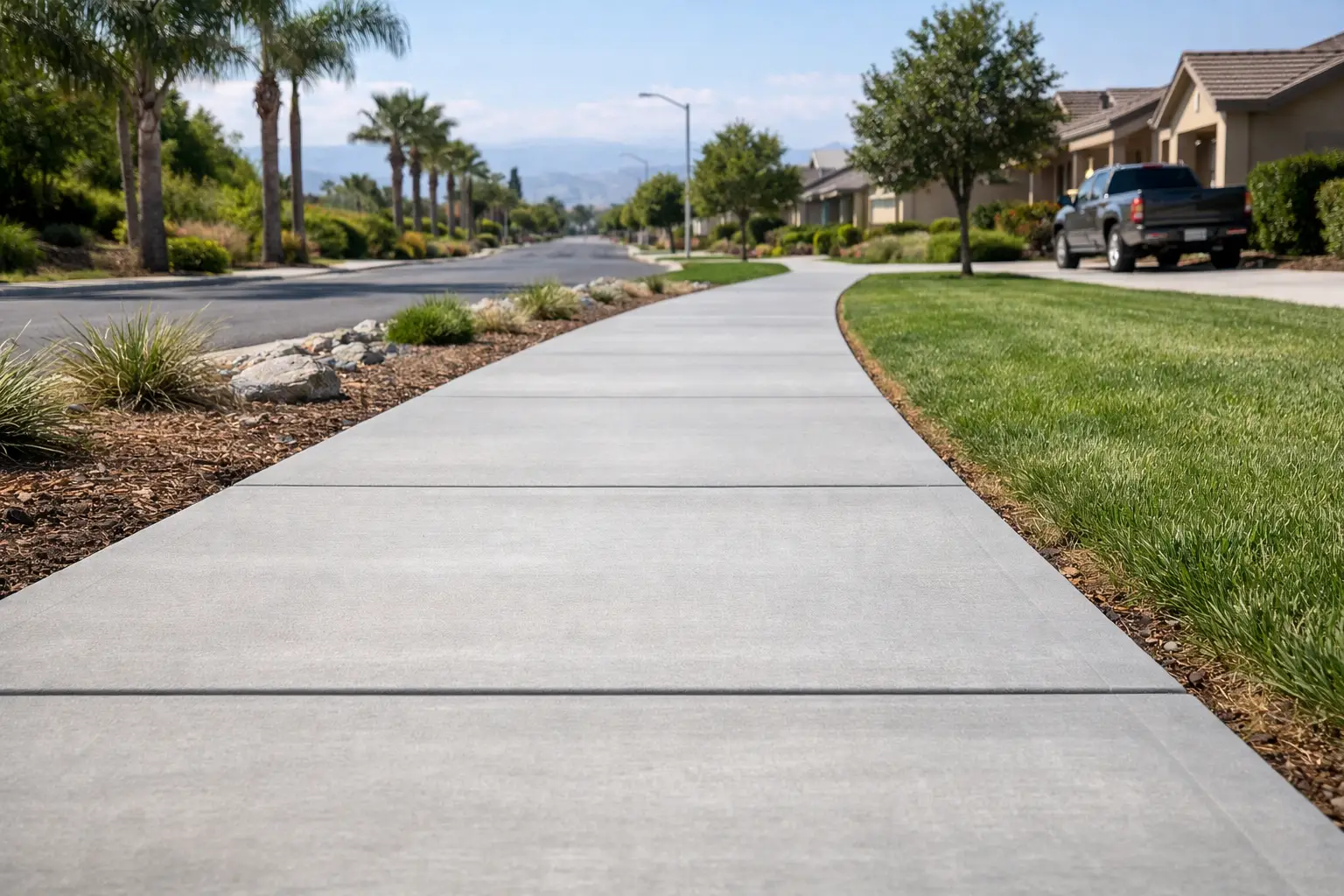
A sidewalk should do more than get people from the curb to the front door. It should feel solid underfoot, drain properly after a storm, complement the property, and stand up to Bakersfield heat for years. Well-planned concrete sidewalks deliver all of that, but the result depends on more than pouring gray material into a narrow strip.
For homeowners, a new walkway can clean up a worn entry, connect a patio to a gate, or make the yard easier to use every day. For commercial properties, sidewalks help create safer, more accessible routes for customers, tenants, and employees. The right concrete installation is a practical improvement that also makes a strong first impression.
What Makes a Concrete Sidewalk Last?
Long-lasting work begins below the surface. Concrete is strong, but it needs a stable, properly prepared base. Loose soil, poor compaction, or an uneven subgrade can allow sections to settle, crack, or hold water. That is why site preparation deserves the same attention as the visible finish.
A qualified contractor evaluates the existing ground, removes unsuitable material when needed, establishes the correct elevation, and compacts the base before concrete is placed. The slab thickness and reinforcement approach should fit the application. A simple residential path does not have the same demands as a busy commercial walkway or an area that may see maintenance equipment.
Control joints are another essential detail. Concrete naturally moves slightly as it cures and responds to temperature changes. Properly placed joints give that movement a planned location, helping reduce random cracking across the finished surface. Joints do not guarantee a crack-free slab forever, but they are a sign that the installation was designed with real-world conditions in mind.
Bakersfield Heat, Drainage, and Surface Finish
Kern County weather puts concrete to work. Summer heat can speed up the curing process, which means timing, moisture management, and finishing technique matter. If concrete is rushed or allowed to dry too quickly, the surface may be more vulnerable to cosmetic issues and premature wear.
Drainage matters just as much. Sidewalks need enough slope to move water away from the home, building, and low spots in the landscape. The slope must be deliberate, not dramatic. A walkway that sheds water effectively should still feel comfortable and safe to walk on.
For most exterior applications, a broom finish is a smart choice. It provides light texture for better traction without making the path difficult to sweep or uncomfortable underfoot. A smooth finish can look clean, but it may become slick when wet. Decorative finishes, colors, borders, and stamped patterns can also work beautifully when appearance is a priority, especially around gardens, patios, pool areas, and prominent entrances.
The best finish depends on where the sidewalk sits and how people will use it. A front entry may call for a crisp decorative edge, while a side-yard access path may be better served by a straightforward, durable broom finish.
Planning Concrete Sidewalks for How You Use Your Property
Before choosing a width or finish, think about the daily path people actually take. Many sidewalks fail to feel useful because they follow a property line instead of the way residents, guests, or customers move through the space.
A front walk should provide a natural route from the driveway or street to the entry. A backyard walkway may need to connect a patio, pool deck, outdoor kitchen, storage area, or detached structure. On commercial sites, the route should support access needs while working with parking areas, landscape zones, curbs, entrances, and existing utilities.
Width is a key decision. A narrow path can be suitable for light side-yard access, but a main entry walkway should feel welcoming rather than restrictive. Wider sidewalks are more comfortable for two people walking together, moving yard equipment, or accommodating mobility needs. The right dimension depends on the layout, local requirements, and the purpose of the path.
It also helps to decide early whether the sidewalk should be a simple straight run or part of a larger concrete plan. Coordinating a new walkway with a driveway extension, patio, curbing, or front entry landing can create a more intentional look and avoid mismatched elevations later.
When Replacement Is Better Than Repair
Small cracks do not always mean a sidewalk needs to be replaced. Concrete can develop minor hairline cracks over time, and isolated surface blemishes may be repairable. The bigger question is whether the slab is still stable, safe, and draining as it should.
Replacement is often the stronger long-term option when sections have settled, edges are crumbling, multiple cracks have widened, or the walkway creates a trip hazard. Patching a slab with ongoing soil movement may improve its appearance temporarily, but it does not correct the cause beneath it.
Tree roots are another common consideration. Roots can lift concrete panels and create uneven transitions. The right solution varies by site. It may involve selective removal and replacement, root management coordinated with a landscape professional, or a revised route that protects both the walkway and the tree where possible.
A dependable contractor should explain whether repair makes sense, what replacement involves, and where the trade-offs are. Clear recommendations help property owners spend wisely instead of putting money into a short-lived fix.
The Installation Details That Protect Your Investment
The visible slab is only one part of a quality sidewalk project. Good installation includes careful layout, grade planning, edge forms, base preparation, joint placement, finishing, and curing. Details at transitions also matter. A new sidewalk should meet adjacent concrete, gates, landscaping, and entry areas cleanly, without awkward lips or drainage traps.
For a polished result, contractors also need to protect the surrounding property during construction. That includes planning access for equipment, managing demolition debris if an old walkway is being removed, and keeping the work area organized. A smooth customer experience is not separate from craftsmanship. It is part of the job.
At National Concrete, sidewalk projects are approached with the same care given to larger driveways, patios, and custom concrete installations. Whether the goal is a straightforward replacement or a more detailed design, the focus stays on durable workmanship, clear communication, and a finished surface that suits the property.
Choosing the Right Look Without Overcomplicating the Project
Concrete gives property owners flexibility without requiring an overly elaborate design. A clean gray walkway with a consistent broom finish remains a reliable choice for many homes and businesses. It is practical, timeless, and easy to pair with almost any exterior style.
When curb appeal is a larger priority, a colored border, decorative scoring, exposed aggregate, or stamped treatment can add character. The key is choosing a finish that fits the setting. A highly decorative walkway may be ideal at a custom front entry, while a commercial access route often benefits from a simpler finish that prioritizes traction, visibility, and easy maintenance.
Consider the surrounding materials too. Brick, stone veneer, stucco, fencing, landscape rock, and existing patio concrete can all influence the best color and pattern. Seeing the full property as a whole leads to better decisions than selecting a finish from a sample alone.
Care After Your New Sidewalk Is Installed
Concrete is low-maintenance, not maintenance-free. Keep the walkway clean, avoid harsh deicing chemicals, and address drainage problems before they send water under the slab. If joints are designed to be sealed, maintaining that seal can help limit water and debris from entering the joint.
Avoid placing extremely heavy equipment on a sidewalk that was not designed for it. Also be cautious with landscape changes. Adding soil, irrigation, or planters against the edge of the slab can affect drainage and create conditions that were not part of the original plan.
A well-built sidewalk should make the property easier to enjoy, not become another issue to manage. Start with a layout that fits the way people move, choose a finish that matches the setting, and work with a local concrete team that treats the preparation beneath the slab as seriously as the surface everyone sees.