
Concrete Resurfacing for Old Patio Slabs
July 13, 2026
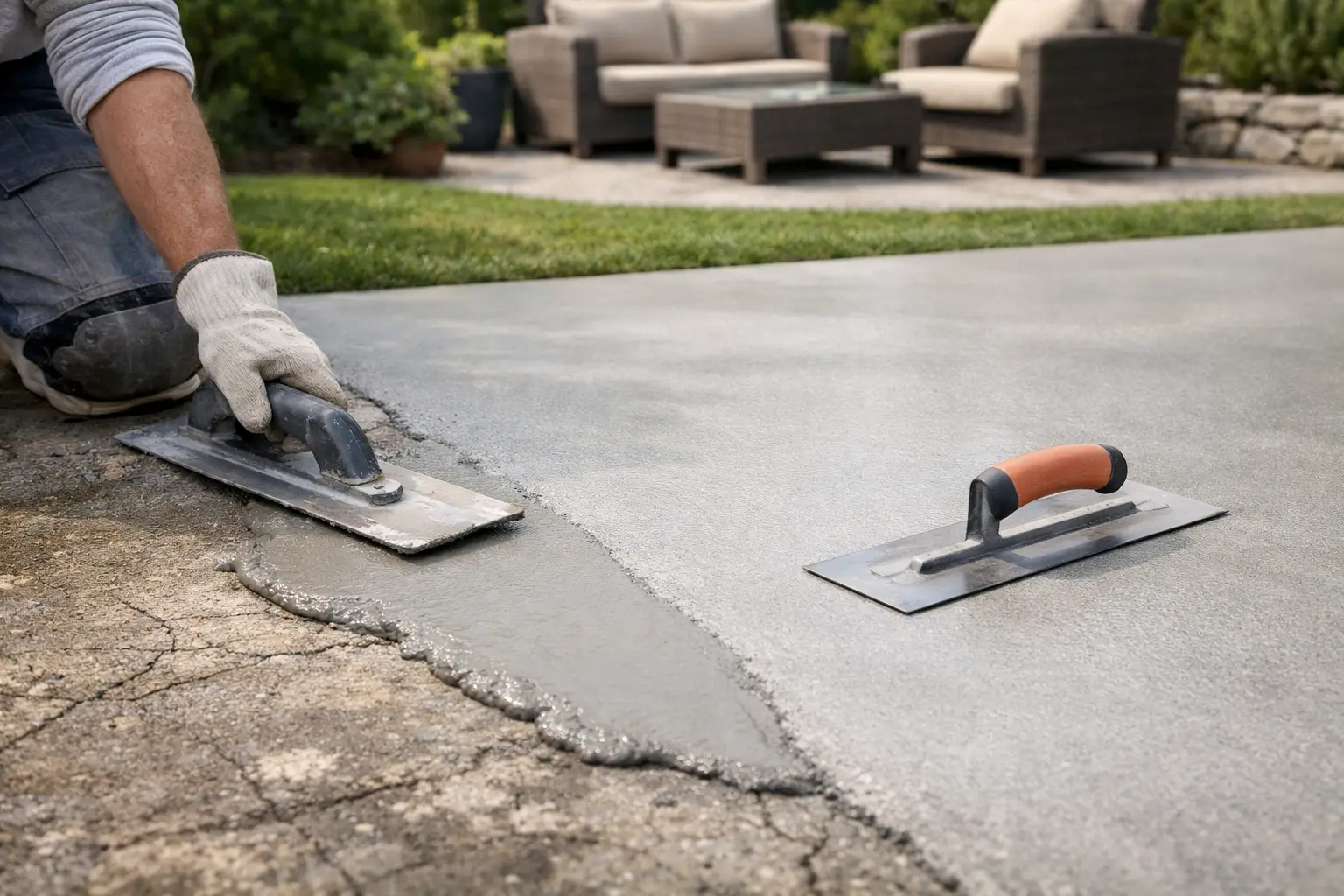
A patio can still be structurally useful long after it stops looking welcoming. Faded color, surface peeling, stains, hairline cracks, and rough spots are common on older concrete in Bakersfield. Concrete resurfacing for old patio slabs gives homeowners a way to refresh that worn surface without automatically paying for a full demolition and replacement.
The key word is structurally. A resurfacing system can make a tired patio look clean, modern, and ready for outdoor living again, but it cannot correct every underlying problem. The best result starts with an honest evaluation of the slab, proper surface preparation, and a finish that fits how you use the space.
When Concrete Resurfacing for an Old Patio Makes Sense
Resurfacing is a strong option when the patio slab is mostly sound but its top layer has seen better days. Years of sun exposure, foot traffic, patio furniture, barbecue spills, and ordinary weather can leave concrete looking blotchy and worn even when the base remains stable.
A qualified concrete contractor will look beyond the appearance of the patio. Small surface cracks, shallow pitting, minor scaling, discoloration, and old coating failure can often be addressed with repairs and an overlay. Once the surface is prepared correctly, a new cement-based coating can create a consistent, durable finish.
This approach is often appealing because it preserves the existing slab. That can reduce demolition, hauling, and construction time compared with replacement. It also gives property owners more design choices than plain gray concrete alone. Depending on the condition of the patio and the desired look, resurfacing can create a smooth modern finish, a decorative texture, or a stamped-concrete appearance.
For homeowners who want to improve a backyard before hosting family, selling a property, or updating an outdoor kitchen area, resurfacing can deliver a meaningful visual change without rebuilding the entire space.
When Resurfacing Is Not the Right Fix
A fresh surface is only as reliable as the concrete underneath it. If the patio has major movement, deep cracks, sinking sections, poor drainage, or widespread deterioration, resurfacing may only cover a problem for a short time.
Large cracks that have separated or shifted are a warning sign. So are areas where the slab has settled away from the house, developed a noticeable slope in the wrong direction, or become uneven enough to create a trip hazard. Those issues often point to subgrade movement, water problems, tree-root pressure, or an original installation that needs more than a cosmetic repair.
Moisture is another factor that deserves attention. If water routinely stands on the patio after irrigation or rain, a new overlay may not solve the cause. The drainage issue should be corrected first. In Bakersfield, where outdoor spaces take a lot of sun and irrigation is common, managing water flow helps protect both the patio and the surrounding property.
In some cases, partial removal and replacement is the smarter investment. In others, a full new patio may provide better long-term value, especially if you want to expand the space, change the layout, add steps, or build in new features. A dependable contractor should explain the trade-off clearly rather than pushing resurfacing when replacement is the better solution.
The Preparation Work That Determines the Result
The most important part of patio resurfacing happens before the decorative material is applied. A good-looking overlay can fail early if it is placed over dirt, loose concrete, grease, old paint, or a weak surface layer.
First, the patio needs a close inspection. The contractor checks for cracks, hollow-sounding areas, previous coatings, drainage patterns, and sections that may be separating. Damaged spots are repaired, and cracks are treated according to their size and cause. Not every crack can be made invisible forever, but the right repair method can help reduce the chance that it transfers through the new surface.
Next comes cleaning and mechanical preparation. The slab must be free of contaminants that prevent bonding. Depending on the patio, that may involve pressure washing, grinding, removing failed coatings, or profiling the concrete so the resurfacing material has a sound surface to grip.
After preparation, the resurfacing material is mixed and installed at the proper thickness. Timing matters. Concrete work is affected by heat, direct sun, wind, and curing conditions. Experienced crews plan the work around site conditions instead of treating every patio like the same job.
Finally, the finish is applied and cured. A protective sealer may be recommended to help defend against stains, moisture, and normal patio use. The best maintenance plan depends on the finish selected, exposure to sun, and whether the area sees heavy entertaining, pets, or frequent food and drink spills.
Choosing a Finish for Your Backyard
Resurfacing is not a one-look solution. The right finish should balance appearance, traction, maintenance, and the style of your home.
A smooth broom or trowel finish can work well for homeowners who prefer a clean, simple patio that complements almost any backyard design. It is practical, easy to coordinate with landscaping, and generally less visually busy than decorative patterns.
For a more customized look, decorative overlays can add color, texture, borders, or stamped patterns that resemble stone, slate, brick, or tile. These options can bring character to an older patio without the cost and maintenance demands of natural stone. They are especially popular when the patio is a focal point near a pool, pergola, outdoor kitchen, or covered living area.
Texture deserves careful consideration. A patio around a pool or an area that gets wet from sprinklers needs reliable traction. A finish that looks great in a sample may not be the best choice if it becomes slippery when wet. On the other hand, an overly aggressive texture may be uncomfortable for bare feet. The right choice depends on how the family uses the space.
Color also needs realistic expectations. Decorative concrete can create beautiful variation, but it is not identical to paint. Sun exposure, existing slab conditions, and application techniques all influence the final appearance. Working with a contractor who can discuss samples, color range, and finish options upfront helps prevent surprises.
What Affects the Cost of Patio Resurfacing?
There is no responsible one-price answer for concrete resurfacing because every patio has different conditions. Square footage matters, but it is only part of the estimate.
A straightforward, open patio with minor surface wear generally requires less labor than one with extensive crack repairs, peeling coatings, tight access, multiple elevations, drainage corrections, or intricate decorative work. The selected finish also changes the investment. A basic resurfaced patio and a custom stamped overlay with borders and multiple colors are very different projects.
It is also worth comparing cost with expected service life, not just the initial number. A lower quote that skips preparation can become expensive if the new surface chips, delaminates, or shows through old problems shortly after installation. Quality materials and experienced installation are where long-term value is created.
For Bakersfield property owners, a detailed onsite estimate is the best way to understand the actual scope. It gives you a chance to ask what repairs are included, how drainage will be handled, what finish is proposed, and what the crew will do to protect nearby landscaping or structures.
Keep a Resurfaced Patio Looking Its Best
Once the patio is complete, regular care is simple. Sweep away dirt and leaves, rinse spills before they set, and use a mild cleaner when needed. Avoid harsh chemicals or abrasive tools unless they are approved for the specific sealer and finish used on your patio.
Furniture should have protective feet to reduce scratches and scuffs. If you move heavy grills, planters, or outdoor furniture, lift when possible instead of dragging them across the surface. Periodic resealing may also be recommended, particularly in high-use areas or patios exposed to intense sun and frequent moisture.
A resurfaced patio should feel like an improvement you can use, not a surface you have to worry about. With a sound slab, thoughtful design, and proper installation, it can bring new life to the backyard you already enjoy. If you are unsure whether your patio is a resurfacing candidate or needs replacement, National Concrete can provide a clear assessment and help you choose a solution built for the way you live outdoors.