
Concrete Drainage Solutions Guide for Bakersfield
September 15, 2026
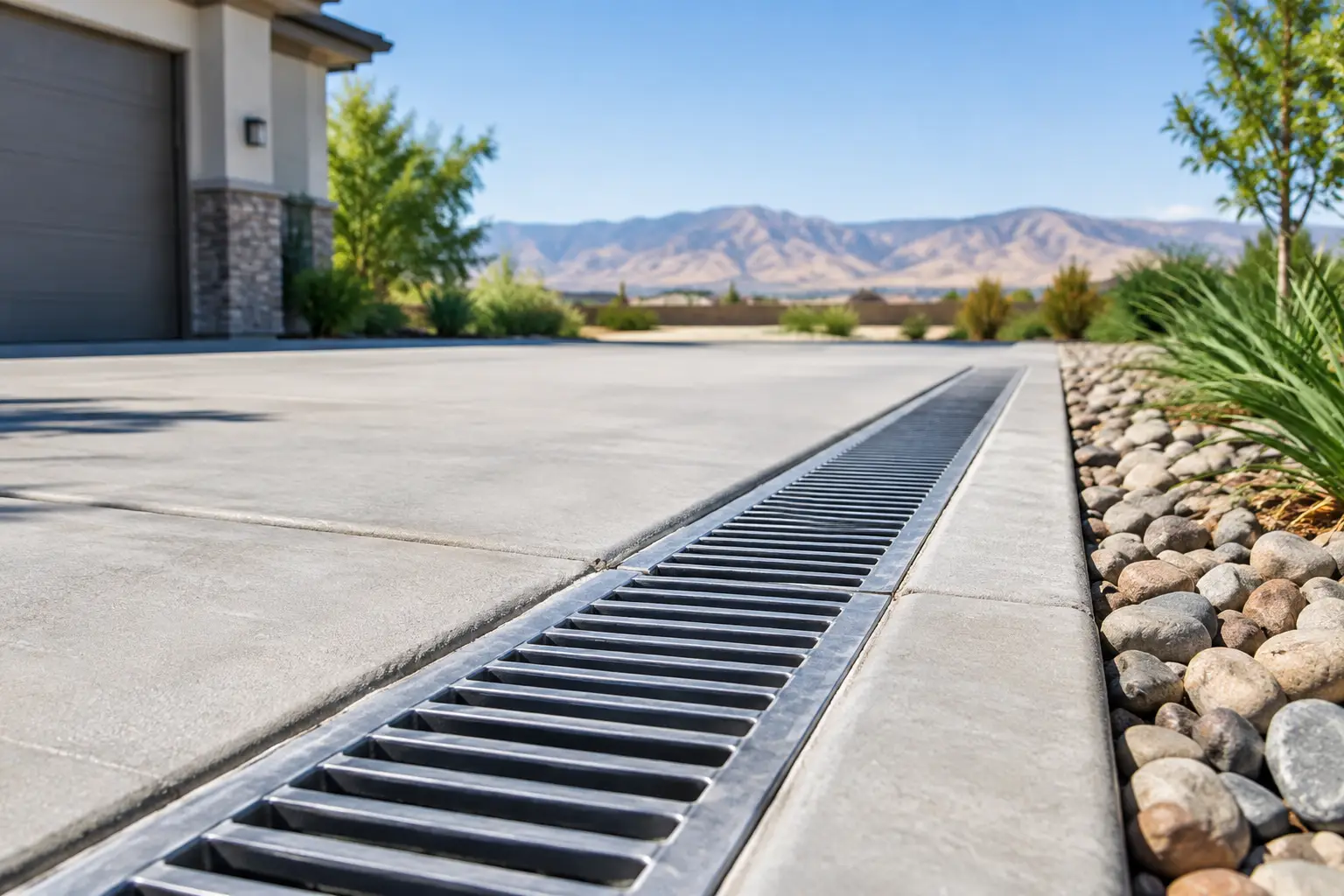
A driveway can look perfectly level and still send water toward the garage. A patio can be beautifully stamped and still leave puddles along the house after one hard Kern County rain. That is why a concrete drainage solutions guide should start before the first form is set, not after water has already found its way into the wrong place.
For Bakersfield homeowners, commercial property owners, and builders, drainage is part of a concrete project’s performance. The right plan protects foundations, keeps walking surfaces safer, preserves landscaping, and helps your new concrete look clean and intentional for years.
Why Drainage Belongs in Every Concrete Project
Concrete is durable, but it is not a drain. Water follows gravity, collects at low points, and looks for openings along expansion joints, edges, and adjoining structures. When runoff repeatedly sits on or beneath a slab, it can contribute to staining, slippery surfaces, soil movement, erosion at the edges, and cracking over time.
Bakersfield’s dry stretches can make drainage seem like an afterthought. Then a heavy rain exposes every low spot at once. Irrigation can create the same problems more gradually, especially near planters, pool decks, walkways, and foundations. A properly planned system accounts for both stormwater and the water a property uses every week.
Good drainage also protects the investment around the concrete. When soil washes away from a driveway edge or a patio settles near a house, the issue is not only cosmetic. Correcting drainage after installation often means cutting concrete, removing sections, or rebuilding adjacent landscaping. Planning for water early is simpler, cleaner, and usually more cost-effective.
Start With Slope, Not a Drain
The first drainage solution is usually proper slope. Concrete flatwork should direct water away from buildings and toward an approved collection or discharge area. A common target for many exterior slabs is a gradual fall of about 1/8 inch per foot, though the correct slope depends on the space, finish, local requirements, and accessibility needs.
A patio outside a back door, for example, needs enough fall to move water away from the home without feeling noticeably sloped underfoot. A commercial walkway may need to meet accessibility standards, which can limit how much slope is available. In that case, drains and carefully placed collection points become more important.
Before installation, a contractor should identify high and low elevations, door thresholds, existing grade, downspout locations, landscaping, and where water can legally travel. The goal is not simply to get water off the concrete. The goal is to direct it somewhere it can be managed without creating a new problem for a neighbor, driveway, wall, or foundation.
Concrete Drainage Solutions Guide: Choose the Right System
No single drainage method works for every property. The best choice depends on the size of the paved area, the amount of runoff, the available grade, surrounding structures, and how the property is used.
For many residential and commercial projects, the solution is one or a combination of these four options:
- Sloped concrete surfaces use the slab itself to move water toward a lawn, swale, curb, planter drain, or designated drainage area. This is often the cleanest solution when the site has enough natural fall.
- Trench drains are narrow, linear channels set into the concrete. They are especially useful at garage entrances, across driveways, near pool decks, and at the transition between a patio and a yard where water would otherwise run toward a building.
- Catch basins and area drains collect runoff at a low point and send it through underground pipe. They can work well for courtyards, larger paved areas, and locations where several surfaces drain to the same area.
- Concrete curbing, swales, and grade transitions help guide water away from structures and vulnerable landscaping. A shallow swale or strategically placed curb can keep runoff from crossing a walkway or washing out the edge of a slab.
A French drain may also be useful when the concern is subsurface water in planting areas or along a foundation. It is not a replacement for correct concrete slope, though. If rainwater is allowed to pond on a patio or driveway, a buried drain alone may not solve the issue.
When a Trench Drain Makes Sense
Trench drains are one of the most effective options where water crosses a wide paved area. A garage apron is a common example. If the driveway slopes toward the garage, a channel drain installed in front of the door can intercept runoff before it enters the structure.
They are also useful near pool decks, outdoor kitchens, and enclosed patios. The drain grate can be selected to fit the appearance and expected traffic. For vehicle areas, the drain system must be rated and installed for the load it will carry. A decorative grate that works beside a patio may not be appropriate in a driveway.
The trade-off is maintenance. Leaves, landscape debris, and sediment can clog any drain. Grates should be inspected and cleaned regularly, especially before the rainy season. A well-installed drain still needs a clear path for water to leave the property safely.
When Surface Drainage Is the Better Answer
If a property has usable grade and a clear drainage route, surface drainage is often preferable to adding more underground components. A driveway or patio with the correct pitch is easier to maintain than a system that relies entirely on buried pipe.
This is particularly true for open yards where runoff can be directed toward a landscaped swale or a properly designed drainage area. The concrete layout, curbing, and landscape grading should work together. Water should not be pushed from a patio directly into a planter that sits against the foundation.
Match the Plan to the Project
Driveways need a drainage plan that considers vehicle traffic, street flow, garage elevation, and driveway edges. Water should not pond where tires repeatedly pass, since standing water can accelerate surface wear and carry dirt across the concrete. If a driveway meets a public street or sidewalk, the transition may also need to follow local requirements.
Patios and walkways need a more subtle approach. Their slope should feel comfortable while keeping water away from doors and walls. Decorative finishes such as stamped concrete can still perform well with proper drainage, but pattern layout, joints, and drain placement should be planned so the finished surface looks intentional.
Pool decks require added attention because water is expected around the space. The deck should drain away from the pool where appropriate and avoid sending runoff toward the home. Drain placement also needs to complement the pool equipment, coping, fencing, and landscape design.
Commercial sites may require a more detailed drainage strategy due to larger surface areas, parking and loading conditions, pedestrian access, and site-specific engineering. A small low spot can become a major liability when it sits in a busy walkway or storefront entrance.
Installation Details That Make a Difference
Drainage performance depends on more than the visible slope. Proper base preparation helps support the slab and reduce the risk of settlement that creates new low spots. Compaction, thickness, reinforcement where appropriate, control-joint placement, and clean transitions at existing concrete all affect how the finished project holds up.
Drain systems need careful elevation control. A trench drain set too high can catch debris and interfere with traffic. One set too low may allow water to bypass it. The outlet pipe needs a workable route, correct connections, and protection from damage during backfill and future landscape work.
Expansion joints and sealant also deserve attention. They allow concrete sections to move as conditions change, but joints should not become open pathways for water to work beneath the slab. The right joint layout helps control cracking while supporting a cleaner, longer-lasting surface.
Warning Signs Your Property Needs Drainage Work
Water that disappears within a short time may not be a concern. Repeated ponding, muddy slab edges, water at a garage door, soil washing from beneath concrete, and stains that return after every rain are different. These signs point to a grading, slope, or collection problem that deserves a closer look.
Cracks alone do not always mean drainage caused the damage, but water can make underlying soil issues worse. If a slab has settled, drainage corrections may need to be paired with concrete repair or replacement. The right solution depends on what is happening below the surface, not just what is visible from above.
Get a Plan Built for Your Property
The best concrete drainage solutions are practical, durable, and designed around the way you use the property. A simple slope may be all a backyard patio needs. A garage, pool deck, commercial entry, or large custom installation may call for drains, curbing, and coordinated grading.
National Concrete helps Bakersfield and Kern County property owners plan concrete projects with long-term performance in mind. Before committing to a new driveway, patio, walkway, or custom concrete installation, take a close look at where water starts, where it collects, and where it needs to go. A smart drainage plan keeps the project looking good long after the forms come down.