
Concrete Curb Installation Service in Bakersfield
July 16, 2026
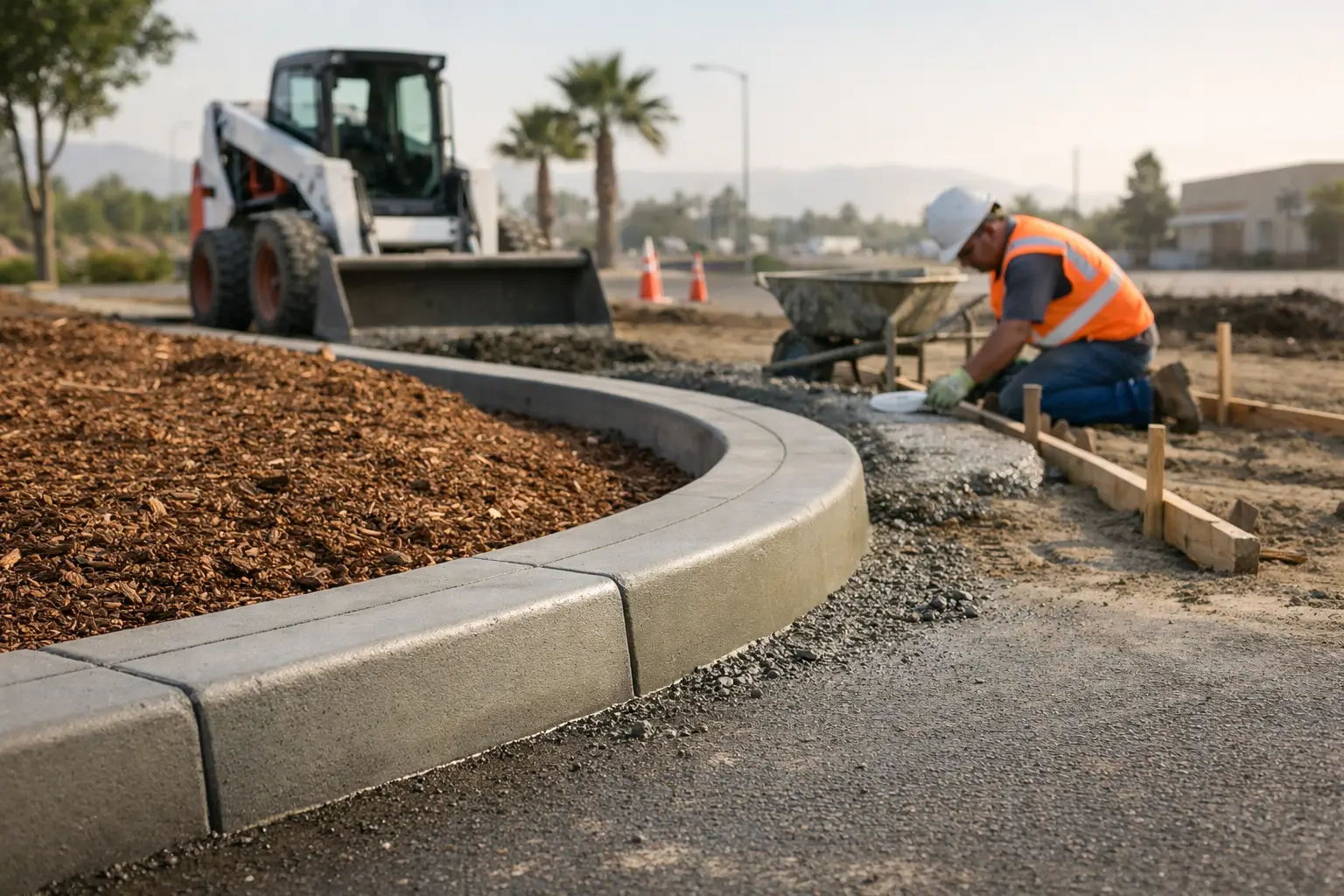
A quality concrete curb installation service does more than create a clean border around your landscape. It gives driveways, parking areas, walkways, planters, and commercial sites a finished look while helping direct water where it needs to go. In Bakersfield, where heat, dry soil, irrigation, and sudden rain can all affect exterior concrete, properly installed curbing is a practical investment that protects your property and improves curb appeal.
Whether you are updating a front yard, defining a new driveway, or completing a larger commercial development, the details matter. The right curb height, layout, base preparation, and concrete mix can make the difference between a clean, long-lasting result and a border that cracks, shifts, or collects water.
What Concrete Curbs Do for Your Property
Concrete curbs create a durable edge between hardscape and landscape areas. They keep gravel, mulch, soil, and decorative rock contained, while also giving mow strips and planting beds a clear boundary. Around driveways and parking lots, curbs can help organize vehicle traffic and reduce damage to surrounding landscaping.
Drainage is another major reason Bakersfield property owners choose concrete curbing. A curb can guide runoff away from landscaped areas, building foundations, and low spots where water tends to collect. The best solution depends on the grade of the property. In some cases, the curb should direct water toward a swale, drain, or designated runoff area. In others, a raised edge may need openings or a different profile so water does not become trapped.
Concrete also holds its shape far better than plastic edging, loose pavers, or untreated wood. Those materials can move with soil, fade in the sun, or require frequent replacement. A professionally placed concrete curb offers a permanent, low-maintenance finish that stands up to regular irrigation, foot traffic, lawn equipment, and Kern County weather.
Concrete Curb Installation Service for Homes and Businesses
Residential curbing is often used to frame front-yard landscaping, separate turf from flower beds, outline driveway edges, or create clean borders around patios and pool areas. Homeowners can choose simple gray concrete for a classic appearance or consider color and decorative finishes that coordinate with stamped concrete, walkways, or existing hardscape.
For commercial properties, curbs serve a more functional role as well. They can define parking areas, protect landscape islands, separate pedestrian spaces, and create a cleaner overall site plan. Builders, property managers, and developers need curbing that follows project specifications, supports proper drainage, and complements the rest of the concrete work on site.
The right design is not always the tallest or most decorative option. A subtle mow curb may be ideal for a landscaped home, while a more substantial vertical curb can make sense near parking areas or heavy-use drive lanes. The best choice comes down to how the space will be used, the layout of the property, and the look you want to achieve.
The Installation Details That Protect Your Investment
A finished curb is only as reliable as the work beneath it. Concrete can look great on installation day and still fail early if the base was not prepared correctly or the layout ignored drainage and soil conditions.
A professional installation begins by marking the curb path and confirming elevations. This step helps prevent awkward curves, uneven borders, and unexpected conflicts with sprinklers, gates, driveways, or existing utilities. For a larger project, layout also ensures that the curb aligns with parking spaces, sidewalks, ramps, and drainage plans.
The ground is then excavated and prepared to create a stable base. Loose material, roots, and weak soil should be addressed before concrete is placed. Depending on the project, the crew may compact the subgrade and add base material to reduce movement over time. Bakersfield soil conditions vary by neighborhood and property, so there is no one-size-fits-all approach.
Forms or a curbing machine shape the concrete into the selected profile. Reinforcement may be appropriate for certain installations, especially where the curb is wider, taller, exposed to vehicles, or tied into other concrete features. Control joints are also placed strategically to help manage normal concrete shrinkage and reduce the chance of random cracking.
Finally, the concrete is finished, edged, and cured. Proper curing is especially important during hot, dry weather. Concrete gains strength over time, and protecting it from rapid moisture loss helps support a stronger, more durable result.
Choosing the Right Curb Style
Concrete curbs are not limited to a single utilitarian shape. A well-planned curb can blend into the design of your home or commercial property while still delivering the strength you need.
A mow curb is a low, rounded border that lets lawn equipment pass over easily. It is a popular choice for grass-to-landscape transitions because it reduces trimming along the edge. A raised landscape curb provides more separation for decorative rock, mulch, and planting beds. It can also create a stronger visual line along a driveway or sidewalk.
Vertical curbs are commonly used in commercial settings and along parking areas. Their upright face creates a clear barrier between vehicles and landscaping. Rolled curbs have a more gradual profile and may work well where vehicles need occasional access. For custom properties, color, exposed aggregate, texture, or decorative scoring can help the curb complement nearby patios, walkways, or stamped concrete.
Design flexibility is valuable, but function should lead the decision. A decorative curb that blocks intended drainage or makes maintenance difficult is not the right fit. An experienced contractor will help balance appearance, access, water flow, and long-term performance before the concrete is poured.
Common Problems With Poorly Installed Curbing
Concrete is durable, but it is not immune to poor planning. One of the most common issues is cracking caused by inadequate base preparation, missing control joints, or movement in the soil below. Not every crack means the installation failed, since concrete naturally shrinks as it cures. Still, wide, uneven, or rapidly spreading cracks deserve attention.
Improper drainage is another avoidable problem. If a curb blocks water without a planned outlet, irrigation or rainwater can pool against a driveway, walkway, or building. Over time, standing water can stain concrete, damage landscaping, and contribute to soil movement around slabs and foundations.
Inconsistent height, wavy lines, rough finishing, and poor transitions at driveways or sidewalks can also make a property look unfinished. These may seem like cosmetic concerns, but they often point to rushed layout or placement. Quality concrete work should look intentional from every angle and function well after the crew leaves.
What to Expect From the Project Process
The easiest concrete projects start with a clear conversation about the property and your goals. A contractor should ask where you want the curb, what it needs to contain or protect, how water moves through the area, and whether the curbing needs to match other concrete features.
After the site is evaluated, you should receive a straightforward estimate based on the length, curb profile, access, demolition needs, site preparation, and finish selection. Curved layouts, tight side yards, existing concrete removal, and decorative finishes can affect pricing. That is why an in-person assessment is more useful than a vague per-foot quote with no review of conditions.
Once the work is scheduled, the installation should be organized around access, landscape protection, and curing time. Homeowners may need to pause irrigation near the work area and keep pets, vehicles, and foot traffic away from fresh concrete. Commercial clients may need a phased plan to maintain tenant, customer, or delivery access.
National Concrete brings experienced craftsmanship and a responsive, easy-to-follow process to curb installations across Bakersfield and surrounding Kern County communities. From a clean residential landscape border to curbing that supports a larger site plan, the goal is the same: concrete work that looks sharp, performs well, and adds lasting value.
A well-built curb may be a small feature, but it has a big effect on how a property looks, drains, and holds up over time. Start with the layout you need, choose a profile that fits the way the space is used, and make sure the installation is built on solid preparation rather than shortcuts.