
How to Reinforce a Concrete Slab for Strength
November 12, 2026
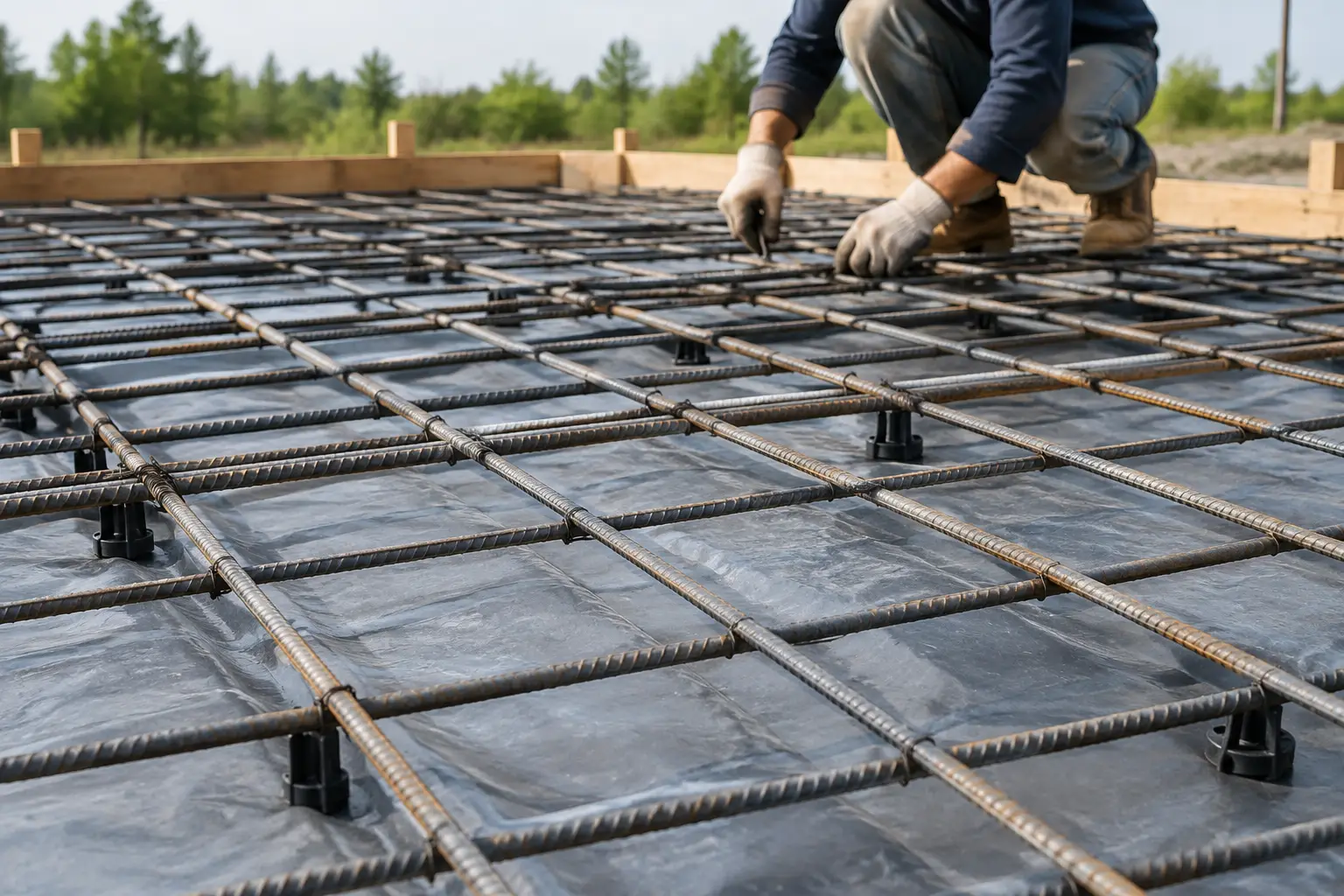
A driveway that carries daily vehicles, a patio built for outdoor gatherings, and a commercial slab supporting equipment do not face the same demands. What they do have in common is this: knowing how to reinforce a concrete slab can make the difference between a surface that performs for years and one that develops avoidable cracks, movement, or edge damage.
Concrete is exceptionally strong under compression, but it has limited tensile strength. When soil shifts, loads concentrate, temperatures swing, or moisture changes beneath the slab, concrete can bend slightly and crack. Proper reinforcement does not make a slab crack-proof, but it helps control cracking, hold sections together, and improve performance when the slab is designed and installed correctly.
For Bakersfield homeowners, builders, and property managers, reinforcement should be part of the planning conversation before concrete arrives on site. Our hot, dry climate and varied soil conditions make preparation every bit as important as the concrete itself.
Why Reinforce a Concrete Slab?
Reinforcement gives concrete added support where it needs it most. Steel rebar, welded wire reinforcement, and fiber additives each serve a purpose, but they are not interchangeable in every project. The right choice depends on slab thickness, intended use, subgrade conditions, joint layout, and the amount of weight the surface must carry.
A residential patio may need a different reinforcement plan than a driveway used by trucks or an equipment pad at a commercial property. A slab can look substantial on the day it is poured and still develop problems later if the base was poorly compacted, the reinforcement was misplaced, or the thickness did not match the load.
Reinforcement is especially valuable when a slab will experience vehicle traffic, concentrated loads, expansive or unsettled soils, or larger uninterrupted areas of concrete. It can also help maintain alignment after cracking, reducing the chance that one side of a crack lifts or separates from the other.
Start With the Ground, Not the Steel
The best reinforcement cannot compensate for unstable ground. Before installing rebar or wire, the project needs a properly prepared subgrade. Loose native soil, organic material, construction debris, and soft spots should be removed or addressed. The area should then be graded and compacted to create consistent support under the full slab.
Many projects benefit from a compacted aggregate base. This base creates a more even bearing surface, helps manage drainage, and reduces the risk of settlement. The required depth depends on site conditions and project use. A decorative backyard walkway may need less preparation than a driveway, RV pad, foundation, or commercial service area.
Drainage matters, too. Water that collects under or beside a slab can soften soil and contribute to movement. The finished concrete should be sloped appropriately so water moves away from structures and does not pool on the surface.
Rebar vs. Wire Mesh vs. Fiber Reinforcement
Rebar for structural support
Rebar is the preferred reinforcement for many slabs that require greater strength and load capacity. It is commonly used in driveways, foundations, structural pads, thickened edges, retaining-related work, and commercial applications. Rebar is arranged in a grid pattern, with spacing and bar size determined by the slab design.
For a typical residential application, contractors often use a rebar grid placed throughout the slab area rather than only around the perimeter. However, exact spacing should be based on the specific project. Larger loads, questionable soil, and thicker slabs may call for a more substantial reinforcing schedule. Structural slabs should be designed to local requirements and, when needed, reviewed by an engineer.
Wire reinforcement for lighter-duty slabs
Welded wire reinforcement, often called wire mesh, can help control shrinkage cracking in lighter residential flatwork. It is commonly considered for patios, walkways, and slabs with relatively light use. Wire mesh is not a replacement for properly designed rebar where structural support is required.
The biggest issue with wire mesh is placement. If it is left on the ground and concrete is poured over it, it provides far less value than intended. Reinforcement needs to sit within the concrete slab, generally in the upper-middle portion, not buried at the bottom. Supports known as chairs help hold rebar or mesh at the correct elevation while the concrete is placed.
Fiber for crack control
Fibers are mixed directly into the concrete and can help reduce plastic shrinkage cracking as the concrete cures. They are useful as part of a crack-control strategy, particularly for slabs where surface appearance and early-age performance matter. Fiber reinforcement may supplement steel reinforcement, but it does not automatically replace rebar in a slab designed for vehicles, structural loads, or significant soil movement.
The practical question is not which product is best in every situation. It is which reinforcement method fits the intended use of your slab.
How to Reinforce a Concrete Slab the Right Way
A reliable slab starts with a clear plan. First, identify how the surface will be used. Passenger vehicles, heavy trucks, trailers, pool equipment, storage sheds, and commercial machinery all place different demands on concrete. Next, determine the proper slab thickness and edge treatment. Reinforcement works together with thickness, not instead of it.
Once the base is prepared and forms are set, the reinforcement is laid out with consistent spacing. Rebar intersections are tied so the grid stays in position during placement. At slab edges, around openings, and near areas expected to carry heavier loads, the reinforcing plan may need additional attention.
Then comes one of the most overlooked steps: keeping the steel off the ground. Rebar supports or chairs hold the reinforcement in the intended zone of the slab. During the pour, the crew must avoid pulling steel down or allowing it to shift as concrete is spread and finished.
Concrete joints are just as important as reinforcement. Control joints create planned weak points where shrinkage cracks are more likely to form in a clean, less noticeable line. Rebar does not eliminate the need for joints. In fact, a slab with good reinforcement but poor joint spacing can still crack in places that hurt both appearance and performance.
Finally, the slab must cure properly. Concrete gains strength over time, and curing helps it retain moisture during that critical period. In Bakersfield heat, concrete can dry too quickly if the crew does not manage placement timing, finishing, and curing practices carefully. A fast-drying surface is more vulnerable to shrinkage cracking and weaker-than-expected results.
Common Reinforcement Mistakes to Avoid
The most common mistake is assuming every slab needs the same reinforcement. A thin patio slab built over poor soil is not improved simply by adding more steel. It still needs correct excavation, compaction, thickness, and drainage.
Another mistake is installing rebar directly on the base. Steel at the bottom of the slab does not provide the same crack-control benefit as steel positioned within the slab. Likewise, using wire mesh without supporting it often means it ends up too low to do its job.
Overlapping rebar incorrectly, leaving large gaps, or failing to tie intersections can create weak areas. Cutting corners on control joints is another frequent problem. Random cracks may still occur with quality work, because concrete naturally shrinks as it cures, but planned joints help manage where that movement happens.
It is also wise to avoid treating a structural concern as a cosmetic project. If a slab will support a building addition, heavy equipment, retaining elements, or unusual loads, the design should account for applicable engineering and local requirements from the start.
Reinforcement for Common Bakersfield Projects
For most residential driveways, a well-compacted base, adequate thickness, properly positioned rebar, and correctly spaced joints form a dependable system. The same principle applies to RV parking areas, but the heavier load often calls for a more deliberate design.
Patios and walkways may not require the same level of steel as a driveway, yet they still benefit from sound base preparation and crack-control planning. Decorative stamped concrete requires extra care because cracks and settling can affect the finished pattern and visual impact.
Commercial slabs deserve a project-specific approach. Traffic patterns, equipment loads, drainage, access routes, and building requirements can all influence reinforcement and thickness. This is where experienced planning protects the schedule and the investment.
National Concrete approaches each project with the same goal: build concrete that looks right, performs reliably, and fits the way the property will actually be used. A straightforward installation deserves the same care as a custom design or large-scale commercial pour.
Before you reinforce a concrete slab, take time to match the plan to the soil, load, and purpose of the surface. That decision is made below the finish line, but it is one homeowners and property owners will appreciate every day the concrete stays level, clean, and ready for use.