
9 Common Concrete Patio Mistakes to Avoid
November 10, 2026
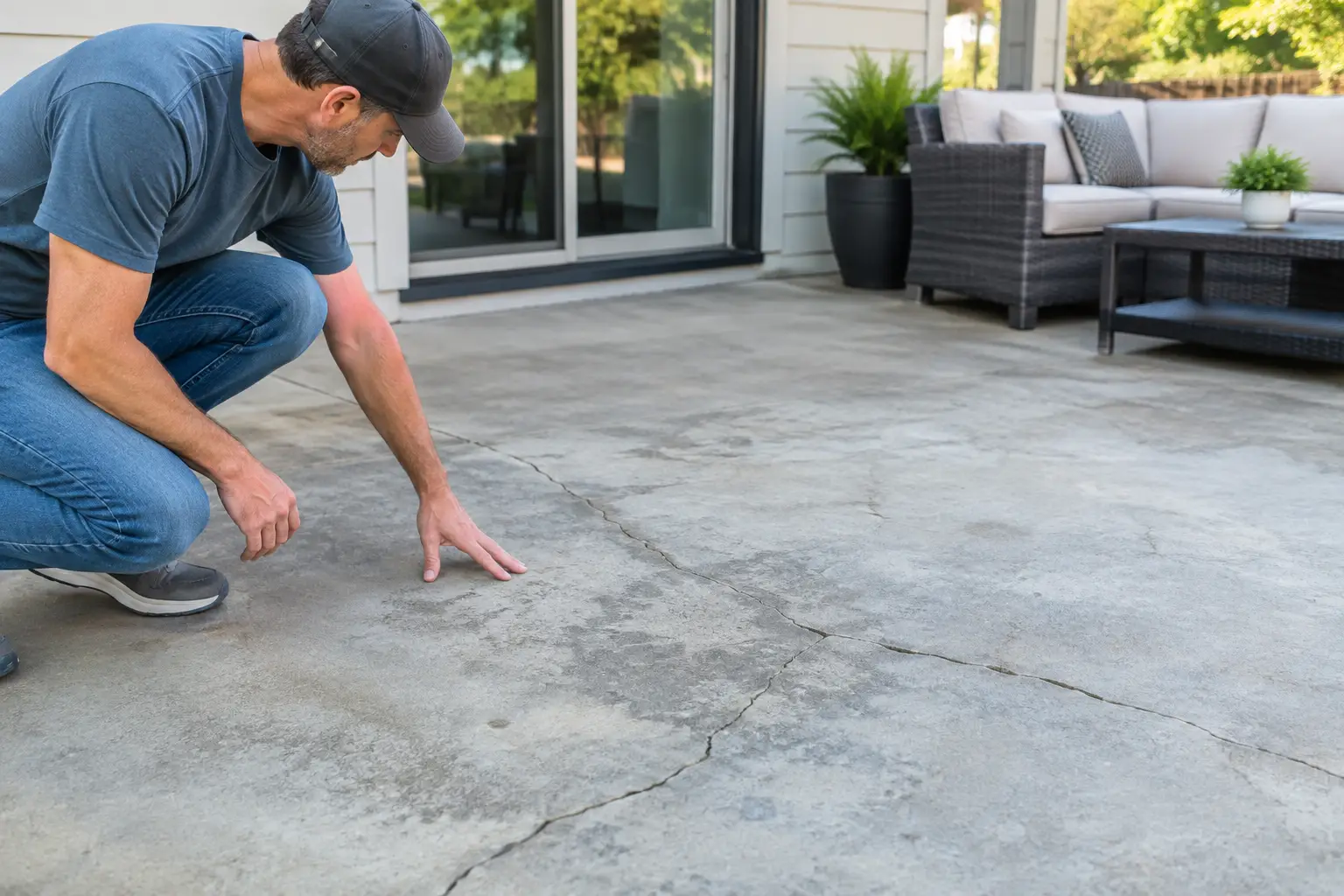
A patio can look great on pour day and still become a problem months later. The most common concrete patio mistakes usually happen below the surface or during the planning stage, where they are easy to miss but expensive to correct. For Bakersfield homeowners, intense summer heat, irrigation, drainage, and soil conditions all deserve attention before concrete arrives.
A well-built patio should feel like an extension of your home: level enough for furniture, sloped enough to shed water, durable enough for everyday use, and designed to fit how you actually live outdoors. Here are the mistakes worth avoiding before your project begins.
1. Treating Site Preparation as an Afterthought
Concrete is only as dependable as the ground supporting it. Pouring over loose soil, old landscaping material, roots, or an uneven base can lead to settling, cracks, and sections that no longer drain correctly.
Proper preparation starts with excavation to the needed depth, removal of unstable material, and careful compaction of the subgrade and base. The exact approach depends on the property, the patio size, soil conditions, and whether the slab will support more than patio furniture. A simple sitting area has different demands than a patio designed for an outdoor kitchen, heavy fire feature, or large covered structure.
Saving time on prep may reduce the upfront price, but it often creates the kind of repair work no homeowner wants to schedule later.
2. Ignoring Drainage and Patio Slope
A patio should not be perfectly flat. It needs a controlled slope that moves water away from the house and toward an appropriate drainage area. When water flows back to the foundation, sits along the edge of the slab, or pools near doorways, it can create a much larger issue than a wet patio after a storm.
This is especially important around pool decks, covered patios, and properties with established landscaping or irrigation. Downspouts, sprinkler overspray, and neighboring grades can all affect where water goes. A contractor should look beyond the patio footprint and consider the entire drainage path.
The trade-off is simple: too little slope allows standing water, while too much can make a patio feel awkward and cause furniture to sit unevenly. Good layout and finishing create a slope that works without making the space look or feel slanted.
3. Assuming Reinforcement Prevents Every Crack
Homeowners often hear that rebar, wire mesh, or fibers will make concrete “crack-proof.” That is not how concrete behaves. Concrete naturally shrinks as it cures and can crack over time due to movement, temperature changes, and soil conditions.
Reinforcement helps hold a slab together and can improve performance when it is correctly selected and placed. It does not eliminate the need for proper base preparation, adequate thickness, control joints, and curing. Wire mesh that ends up resting at the bottom of the slab, for example, provides far less value than reinforcement positioned where it can do its job.
The right reinforcement plan depends on the patio design and expected use. A trusted concrete contractor explains what is being installed, why it fits the project, and what realistic long-term performance looks like.
4. Skipping or Poorly Placing Control Joints
Control joints are intentional grooves cut or formed into concrete to encourage cracking along planned lines. Without them, concrete still moves and shrinks, but it chooses its own path. That can mean random cracks across a visible section of patio.
Joint placement should follow the slab layout rather than being added as an afterthought. Large patios, L-shaped layouts, steps, columns, planters, and transitions to existing concrete all need thoughtful joint planning. The goal is to create clean, balanced panels while allowing the slab to respond to normal movement.
Joints are functional, but they also affect appearance. On decorative or stamped concrete, their location should be considered as part of the pattern and overall design.
5. Choosing a Slab Thickness That Does Not Match the Use
Not every patio needs the same thickness. A standard backyard gathering space may have different needs than a slab supporting a built-in barbecue island, masonry fireplace, spa, pergola posts, or commercial outdoor seating area.
Problems start when a project is designed around the lowest possible cost instead of its real load requirements. Thin edges are especially vulnerable to chipping and cracking, particularly where people step on and off the patio or where equipment may cross during construction.
It is better to discuss future plans early. If you may add a cover, outdoor kitchen, or shade structure later, mention it before the pour. Planning for it upfront is usually cleaner and more cost-effective than cutting into a finished patio afterward.
6. Pouring in Hot Weather Without a Placement Plan
Bakersfield heat can change the pace of a concrete installation. High temperatures, direct sun, low humidity, and wind can cause moisture to leave fresh concrete quickly. That shortens the finishing window and increases the risk of surface issues if the crew is not prepared.
This does not mean concrete patios cannot be installed during warm weather. It means timing, crew coordination, concrete mix, site conditions, and curing need to be managed carefully. Adding excess water at the jobsite to make concrete easier to work with is not a real solution. It can weaken the finished surface and increase shrinkage concerns.
An experienced crew plans the pour around conditions instead of hoping the conditions cooperate.
7. Rushing the Cure and Using the Patio Too Soon
Fresh concrete may look hard within a day or two, but it continues gaining strength over time. Rushing to place heavy furniture, grills, planters, or construction materials on a new patio can leave marks or damage edges before the slab has properly cured.
Curing is not just waiting. It is the process of helping concrete retain the moisture it needs to develop strength. Depending on the project, that may involve curing compounds, moisture-retention methods, or other practices suited to the finish and weather.
Ask for clear aftercare instructions before installation day. You should know when it is safe to walk on the patio, when to move furniture back, when to seal decorative concrete if applicable, and how to avoid staining the surface early on.
8. Selecting Decorative Concrete Based Only on a Sample
Stamped concrete, colored concrete, exposed aggregate, and custom finishes can transform a backyard. Still, a small sample cannot show every aspect of the finished installation. Color can look different in direct sunlight, shaded areas, and beside your home’s exterior finishes. Texture can also affect comfort, maintenance, and slip resistance.
For pool decks and frequently wet areas, the finish needs to balance appearance with traction. For entertaining spaces, a heavily textured surface may not be ideal for certain furniture or for people who prefer a smoother walking surface. Dark colors can look dramatic, but they may absorb more heat in full Bakersfield sun.
A strong design conversation covers use, sun exposure, surrounding materials, maintenance expectations, and the look you want to achieve. The best patio is not simply the one that photographs well. It is the one that fits your property and gets used comfortably.
9. Hiring on Price Alone
The lowest quote can be tempting, especially when several contractors appear to be offering the same patio. But concrete proposals can differ in important ways: excavation depth, base preparation, thickness, reinforcement, drainage, demolition, finish work, cleanup, and curing may not be included at the same level.
Ask what is included and what could create an added cost. Review the contractor’s experience with projects similar to yours, not just a single attractive photo. Clear communication before the project starts is often a good sign of how the job will be managed once work is underway.
National Concrete believes a quality patio should come with a straightforward process, skilled craftsmanship, and answers you can trust. A detailed estimate helps you compare value, not just numbers.
Build the Patio Around Real Life
Before choosing a color or finalizing a shape, stand in the space and think about how your patio will work on an ordinary weekend. Notice the sun, the path from the house, the nearest hose bib, the view from inside, and where rainwater already collects. Those details give a concrete professional the information needed to build a patio that looks right, drains right, and serves your property for years.