Driveway Material Comparison for Bakersfield Homes
November 8, 2026
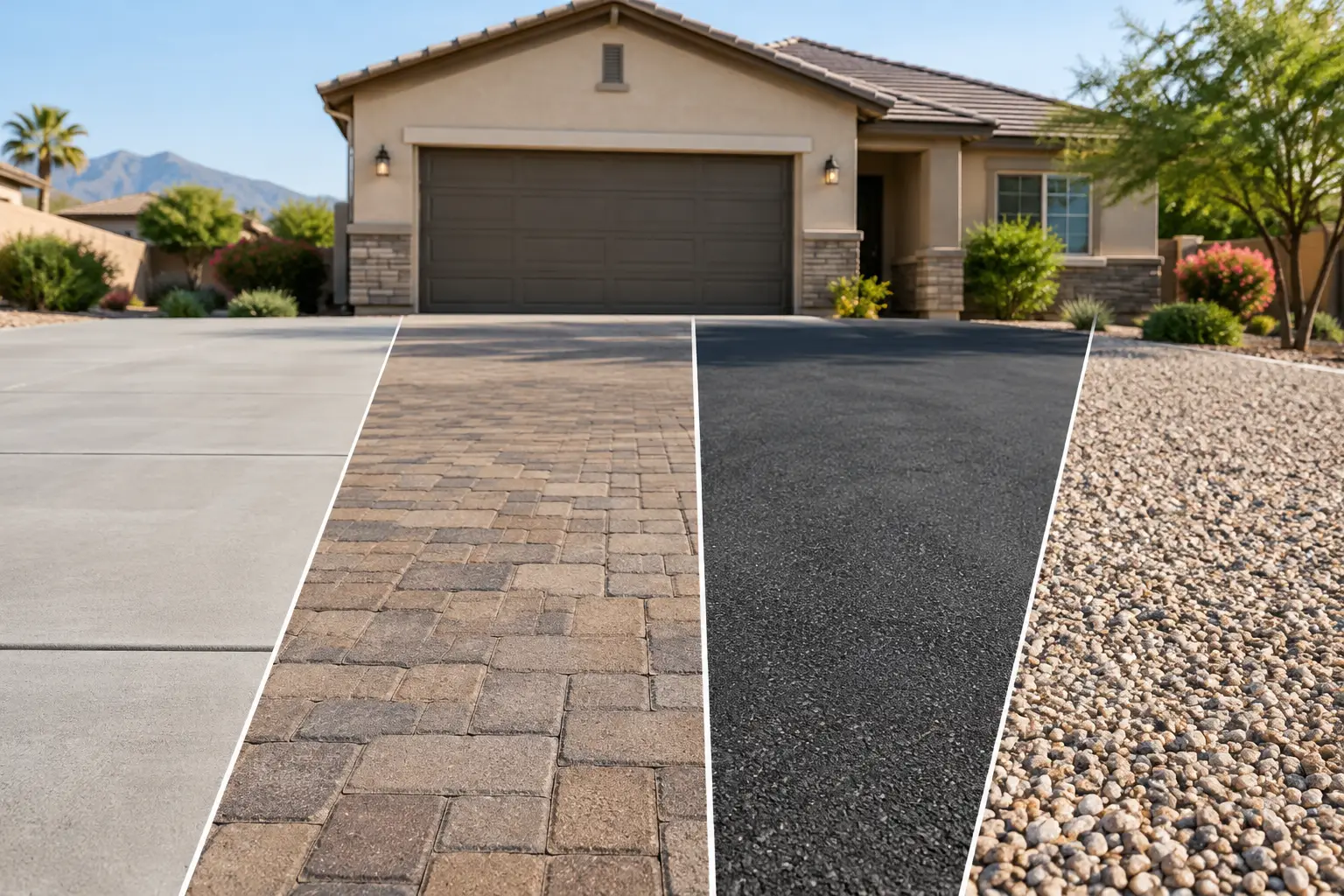
A driveway has to do more than look good from the street. It carries daily traffic, handles Bakersfield heat, stands up to oil drips and irrigation runoff, and sets the tone for the rest of the property. This driveway material comparison looks at concrete, asphalt, pavers, and gravel through the lens that matters most: how each choice performs over time in Kern County.
The right answer is not always the cheapest material on installation day. A driveway is a long-term surface, so maintenance needs, expected life, drainage, appearance, and site preparation all deserve a place in the decision.
Driveway Material Comparison: What Matters Most
Before comparing materials, start with how the driveway will be used. A two-car residential driveway has different demands than a wide approach for RV parking, a commercial entry, or a property with frequent delivery vehicles. Soil conditions, slope, drainage, and the existing base also affect performance more than many homeowners expect.
Bakersfield’s long, dry summers create another consideration. Dark surfaces can become extremely hot, while materials that expand, shift, or soften under high temperatures may need more regular attention. A properly prepared base and correct installation details are not extras. They are what help a driveway stay level, drain correctly, and serve the property for years.
Upfront cost versus lifetime cost
Gravel is usually the lowest-cost option to install, followed by asphalt in many situations. Standard concrete often has a higher initial price, while pavers can be the most expensive choice depending on the pattern, edge restraints, and base work involved.
That first number only tells part of the story. Asphalt requires recurring sealing and eventual resurfacing. Gravel needs periodic raking, replenishment, and control at the edges. Concrete generally requires less routine maintenance, while pavers may need joint sand replacement or occasional leveling. A smart budget considers the cost of ownership over the next 15 to 30 years, not only the estimate in front of you.
Concrete Driveways: Built for Lasting Value
Concrete remains one of the strongest all-around driveway choices for Bakersfield homes and commercial properties. When it is installed over a properly compacted base with the right thickness, reinforcement where appropriate, control joints, and drainage planning, concrete delivers a hard-wearing surface with a clean, finished appearance.
A concrete driveway does not need regular sealing to function, though sealing can help protect decorative finishes and make cleanup easier. It resists rutting under normal vehicle traffic and does not soften in summer heat the way asphalt can. For homeowners who want a low-maintenance driveway that complements the home for decades, those advantages are significant.
Concrete is also highly flexible from a design standpoint. A standard broom finish gives a practical, slip-resistant surface. Decorative borders, colored concrete, exposed aggregate, and stamped concrete can create more curb appeal without changing the driveway’s core durability. That makes concrete a strong fit for everything from straightforward replacement driveways to custom front-entry designs.
The trade-off is that concrete must be installed correctly from the start. It can crack if the base is poor, drainage is ignored, joints are misplaced, or the slab is not designed for the expected loads. Small cracks can occur in concrete because it naturally shrinks as it cures, but thoughtful joint placement helps manage where movement happens. Quality workmanship and site preparation make a major difference.
Asphalt: Fast Installation, Ongoing Maintenance
Asphalt gives a smooth, dark driveway surface and is commonly selected for its lower upfront cost and quick installation timeline. It also has some flexibility, which can be useful where slight ground movement is a concern.
In Bakersfield, however, high heat deserves careful consideration. Asphalt absorbs heat and can become very hot during summer. It may soften under heavy loads, especially when vehicles sit in the same position repeatedly. Oil and fuel leaks can also damage the binder, and the surface typically needs periodic sealcoating to protect its appearance and slow oxidation.
An asphalt driveway can be a practical choice for a budget-conscious project or a large driveway where initial cost is a major factor. Just plan for maintenance. Cracks should be addressed early, and resurfacing may be needed sooner than a well-installed concrete replacement.
Paver Driveways: Premium Appearance With More Detail Work
Concrete pavers create a polished, high-end look that works especially well with custom homes, courtyards, and properties where visual detail is the priority. They are available in a broad range of colors, shapes, and laying patterns, making it easier to coordinate with exterior finishes, walkways, or patios.
One benefit of pavers is repairability. If a small section settles or becomes stained, individual pavers can often be lifted and replaced instead of removing a large area. Properly installed pavers also allow for small amounts of movement without showing a typical slab crack.
The performance of a paver driveway depends heavily on the base, bedding layer, edge restraints, and compaction. Without precise installation, pavers can shift, develop low spots, or allow weeds to appear at joints. They also cost more than most standard concrete driveway installations. For a homeowner focused on custom curb appeal and willing to invest in detailed installation, pavers can be a beautiful option. For a wide, hard-working driveway, concrete may provide a simpler long-term value proposition.
Gravel: Affordable, Rural, and Maintenance-Heavy
Gravel driveways can make sense for rural properties, long private drives, side yards, or projects where a paved surface is not necessary. They are generally quick to install and allow water to pass through the surface, which can help in certain drainage situations.
The challenge is upkeep. Gravel moves under tires, creates ruts, spreads into landscaping, and needs occasional regrading. Dust can also become a concern during dry Bakersfield weather. A quality base, proper crown, and durable edging improve performance, but they do not eliminate the need for maintenance.
For a front driveway where curb appeal, a clean entry, and daily convenience are priorities, gravel often feels temporary compared with concrete, asphalt, or pavers. It is better suited to properties where its informal appearance and lower installation cost match the site.
Choosing the Right Driveway for Your Property
Concrete is often the best fit when you want long-term durability, minimal ongoing maintenance, and design options that can range from simple to highly customized. It works well for standard residential driveways, RV parking areas, side-yard access, and many commercial applications.
Asphalt may be worth considering when installation cost is the top priority and the owner is comfortable with ongoing sealing and future resurfacing. Pavers are a strong choice for premium visual impact, especially on smaller or highly visible driveways. Gravel is practical for low-traffic or rural applications but requires the most frequent attention to keep it looking orderly.
It also helps to think beyond the driveway itself. Does water need to be directed away from the garage? Will the new driveway meet an existing walkway, gate, patio, or curb? Is the property likely to need heavier vehicle access later? These details affect the best material and the scope of preparation needed before installation begins.
Why Installation Quality Changes Everything
Even the best driveway material can underperform when the contractor skips proper excavation, compaction, grading, or joint planning. A reliable concrete contractor evaluates the existing surface, soil conditions, drainage route, vehicle use, and desired finish before recommending a solution.
At National Concrete, that practical approach is part of making driveway projects easier for Bakersfield property owners. Clear planning helps prevent surprises, while experienced craftsmanship ensures the finished driveway looks right and is built for the work it needs to do.
A driveway should give you confidence every time you pull in. Choose the material that matches your property, budget, and maintenance expectations, then make sure the installation is handled with the care a long-term investment deserves.