
What Causes Concrete Patio Sinking? 7 Common Reasons
October 31, 2026
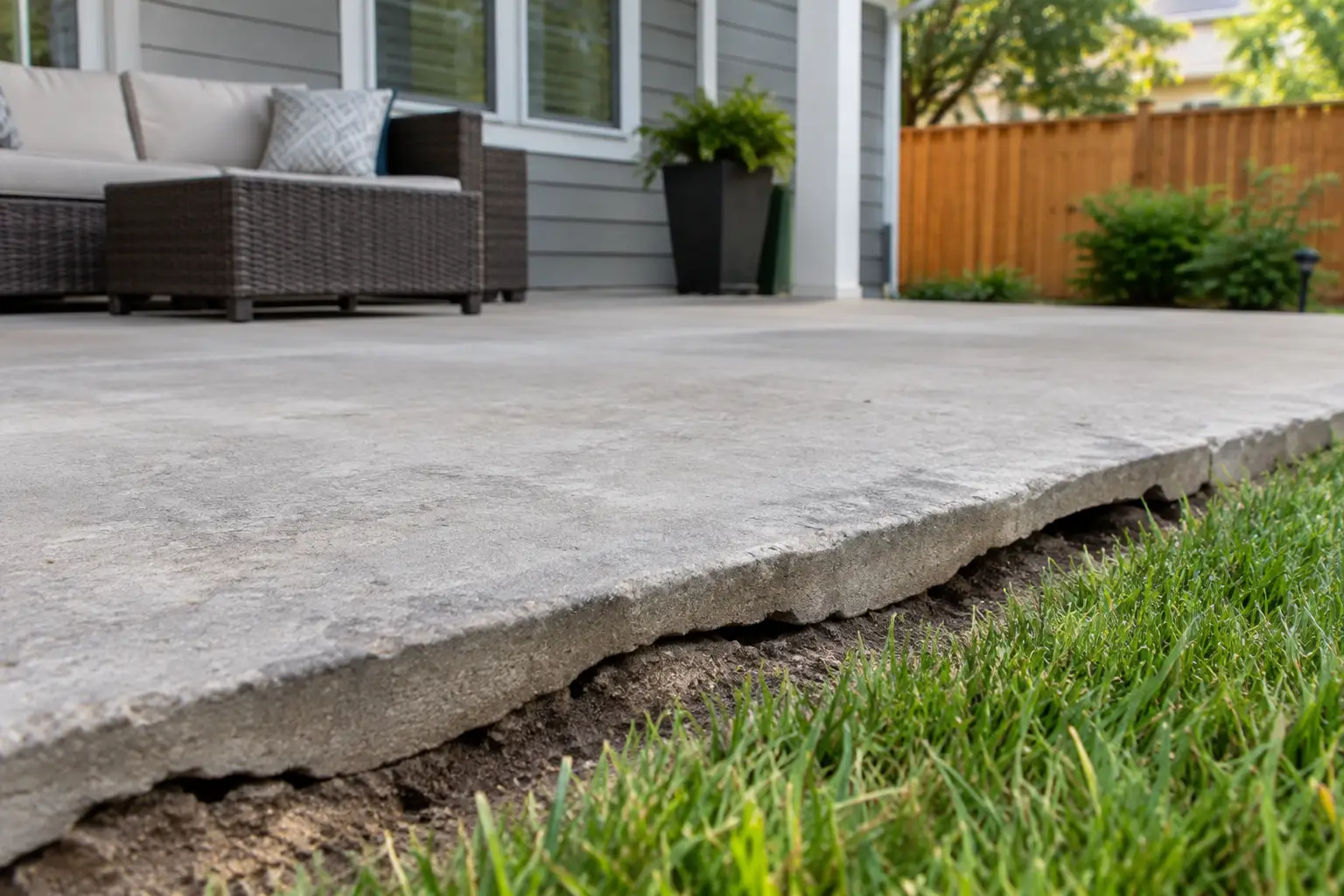
A patio can look perfectly solid one season and develop a noticeable low spot, crack, or awkward step the next. If you are asking what causes concrete patio sinking, the concrete itself is usually not the real problem. In most cases, the ground, base material, or water movement below the slab has changed.
For Bakersfield homeowners, a sinking patio is more than a curb appeal issue. It can send water toward the home, create a trip hazard, interfere with patio furniture, and turn an outdoor space into something you avoid using. Finding the cause before choosing a repair is the best way to protect your property and avoid paying for the same problem twice.
What Causes Concrete Patio Sinking?
Concrete patios sink when the soil or support beneath them can no longer hold the slab evenly. Concrete is strong under compression, but it is not designed to bridge large empty spaces. Once part of the base settles, washes away, or compresses, the slab follows.
The rate of sinking matters. A patio that has settled slightly over many years may have a different solution than one that suddenly drops after a heavy rain, irrigation leak, or plumbing issue. Here are the seven most common reasons contractors find.
1. Poorly Compacted Base Soil
Before a patio is poured, the soil beneath it should be graded, prepared, and compacted to create stable support. If that step was rushed or skipped, loose soil can settle over time under the weight of the concrete.
This issue is especially common around newer homes where the lot was graded and backfilled during construction. Fill dirt can look level at the surface while remaining loose below. As it consolidates, a section of the patio can sink, often leaving a crack where the slab begins to bend.
A proper repair must account for the unstable material underneath. Simply adding a new layer of concrete on top does not correct the settling and adds more weight to the problem.
2. Water and Poor Drainage
Water is one of the biggest threats to a concrete patio base. Downspouts that empty beside the patio, yard drainage that slopes toward the slab, and runoff from nearby hardscapes can saturate the soil below. Wet soil may soften, shift, or gradually erode away.
The patio should generally slope away from the house so rain and irrigation water move away from the foundation. When a settled section reverses that slope, water may begin collecting against the home. That is when a patio repair becomes a property-protection issue, not just a cosmetic improvement.
In Bakersfield’s dry climate, irrigation can be the more frequent source of hidden moisture. A sprinkler head aimed at the patio edge or a leaking line running below landscaping can introduce water repeatedly, even when there has not been significant rainfall.
3. Erosion From Leaks or Runoff
Water does not have to flood a yard to create trouble. A slow leak can carry fine soil particles away little by little, leaving voids beneath the concrete. Once there is open space under a slab, the patio may sound hollow when tapped or show cracks that widen over time.
Common sources include damaged irrigation lines, leaking outdoor faucets, broken drainpipes, and poorly directed roof runoff. If one area of the patio has dropped noticeably while the surrounding concrete remains level, investigate water movement before scheduling a surface-level repair.
A reliable contractor will look for the reason the void formed. Raising the slab without correcting an active leak may provide a temporary improvement, but the ground can continue washing out underneath.
4. Expansive or Changing Soil Conditions
Soils do not stay the same year-round. Clay-heavy soils can expand when wet and shrink as they dry. That movement can place uneven pressure beneath a patio, causing sections to lift, settle, or crack.
This does not mean every patio on reactive soil will fail. Good site preparation, drainage planning, reinforcement, and joint placement make a major difference. Still, patios built near planting beds, lawn areas, or locations with inconsistent watering can experience more soil movement than patios on stable, well-drained ground.
The fix depends on the severity and the source of moisture changes. Improving drainage may be enough for minor movement. More substantial settlement may call for lifting, removal and replacement, or redesigning nearby landscape and irrigation features.
5. Tree Roots and Decaying Organic Material
Large tree roots are often blamed for every concrete problem, but roots usually lift concrete more directly than they cause it to sink. However, root-related settling can happen when roots alter soil moisture, decay after a tree is removed, or leave voids as buried organic material breaks down.
Patios poured over old root systems, buried wood, construction debris, or uncompacted landscape material may settle as that material decomposes. This is one reason excavation and base preparation matter so much on a new patio installation.
If a mature tree is close to the patio, avoid cutting major roots without professional guidance. Removing roots can affect the tree’s stability and may create a different ground-movement issue later. A site-specific assessment is safer than assuming the tree is the only cause.
6. Heavy Loads and Unsupported Patio Edges
Most residential patios are built for foot traffic, furniture, grills, and normal outdoor living. They are not necessarily designed for repeated vehicle traffic, oversized equipment, loaded dumpsters, or heavy structures placed near the edge.
A patio edge is more vulnerable when the surrounding soil has eroded or when there is no well-supported transition to an adjacent walkway, planter, or yard. Heavy point loads can crack the slab and push it into weak soil below. Outdoor kitchens, pergola posts, and masonry features should be planned with the patio’s thickness and supporting base in mind.
For commercial properties, loading expectations are even more important. A slab used by carts, service equipment, or delivery activity needs a design appropriate for that use, not a standard residential patio approach.
7. Original Installation Problems
Some sinking begins with installation choices that were not visible after the concrete cured. A patio may have been poured too thin, placed over an uneven base, installed without proper reinforcement, or finished with inadequate slope. Control joints may also have been missing or poorly located, allowing random cracks to develop as the slab moves.
Age alone does not make concrete sink. Well-installed concrete can provide decades of dependable service. But an older patio can reveal weaknesses that were present from day one, especially after years of irrigation, weather exposure, and normal ground movement.
Signs Your Patio Needs More Than a Cosmetic Fix
Hairline cracks are common in concrete and do not always mean a patio is failing. The concern grows when cracks have vertical separation, meaning one side sits higher or lower than the other. Other warning signs include standing water after irrigation, gaps under the slab edge, doors or gates that now scrape near the patio, and cracks that keep reopening after patching.
Pay attention to where the slab is moving. A low corner near a downspout points toward drainage. A settled strip beside a planter may indicate irrigation or soil changes. A patio that sinks toward the house deserves prompt attention because it can direct water where it does not belong.
Should You Lift, Repair, or Replace a Sinking Patio?
There is no one-size-fits-all answer. If the concrete is still in good condition and the sinking is limited, slab lifting may be a practical option. This approach can raise a settled section by filling the voids beneath it, but it works best when the underlying cause has been identified and addressed.
Crack repair may help with minor surface defects, but patches cannot stabilize unsupported concrete. If the patio has widespread cracking, major height differences, poor drainage, thin concrete, or a failing base across a large area, replacement is often the longer-lasting investment.
Replacement also creates an opportunity to improve the patio rather than simply restore it. A new layout can add better drainage, a larger entertaining area, decorative stamped concrete, integrated walkways, or a cleaner connection to a pool deck or backyard landscape.
A Better First Step for Bakersfield Property Owners
Before making a decision, look at the whole site: the patio slope, downspouts, sprinklers, nearby trees, landscaping, and any signs of leaks. Taking photos after watering or rain can help show where water is traveling and where it pools.
National Concrete can assess the condition of an existing patio and help Bakersfield-area property owners understand whether a targeted repair or a new installation makes more sense. The goal should be a level, attractive surface supported by proper preparation, not a quick cover-up.
A sinking patio rarely fixes itself, but it does not always require a full replacement. Address the soil and water conditions early, and your outdoor space can return to being the comfortable, dependable place it was meant to be.