Concrete Patios Built for Bakersfield Living
October 21, 2026
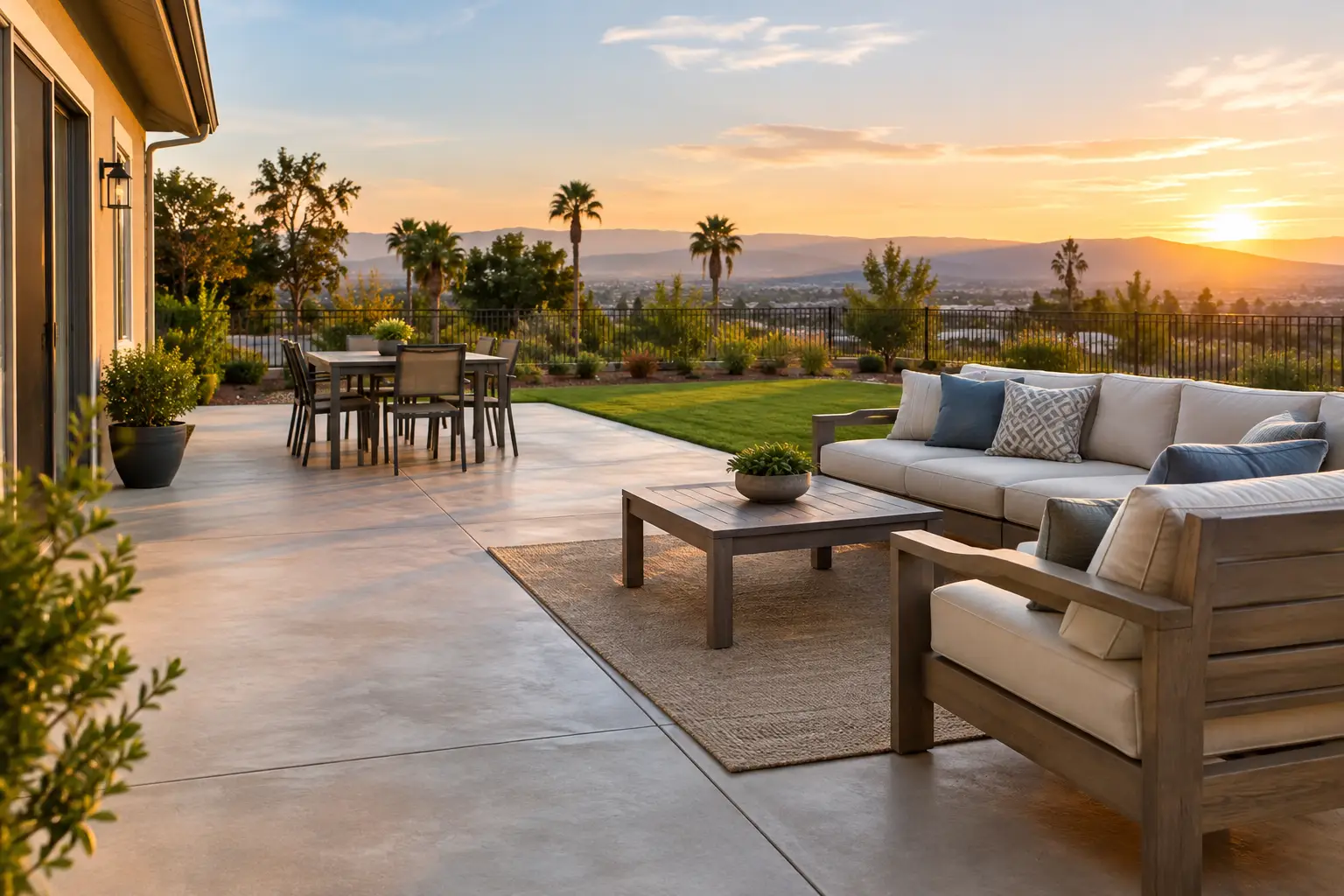
A patio in Bakersfield has to do more than look good on the day it is poured. It needs to stand up to bright sun, dry conditions, weekend gatherings, patio furniture, grills, and the daily traffic of a busy home. Well-planned concrete patios give homeowners a durable foundation for outdoor living while creating a finished look that fits the property.
The difference between a patio that stays attractive and one that develops early cracks, drainage problems, or an awkward layout usually comes down to planning before the concrete truck arrives. Size, elevation, base preparation, reinforcement, finish, and curing all matter. A dependable contractor helps bring those decisions together without making the process complicated.
Why Concrete Patios Make Sense in Bakersfield
Concrete is a practical choice for Kern County properties because it can be designed around how the space will actually be used. A small patio can create a clean spot for a table and grill. A larger installation can connect a pool, outdoor kitchen, fire feature, side yard, or covered living area into one useful space.
Compared with many individual pavers, a poured concrete surface has fewer joints to shift or collect weeds. Compared with wood decking, it does not need regular staining, does not invite termite concerns, and handles sun exposure well when installed correctly. It is also flexible from a design standpoint. Homeowners can choose a clean broom finish, decorative borders, stamped patterns, integral color, exposed aggregate, or a custom combination that complements the house.
That does not mean concrete is maintenance-free or impossible to crack. Concrete naturally shrinks as it cures, and even quality work can develop hairline cracks over time. The goal is to control where movement occurs with proper joints, build a stable base, and use installation practices that support long-term performance.
Start With How You Want to Use the Patio
A patio should feel intentional, not like a leftover slab behind the house. Before choosing a shape or decorative finish, think about the furniture, pathways, and activities the area needs to support.
A dining area needs enough room to pull chairs back comfortably. A grill station needs clearance from walls, fencing, and foot traffic. If the patio will connect to a pool deck, the surface should be planned with barefoot comfort and slip resistance in mind. For an outdoor kitchen or pergola, it is wise to confirm utility locations and post placement before pouring.
The right size depends on the property and the purpose. A simple landing outside a back door may only need a modest pad. A family entertainment patio may benefit from separate zones for seating, dining, and cooking. Adding a little space during the original pour is often more economical and visually cohesive than trying to extend the patio a year later.
Consider sun, shade, and access
Bakersfield summers make shade planning especially valuable. Look at where afternoon sun hits the yard and where people naturally enter and exit the home. A patio may work best along the shaded side of the house, beneath a future cover, or with room for umbrellas and shade structures.
Access matters as much as square footage. The patio should create a natural route from the home to the yard, pool, gate, or driveway. A well-placed walkway can keep foot traffic off landscaping and make the entire outdoor area easier to use.
Design Options for Concrete Patios
A standard gray patio remains a strong option when the goal is a clean, affordable, low-maintenance surface. With crisp edges, properly placed joints, and a consistent finish, simple concrete can look sharp beside almost any home style.
Decorative concrete offers more visual impact when the patio is a major feature of the backyard. Stamped concrete can create the appearance of stone, slate, brick, or wood plank while maintaining the strength and continuity of a poured slab. Color can be integrated into the concrete or applied as part of the finishing system. Borders, bands, and contrasting patterns can help define a dining area or echo the colors of the home’s exterior.
A broom finish is a popular choice for patios because it provides texture and traction. Exposed aggregate can add a more decorative, textured look, although it may not be the best fit for every barefoot poolside application. Smooth troweled finishes can look modern, but they need careful consideration around water since overly slick surfaces are not ideal outdoors.
The best finish is not always the most elaborate one. It depends on the budget, the architecture of the home, expected foot traffic, and whether the patio needs to coordinate with existing driveways, walkways, or pool decking. An experienced concrete contractor can explain which options will look good and perform well for the intended location.
What Makes a Patio Last
The visible surface gets attention, but the work underneath carries much of the responsibility for a lasting patio. Soil conditions, excavation depth, and compaction need to be evaluated before installation. A properly prepared base helps support the slab and reduces the risk of uneven settling.
Drainage is equally important. Water should move away from the home and avoid pooling near doors, foundations, or the patio edge. The patio needs a deliberate slope, but not so much that tables, chairs, and everyday use become uncomfortable. This is one of the details that is easy to overlook in a quick estimate and difficult to correct after the concrete hardens.
Control joints are another essential part of the job. These planned cuts or tooled lines encourage concrete to crack in predictable locations as it cures and moves. Joint placement should work with the patio’s shape and dimensions so the finished layout looks intentional rather than random.
Reinforcement, concrete thickness, and edge details should match the use of the patio. A standard residential seating area has different needs than a slab supporting heavy outdoor equipment, a masonry fireplace, or a built-in kitchen. If the project includes structures or unusual loads, discuss them early so the patio can be designed accordingly.
The Installation Process Should Feel Straightforward
A quality patio project begins with a clear conversation about goals, measurements, design preferences, and site conditions. Homeowners should know what area will be poured, how the crew will access the yard, what happens to existing landscaping, and how long the work is expected to take.
Once the plan is set, the installation generally includes layout, excavation, base preparation, forms, reinforcement where needed, concrete placement, finishing, joint work, and curing. Decorative work may involve additional steps for color, stamping, sealing, or detailed border treatments.
Weather can affect the schedule and finishing process. Bakersfield heat can cause concrete to set quickly, which makes timing and crew experience especially important. A professional team plans the pour around conditions and uses proper curing practices to give the slab the best opportunity to gain strength.
After installation, protect the patio while it cures. Follow the contractor’s guidance on when to walk on it, place furniture, use a grill, or drive equipment across it. For decorative surfaces, periodic cleaning and resealing may help preserve color and appearance. Avoid harsh de-icing chemicals and address stains sooner rather than later.
Choosing a Contractor for Concrete Patios
Price matters, but the lowest quote is not always the best value. A patio estimate should reflect more than square footage. It should account for access, removal work, excavation, base preparation, thickness, reinforcement, drainage, finish selection, and any custom features.
Ask how the contractor plans to manage slope and drainage, where joints will be placed, and what finish is recommended for the area. Review examples of similar work and make sure the company is comfortable with both straightforward patio pours and custom decorative designs. Clear communication before the job starts is a good sign that the project will stay organized once work begins.
National Concrete brings local craftsmanship and a practical, customer-first approach to patios throughout Bakersfield and nearby Kern County communities. Whether the vision is a simple backyard slab or a detailed stamped concrete gathering space, the right plan makes the process easier and the final result more rewarding.
A great patio should make you want to step outside more often. Start with the way you live, choose materials and finishes that fit the property, and give the preparation work the attention it deserves. That is how an outdoor concrete surface becomes a space your family can enjoy for years.