Decorative Concrete Design Trends for Bakersfield
October 13, 2026
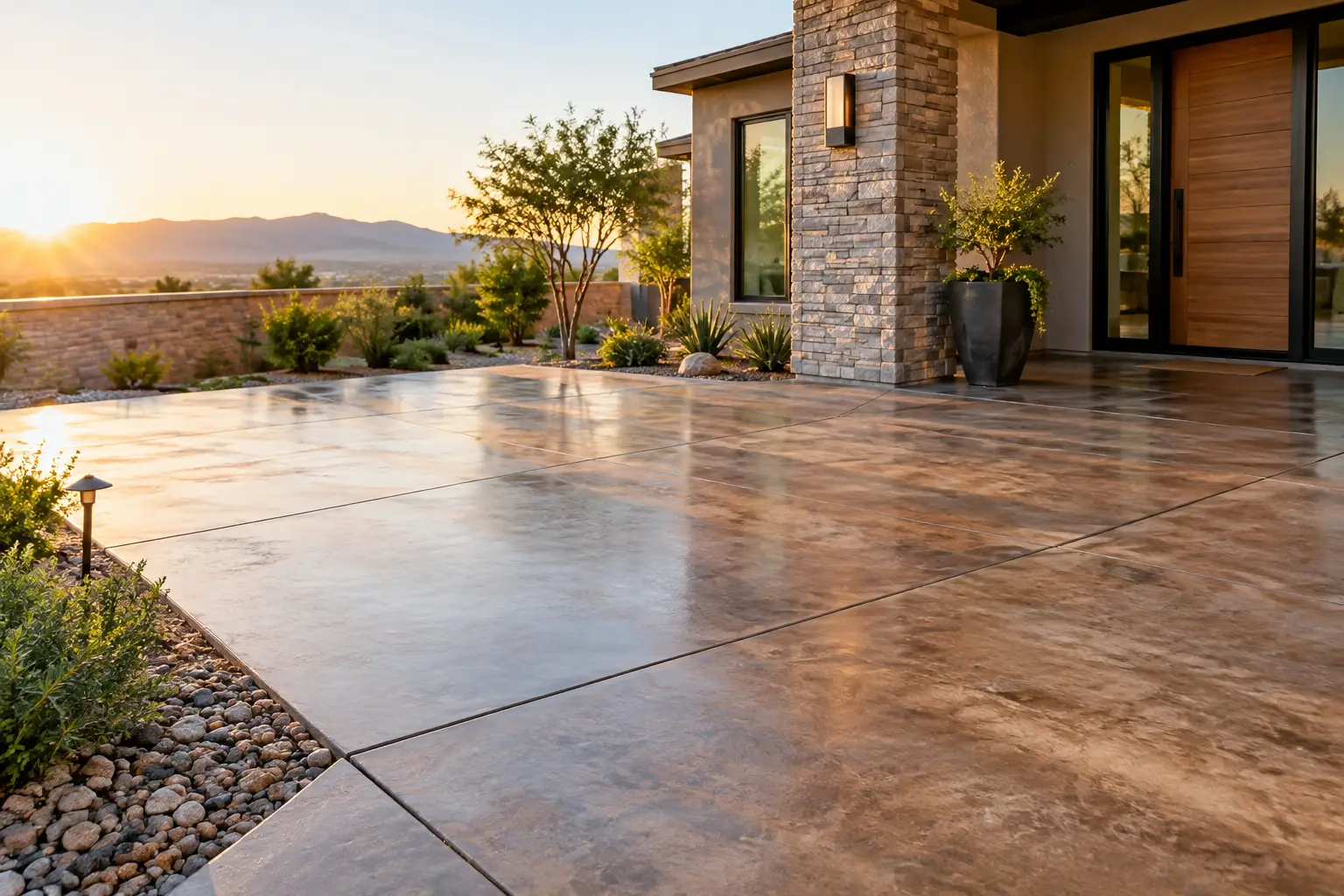
A plain gray slab can do the job, but it rarely makes a front entry, backyard, or commercial property feel finished. The best decorative concrete design trends give Bakersfield property owners more control over color, texture, layout, and long-term performance without giving up the strength concrete is known for.
For homeowners, decorative concrete can turn a wide driveway into a true part of the home’s curb appeal or make a patio feel like an outdoor room. For commercial properties, it can help define entrances, pedestrian areas, courtyards, and gathering spaces while standing up to regular use. The key is choosing a look that fits the property, the local climate, and the way the surface will actually be used.
Decorative Concrete Design Trends That Last
Trends matter, but the right concrete design should not feel dated after a few seasons. In Kern County, heat, sun exposure, dust, and daily foot or vehicle traffic all influence which finishes make sense. A beautiful finish is only a good investment when it is paired with proper site preparation, solid installation, planned joints, and appropriate sealing.
Warm, natural color palettes
Cool gray concrete is still a practical choice, especially for modern homes and commercial sites. But warmer colors are gaining ground across patios, walkways, and driveways. Sand, taupe, tan, soft brown, terracotta, and weathered stone shades work naturally with Bakersfield’s landscape, stucco exteriors, tile roofs, and dry-climate planting.
These colors tend to look less stark in bright sunlight and can help outdoor spaces feel more connected to the home. Lighter shades may also be more comfortable underfoot near a pool or patio during hot weather. That said, very light finishes can show dirt, tire marks, and leaf stains more easily, while very dark colors can absorb more heat. A mid-tone palette often gives homeowners the most forgiving balance.
Stone, slate, and wood-inspired stamped concrete
Stamped concrete remains popular because it delivers texture and character at a more manageable cost than installing individual pavers or natural stone. Current preferences are moving away from overly busy patterns and high-contrast color combinations. Instead, many property owners are choosing realistic slate, flagstone, travertine-style, ashlar, and subtle wood plank patterns.
The strongest stamped concrete projects use restrained color. A base color with a complementary release color can create depth without making every joint look artificial. This approach works especially well for patios, pool decks, entry walkways, and larger entertaining areas where a natural texture adds visual interest.
Pattern selection should match the scale of the space. Large-format stamps can make a broad patio feel clean and open, while a smaller pattern may suit a narrow walkway or compact courtyard. A contractor should also consider drainage, slope, and furniture placement before committing to a deeply textured finish.
Clean borders and intentional layout
One of the most effective design upgrades is also one of the simplest: adding a border. Decorative borders can frame a patio, outline a driveway, define a walkway, or create a visual transition between a pool deck and landscaping. They may use a contrasting color, a different stamp pattern, or a clean saw-cut line.
This trend is less about adding decoration everywhere and more about creating order. A broad driveway, for example, can look more custom with a darker perimeter band and controlled joint layout. On a patio, a border can make the space feel like a finished outdoor living area rather than an extension of the yard.
Saw-cut scoring is another practical choice for property owners who want a more tailored appearance without a heavy texture. Geometric grids, large rectangular panels, and simple diagonal lines can bring a modern look to a slab. Because control joints are necessary in concrete, thoughtful planning can make those functional lines part of the design instead of an afterthought.
Modern smooth finishes with subtle detail
Not every decorative surface needs to be stamped. Smooth troweled concrete, lightly textured finishes, and exposed aggregate are increasingly chosen for clean-lined homes and commercial properties. These surfaces can look refined, especially when paired with precise edges, integrated steps, planter walls, or architectural curbing.
Exposed aggregate brings natural variation to the surface by revealing decorative stone within the concrete. It offers good traction and a durable appearance for walkways, pool areas, and certain driveways. The trade-off is comfort and maintenance: a rougher surface may not be ideal for bare feet, and repairing a small section can be more difficult if the aggregate blend is not matched carefully.
For pool decks, a broom finish or a specialty textured finish may be the better fit when slip resistance is the priority. Design should support safety first, particularly around water, stairs, and frequently used walking paths.
Decorative Concrete for Outdoor Living
Backyards are being designed for everyday use, not just occasional parties. That shift is influencing the way patios and hardscape areas are planned. Homeowners are requesting larger concrete pads with designated zones for dining, grilling, fire features, seating, and shade structures.
A decorative patio can bring those zones together without requiring several different materials. A stamped main field paired with a simple border, for example, can visually separate the dining area from a lounge space. A smooth concrete section near an outdoor kitchen may make cleanup easier, while a textured section near the yard can offer better grip.
Integrated features are also gaining attention. Low seat walls, steps, planter edges, drainage channels, and concrete curbing can make the entire outdoor area feel more deliberate. These additions need to be planned before the pour. Adding them later is possible in some cases, but it rarely delivers the same clean, built-in result.
Pool Deck Trends: Cooler, Safer, Easier to Maintain
A pool deck has different demands than a front walkway. It needs reliable traction, heat-conscious color choices, drainage away from the pool and home, and a finish that holds up to water, chemicals, and regular cleaning.
Many Bakersfield homeowners are favoring lighter, lightly textured pool deck finishes over dark, heavily stamped patterns. A subtle texture is easier to walk on than a slick hard-troweled surface and usually feels more comfortable than aggressive aggregate. Decorative scoring or a simple border can still add personality without creating too many uneven lines around lounge chairs and pool equipment.
Sealer choice matters here. A glossy sealer can deepen color and give stamped concrete a richer appearance, but it may become slippery when wet if the right traction additive is not used. A professional recommendation should account for the finish, the amount of shade, nearby landscaping, and how the pool area is used.
What Commercial Properties Are Choosing
Commercial decorative concrete needs to look professional while handling heavier use. Property managers, builders, and business owners often choose finishes that guide traffic, improve first impressions, and simplify maintenance. Colored walkways, exposed aggregate entries, scored plazas, and broom-finished paths with decorative borders are all practical options.
The best commercial design is usually more restrained than a residential patio. It should complement the building, make entries easy to identify, and meet accessibility and drainage needs. A decorative finish cannot compensate for poor grading or inadequate thickness, so structural requirements must lead every decision.
For larger projects, consistency is just as important as appearance. Matching color batches, joint spacing, finish texture, and transitions between phases requires experienced planning and crew coordination. That is where proven concrete craftsmanship makes a visible difference.
Choosing a Trend That Fits Your Property
Before selecting colors or patterns, think about the surface’s daily job. A driveway needs to support vehicles and resist tire marks. A patio should suit your furniture and outdoor lifestyle. A pool deck needs traction and heat awareness. A commercial walkway must prioritize safety, access, and durability.
It also helps to look at the property as a whole. The best designs repeat a color, texture, or line already found in the home’s exterior, landscaping, block walls, or surrounding hardscape. The result feels intentional instead of trendy for trend’s sake.
National Concrete helps Bakersfield and Kern County property owners bring these ideas into a clear, buildable plan. From a simple decorative border to a detailed stamped patio or large-scale commercial installation, the right approach starts with listening, evaluating the site, and providing a straightforward estimate.
A decorative concrete project should make the property easier to enjoy every day. Choose a design with lasting appeal, make performance part of the conversation, and work with a contractor who treats every finish detail as part of the finished result.