Can Concrete Be Poured in Winter? Bakersfield Tips
October 7, 2026
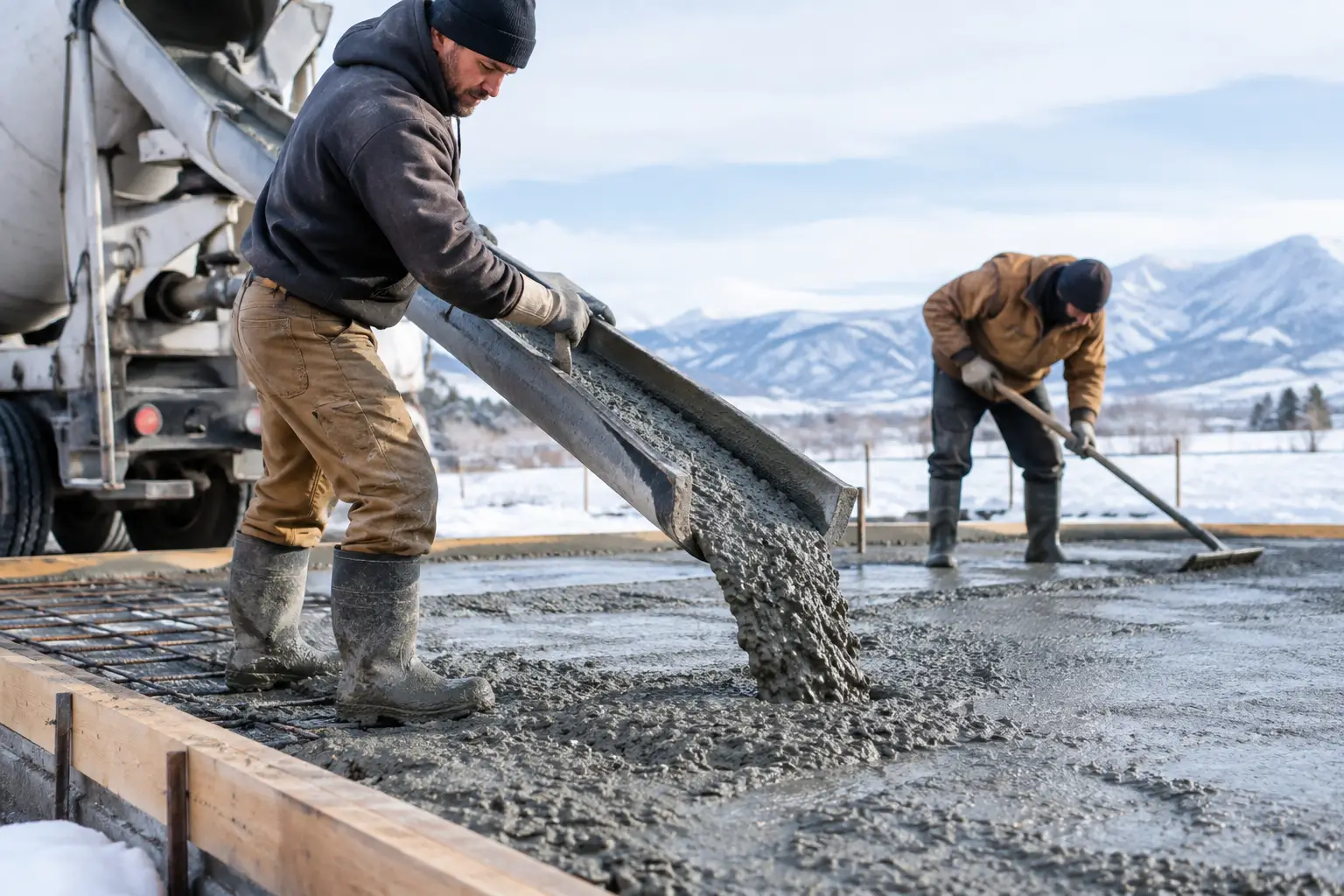
A winter project does not have to mean putting off the new driveway, patio, foundation, or pool deck you have planned. Can concrete be poured in winter? Yes, when the crew pays close attention to air temperature, ground conditions, moisture, mix design, and curing. The calendar matters less than the conditions on the day of the pour and during the first week afterward.
For Bakersfield and Kern County property owners, winter often provides workable concrete days. Our climate is far milder than many parts of the country, but cool nights, rain, damp soil, and occasional cold snaps can still affect fresh concrete. A quality installation starts with a contractor who knows when to proceed, when to protect the work, and when rescheduling is the smarter call.
Can Concrete Be Poured in Winter Safely?
Concrete can be placed during winter if it is kept warm enough to hydrate and gain strength properly. Concrete does not simply “dry.” Cement reacts chemically with water in a process called hydration. That reaction builds the strength that lets a driveway carry vehicles, a patio support outdoor living, or a foundation perform as designed.
Cold weather slows hydration. If fresh concrete freezes before it has developed enough early strength, the water inside can expand and damage the concrete’s internal structure. The result may be reduced strength, surface scaling, cracking, or a shorter service life. Those problems are difficult and expensive to correct after the fact.
Industry cold-weather precautions generally become necessary when average daily temperatures fall below 40 degrees Fahrenheit for more than three consecutive days. That does not mean every 39-degree morning makes a pour impossible. It means the project needs a deliberate plan. In Bakersfield, the biggest concern is usually a cold overnight forecast or wet weather, rather than weeks of deep freeze.
What Conditions Make a Winter Pour a Bad Idea?
A dependable contractor evaluates the entire weather window, not just the temperature at the scheduled start time. The day may look clear at 10 a.m., but a sharp drop after sunset or rain moving in before the finish is complete can change the decision.
A pour may need to be postponed when the subgrade is frozen, standing water is present, heavy rain is expected, or temperatures are likely to fall below safe curing levels without proper protection. Concrete should never be placed on frozen soil, ice, or snow. As that material thaws, it shifts and leaves the slab without uniform support.
Rain deserves special attention. Light rain after concrete has reached an appropriate stage can sometimes be managed with protection, but rain hitting fresh, unfinished concrete can weaken the surface. Adding dry cement to the top to soak up water or working rainwater into the slab is not a professional fix. It can create a dusty, weak, or flaky finish.
For decorative work such as stamped concrete, colored patios, and custom pool decks, weather timing becomes even more critical. These finishes require careful control during placement and finishing. Waiting for a better day is often the best way to protect the appearance you are investing in.
How Professionals Protect Concrete in Cold Weather
Cold-weather concrete work is not guesswork. It involves preparing the site, selecting the right materials, monitoring temperatures, and protecting the slab while it cures. The exact approach depends on whether the job is a small residential walkway, a large commercial slab, a block wall footing, or a structural foundation.
First, the ground must be properly prepared. The base should be stable, compacted, and free of frost, mud, and standing water. Wet, soft subgrade can compromise the slab even if the concrete itself is mixed and placed correctly.
Next, the concrete mix may be adjusted for the forecast and project requirements. A supplier may use an accelerator to help the concrete gain early strength more quickly. This is different from adding excessive water at the jobsite, which lowers strength and increases the risk of shrinkage cracking. For reinforced or decorative concrete, a non-chloride accelerator may be the preferred choice to avoid concerns associated with chlorides.
Crews can also use warmer mixing water or schedule delivery during the warmer part of the day when conditions call for it. After placement, insulating blankets, covers, temporary enclosures, or controlled heat may be used to keep the concrete at a suitable curing temperature. The goal is not to make the concrete hot. It is to prevent freezing and support consistent strength development.
Fresh concrete also needs curing protection after the crew leaves. Depending on the project, this can include curing compound, plastic sheeting, blankets, or other methods that retain moisture and moderate temperature. Good curing is one of the most overlooked parts of a durable installation, especially in cool, breezy winter weather.
Winter Timing Matters for Driveways, Patios, and Foundations
Different projects have different demands. A driveway needs a well-compacted base, proper thickness, reinforcement where specified, joint placement, and enough curing time before vehicle traffic. A patio may have more flexibility, but decorative finishes require favorable conditions to look their best. Foundations and footings need careful attention to soil conditions, bearing support, and structural specifications.
For homeowners, the practical question is usually whether winter work will delay use of the new space. Concrete may feel hard within a day, but that does not mean it is ready for full service. Foot traffic is often allowed sooner than vehicle traffic, while driveways need more time before cars or trucks are placed on them. Cooler weather can extend those timelines.
Do not rush the first few days to park on a new driveway, move heavy patio furniture, install a spa, or start construction on top of a fresh foundation. Your contractor should provide project-specific guidance based on the mix, weather, thickness, and intended use. A little patience at the start helps protect a long-term investment.
Why Winter Can Be a Smart Time for Concrete Work in Bakersfield
Winter is not automatically the off-season for concrete in Bakersfield. Mild daytime temperatures can be comfortable for crews and may reduce the rapid moisture loss that occurs during hot, dry summer days. That can be helpful for curing when the project is properly protected.
Scheduling may also be more flexible outside the busiest warm-weather months. If you are planning a backyard renovation before spring entertaining, a driveway replacement before summer travel, or a commercial improvement on a defined timeline, starting in winter can keep the project moving forward.
The trade-off is that weather-related rescheduling is more likely. A trustworthy contractor will not promise to pour through every forecast just to keep a date on the calendar. Rescheduling for rain or an unsafe temperature window is a sign that the team is protecting your concrete, not avoiding the job.
What to Ask Before Scheduling a Winter Concrete Project
Before approving a winter pour, ask how the contractor checks the forecast, prepares wet or cold subgrade, and protects the concrete after placement. Ask whether the proposed mix is appropriate for the expected temperatures and when the finished surface can safely handle foot traffic, vehicles, or construction loads.
It is also reasonable to ask about drainage. Winter rain can reveal where water collects around a home or commercial property. A new driveway, walkway, patio, or curbing system should be designed with slope and runoff in mind, not just appearance. Proper drainage helps prevent pooling, erosion, and water moving toward the structure.
National Concrete approaches each Bakersfield-area project with the same focus: quality craftsmanship, clear communication, and a plan that fits the site conditions. Whether the job is a straightforward sidewalk or a custom stamped patio, the right preparation makes the difference between concrete that merely looks good on day one and concrete built to last.
If your project timing falls in winter, do not assume you have to wait until spring. Get a professional evaluation of the site, the forecast, and the work involved, then choose the pour date that gives your concrete the best start.