Concrete Curbing for Bakersfield Properties
October 5, 2026
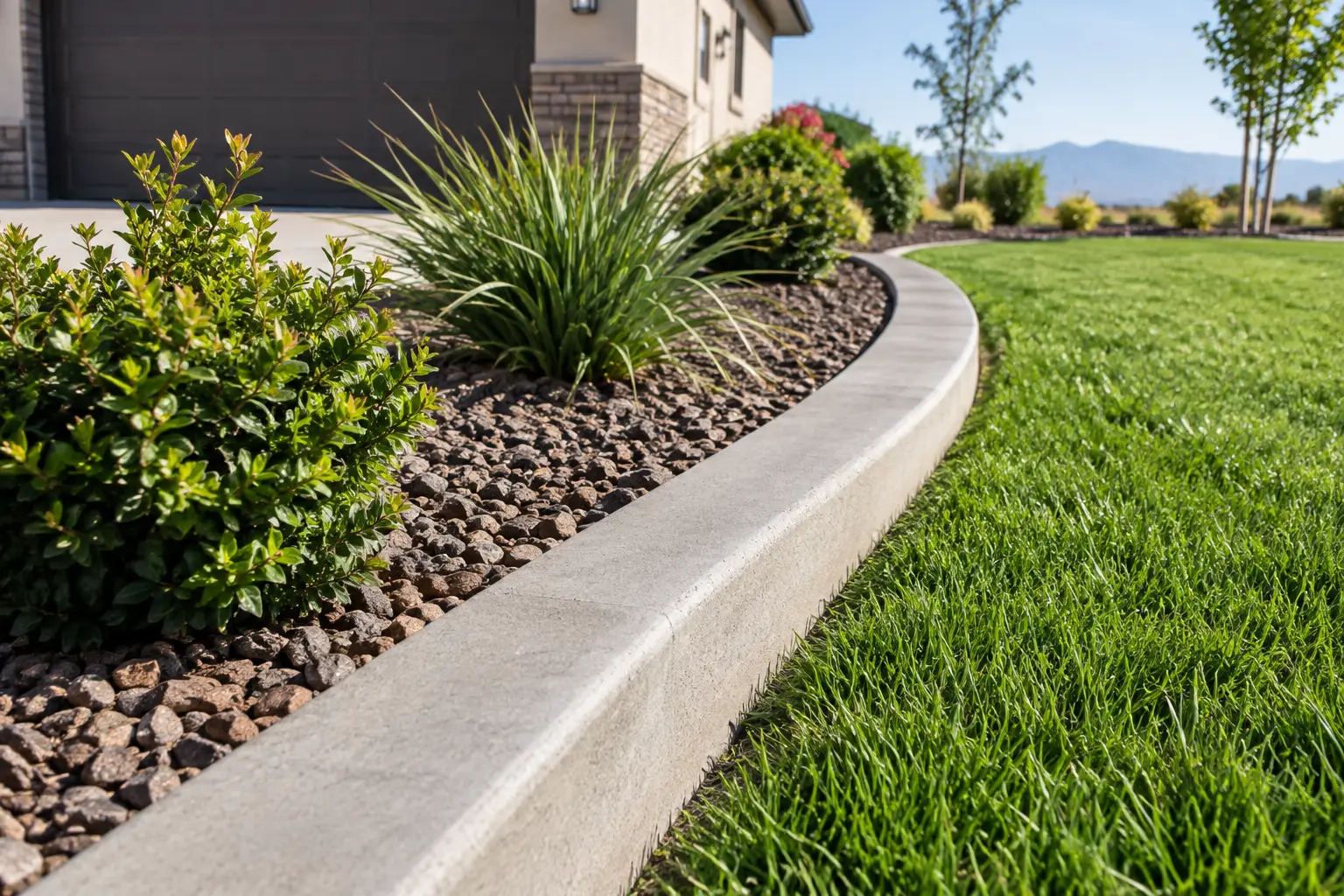
A crisp edge can change the way an entire property feels. Concrete curbing gives Bakersfield homes, commercial landscapes, parking areas, and garden beds a finished boundary that holds its shape through heat, watering, foot traffic, and routine maintenance. It is a practical detail, but it also creates the clean lines that make a driveway, lawn, walkway, or planting area look intentionally designed.
For property owners, the best curbing is not an afterthought. Its profile, placement, drainage, and finish should work with the rest of the concrete and landscape plan. A properly installed curb helps define the space now while reducing the constant edging, shifting materials, and messy borders that come with temporary alternatives.
What Concrete Curbing Does for a Property
Concrete curbing is a continuous poured-concrete border used to separate and contain areas of a property. Residential installations often frame flower beds, lawns, gravel, decorative rock, driveways, and patios. On commercial sites, curbs may guide vehicle movement, protect landscaped areas, define parking islands, or create clear separation between pavement and planting zones.
The biggest benefit is permanence. Plastic edging can lift in the sun, metal edging can bend or rust, and loose pavers can shift as the soil moves. Concrete creates a solid, low-profile boundary with far less maintenance. It keeps bark, gravel, and decorative stone where they belong, which can make regular yard care easier and help landscaping look cleaner between service visits.
Curbing also improves visual order. A simple gray curb can give a front yard sharper definition. A colored or decorative finish can coordinate with a stamped patio, walkway, block wall, or driveway. The right design does not need to compete with the landscaping. It gives the landscaping a structure that makes every other feature stand out.
Where Concrete Curbing Works Best
There is no single curbing layout that fits every property. The best application depends on how the area is used, how water moves through the site, and whether the goal is containment, protection, appearance, or all three.
Landscape Borders and Tree Rings
Landscape curbing is a popular choice for front yards, backyard planting beds, and tree rings. It separates mulch or rock from turf, helps prevent material from spilling onto a sidewalk or driveway, and gives mowing equipment a clear edge to follow. In Bakersfield, where decorative rock and drought-conscious landscaping are common, a continuous concrete border can make a low-water yard look polished without adding ongoing work.
Curved borders are especially effective around lawn areas and planting beds because they soften the layout and avoid the rigid appearance of straight, pieced-together edging. Straight runs, on the other hand, can complement modern home designs and formal entryways.
Driveways, Walkways, and Patios
Curbing beside a driveway or walkway helps create a transition between concrete, turf, rock, and planting areas. It is often used where homeowners want a more finished edge without expanding the entire slab. Around patios, a small curb can contain gravel or planter areas while keeping the outdoor space visually organized.
This work needs planning. A curb placed too close to a walking path can become a trip point, and one that blocks water flow can create drainage problems. The installation should account for slope and the way the space will actually be used, not just how it looks from the street.
Commercial Parking Lots and Site Improvements
Commercial concrete curbing has a more demanding role. It may separate parking from landscaped islands, direct traffic around a building, protect signage, or help establish durable boundaries near access lanes. These curbs must be placed with vehicle clearance, drainage, accessibility, and the property’s maintenance needs in mind.
For a property manager or developer, consistency matters just as much as appearance. Clean lines and durable construction help a site look cared for, while well-placed curbs can reduce damage to landscaping and organize traffic patterns. Larger projects may require coordination with paving, drainage, site plans, and local requirements before concrete is placed.
Choosing the Right Curb Profile and Finish
One reason concrete curbing is so useful is its design flexibility. It can be formed in a range of shapes, from a simple mow strip to a raised landscape border or a more substantial commercial curb. The profile should match the job.
A low, rounded curb is often a smart choice along lawn edges because it is easier to mow beside and has a subtle appearance. A taller profile may be better when containing decorative rock, mulch, or soil. For driveways and parking areas, the curb needs enough definition and strength for the expected traffic and site conditions.
Color can make the curbing blend into the landscape or connect it to nearby concrete. Earth tones often work well with desert landscaping, while natural gray offers a clean, timeless look. Decorative stamping or texture can be appropriate for a custom residential project, but it is not always necessary. A simple, well-finished curb usually delivers the strongest long-term value.
The trade-off is straightforward: more decorative detail can raise the cost and may require more careful maintenance, especially near irrigation and planting beds. If the goal is a durable border that will quietly do its job for years, a clean profile and quality finish are often the best investment.
How Professional Concrete Curbing Is Installed
Long-lasting curbing begins below the visible surface. The area is laid out to establish the intended curves, elevations, and transitions. The crew then prepares the soil, removing loose material and creating a stable base where needed. This step matters because poor preparation can lead to settling, cracking, or uneven lines later.
Forms or specialized curbing equipment shape the concrete into the selected profile. Fresh concrete is placed, consolidated, finished, and tooled to create smooth edges and planned control joints. Control joints do not eliminate cracking entirely, but they help guide normal concrete movement into less noticeable locations.
After placement, curing is critical. Concrete gains strength over time, and excessive heat, wind, or improper moisture management can affect the final result. Bakersfield conditions can be demanding, particularly during hot, dry weather. An experienced local contractor plans the work around the site and weather conditions, then provides clear guidance on when the area can be used and how to protect it while it cures.
What Affects Concrete Curbing Cost?
The price of a curbing project is influenced by more than total linear footage. Straight, accessible runs typically require less labor than intricate curves around existing landscaping. Demolition, excavation, site grading, soil conditions, curb height, color, finish selection, and access for equipment can all affect the estimate.
For commercial work, the scope may also include traffic control, coordination with other trades, engineered plans, or requirements tied to the property layout. That is why an on-site assessment is valuable. It gives the contractor a chance to measure the area, identify drainage concerns, discuss the desired appearance, and recommend an approach that fits the property rather than relying on a rough guess.
The lowest quote is not always the lowest-cost decision. Thin placement, rushed base preparation, and weak finishing can leave a border that cracks early or loses its clean shape. Quality workmanship, appropriate materials, and a clear plan are what turn curbing into a durable improvement instead of another repair item.
Keeping Your Curbing Looking Its Best
Concrete curbing is low maintenance, but it still benefits from basic care. Keep sprinkler heads aimed away from the curb when possible, since repeated direct spray can leave mineral staining and wash soil away from the edge. Avoid striking the curb with mowers, vehicles, or heavy landscape equipment, especially during the early curing period.
For decorative or colored curbing, periodic cleaning and resealing may help preserve its appearance. Small hairline cracks can occur as concrete cures and responds to normal ground movement. Larger cracks, settling, or separation near driveways and walkways deserve a professional evaluation, particularly if drainage has changed around the property.
A well-designed border should make the rest of your property easier to enjoy, not give you another item to worry about. Whether you are refining a front yard, finishing a new patio area, or improving a commercial site, National Concrete can help you choose concrete curbing that looks right, performs well, and adds a clean finish you will be proud to see every day.