
Foundation Settling Signs Bakersfield Owners Should Know
September 21, 2026
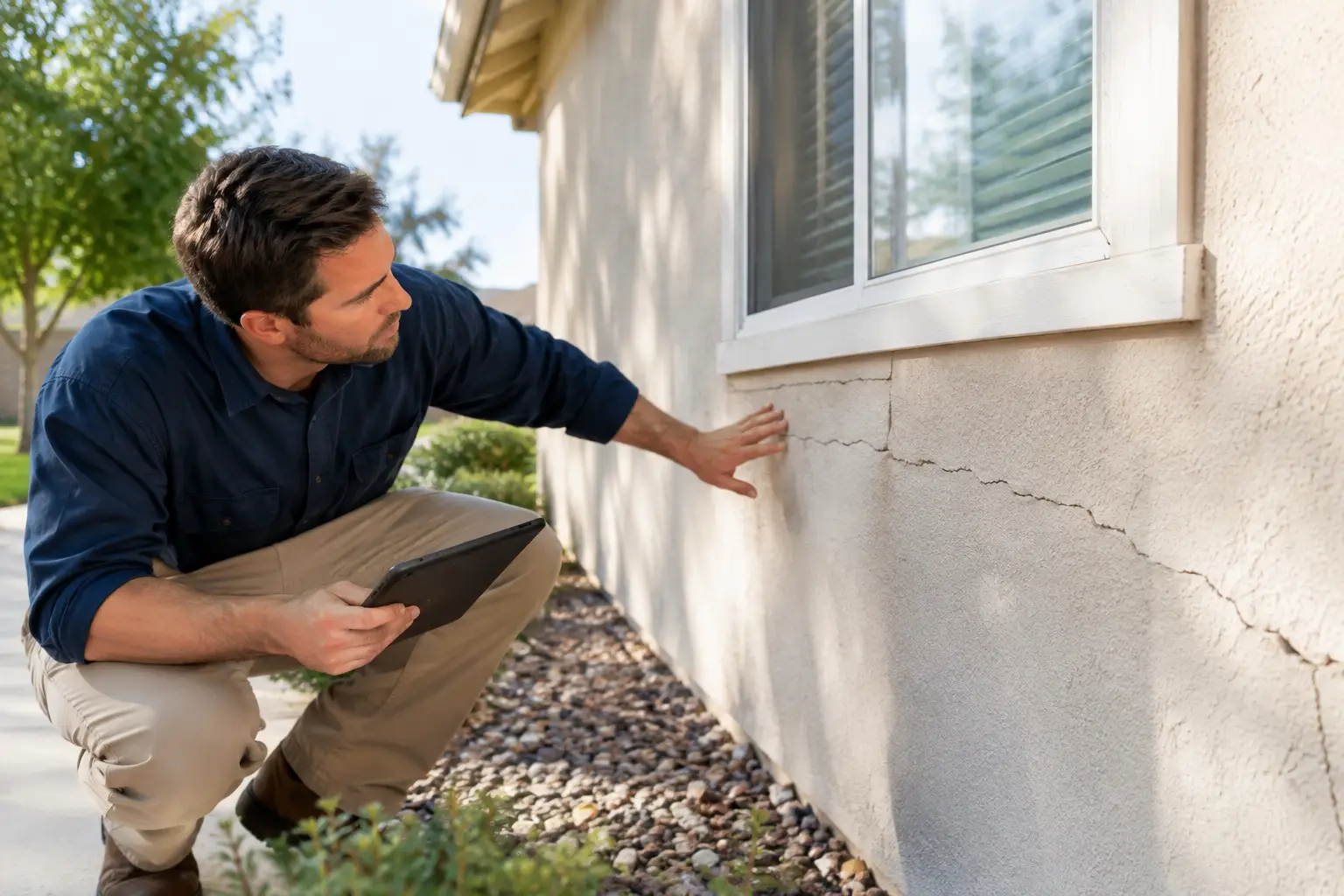
A hairline crack in a concrete slab may be normal. A crack that keeps widening, runs diagonally across a wall, or appears alongside sticking doors is different. Knowing the foundation settling signs to watch for can help Bakersfield property owners act before a manageable repair turns into a larger structural or drainage concern.
Concrete and soil both move. That does not automatically mean a home or commercial building is failing. The key is recognizing whether movement is minor and stable or active enough to affect the structure, slab, or surrounding flatwork.
What Foundation Settling Actually Means
Foundation settling happens when the soil beneath a structure compresses, shifts, expands, or loses support. As the ground changes, parts of the foundation may move at different rates. This uneven movement is often called differential settlement.
In Kern County, dry conditions, irrigation patterns, drainage issues, expansive soils, plumbing leaks, and changes in moisture around a building can all influence soil behavior. A property built on properly prepared, well-compacted soil can still experience some movement over time. The concern starts when that movement becomes uneven, progressive, or visible throughout the building.
New concrete also shrinks slightly as it cures. That is why small, shallow cracks can appear in slabs, patios, and driveways without indicating foundation trouble. A qualified contractor looks at the crack pattern, location, width, change over time, and related symptoms instead of judging the situation by one line in the concrete.
Foundation Settling Signs That Need Attention
The most reliable warning signs usually appear in more than one place. A single sticking interior door after a season of temperature changes may be a minor adjustment. Several doors that no longer latch, combined with wall cracks and sloping floors, deserve a closer look.
Cracks in Interior Walls, Exterior Walls, or Brick
Cracks around door frames, window corners, and ceiling lines are common places for movement to show up. Vertical hairline cracks may be cosmetic, particularly in newer drywall. Diagonal cracks that extend from the corner of a window or door, widen over time, or reappear after patching are more concerning.
On exterior masonry, look for stair-step cracks along mortar joints or separations where brick, stucco, or siding meets another material. These patterns can suggest that one area is moving differently than the area beside it.
Doors and Windows That Stick or Separate
When a foundation shifts, door and window openings can lose their square shape. Doors may rub the frame, swing open on their own, fail to latch, or leave an uneven gap at the top or bottom. Windows can become difficult to open or close.
Again, one stubborn door is not proof of settlement. Wood framing can react to heat and humidity. But if the issue develops in multiple rooms, especially with fresh cracks nearby, it is worth documenting and evaluating.
Uneven Floors and Gaps at Trim
A floor that feels noticeably sloped, bouncy, or uneven can be a structural clue. In a slab-on-grade home, separation between the floor and baseboards may also point to movement. Check for gaps where interior trim meets walls, cabinets pull away from the wall, or countertops separate from a backsplash.
Commercial properties may show similar symptoms through uneven transitions, cracked floor finishes, misaligned doors, or gaps around storefront frames. These conditions can become safety and maintenance issues if they continue to progress.
Cracks in the Foundation, Slab, Driveway, or Patio
Concrete cracks are not all equal. A thin surface crack in a patio may be a normal curing or shrinkage crack. A crack that is wider on one end, has one side higher than the other, or allows water to enter is more significant.
Pay close attention to displacement. If one side of a crack sits higher than the other, known as vertical offset, the concrete has moved rather than simply shrunk. This may occur in a foundation slab, garage floor, walkway, driveway, or pool deck. While exterior flatwork movement does not always mean the home foundation is moving, it can reveal drainage or soil conditions that should not be ignored.
Water Pooling Near the Structure
Water is one of the biggest factors in foundation performance. Downspouts that discharge next to the house, low spots beside the slab, leaking irrigation, or a broken plumbing line can saturate soil in one area while other areas remain dry. That uneven moisture can cause soil to swell, soften, or lose bearing support.
After irrigation or rain, walk the perimeter and look for standing water, erosion, muddy areas, or soil pulling away from the foundation. In Bakersfield’s dry climate, homeowners sometimes focus only on keeping landscaping watered. Consistent, well-managed drainage matters just as much as irrigation.
How to Tell Normal Concrete Cracking From Settlement
The condition of the crack matters more than the fact that it exists. Small, stable hairline cracks without displacement are often part of concrete’s natural curing process. They may be repaired for appearance or to keep moisture and debris out, but they are not automatically a structural emergency.
Settlement-related cracks tend to be accompanied by change. They grow wider, become longer, show vertical movement, or appear with other foundation settling signs such as sticking doors and wall separation. A simple way to monitor a questionable crack is to photograph it with a ruler beside it, note the date, and take another photo every few months. This creates a useful record if the condition changes.
Do not fill a crack and assume the underlying cause is solved. Cosmetic patching has its place, but active movement, poor drainage, or inadequate soil support should be addressed before investing in a permanent finish repair.
What to Do When You Notice Possible Settlement
Start by observing without panic. Take clear photos of cracks, floor changes, gaps, and water patterns around the property. Make note of when you first saw the issue and whether it changed after heavy irrigation, plumbing work, rainfall, or a long dry period.
Next, look for obvious water-management problems. Keep roof runoff directed away from the foundation, correct standing-water areas where practical, and make sure irrigation is not soaking one side of the building every day. Avoid dramatically changing watering habits around the foundation without professional guidance, since sudden moisture swings can create their own problems in certain soils.
If you see displacement, widespread cracking, rapidly changing gaps, or several symptoms at once, bring in the right professional. A foundation repair specialist, structural engineer, or other qualified building professional can determine whether movement is active and what repair approach makes sense. The right solution depends on the cause. It may involve drainage correction, leak repair, soil stabilization, piering, slab repair, or a combination of measures.
For cracked driveways, patios, walkways, and other exterior concrete, an experienced local concrete contractor can help assess whether replacement, leveling, drainage work, or a redesigned concrete layout is the practical next step. National Concrete works with Bakersfield-area property owners who want durable concrete solutions that account for both appearance and site conditions.
Protect Your Property Before Small Changes Grow
Foundation concerns are easiest to manage when they are noticed early. Keep an eye on the perimeter of your home or commercial building, pay attention to changes instead of isolated imperfections, and do not overlook drainage just because the concrete still looks mostly intact.
When a crack, slope, or separation leaves you unsure, getting a professional opinion can replace guesswork with a clear path forward. A timely inspection today may help protect the concrete work, structure, and peace of mind you have invested in for years to come.