
Before and After Pool Deck Resurfacing Results
September 19, 2026
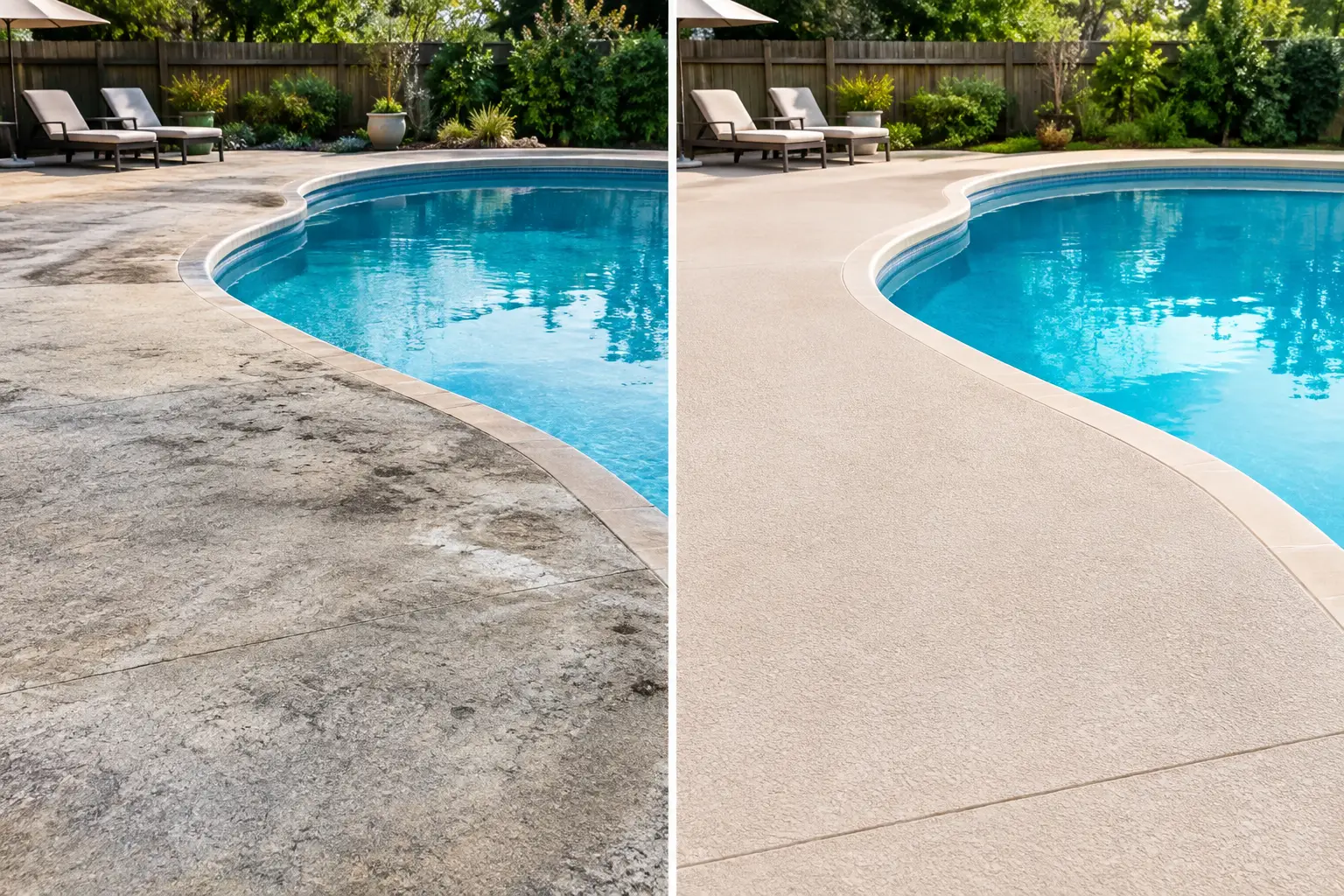
A pool deck can make a well-kept backyard look tired long before the pool itself shows its age. Faded color, rough patches, hairline cracks, and old coatings can turn the space around the water into an eyesore – or worse, a surface that feels unsafe under bare feet. Before and after pool deck resurfacing projects often show a dramatic visual change, but the real value is in restoring a durable, comfortable outdoor surface built for regular use.
For Bakersfield homeowners, that matters. Our long, hot summers, intense sun, pool chemicals, and constant foot traffic can be tough on concrete. A properly planned resurfacing project can give an existing deck a fresh appearance without the cost and disruption of removing and replacing every square foot of concrete.
What a Pool Deck Looks Like Before Resurfacing
Most pool decks do not fail all at once. They gradually collect signs of wear: a chalky or blotchy finish, exposed aggregate, minor surface cracking, peeling sealer, stains, and areas that feel rough on bare feet. These problems can make a backyard feel dated even when the pool, landscaping, and outdoor furniture are in good condition.
Some damage is cosmetic, while other damage deserves a closer look. Small hairline cracks and shallow surface imperfections can often be addressed during resurfacing preparation. Wider cracks, movement between slabs, poor drainage, or concrete that is soft and breaking apart may call for repairs beyond a new overlay. A good contractor should be direct about that difference rather than covering a structural concern with a decorative finish.
Older decks can also present a safety issue. Slick finishes, worn texture, uneven transitions, and crumbling edges are especially concerning around a pool where water is expected. Resurfacing is an opportunity to improve traction and create a more consistent walking surface for family, guests, tenants, or customers.
Before and After Pool Deck Resurfacing: What Changes
The most obvious change after resurfacing is appearance. A faded gray deck can become a clean, cohesive part of the backyard with a color and texture that better fits the home. Depending on the selected system, homeowners may choose a simple refreshed concrete look, a decorative texture, a stamped pattern, or a finish designed to complement stone, tile, or landscaping.
But the best before-and-after pool deck resurfacing results are not just about color. They improve the way the space works. The surface should feel more comfortable, look more intentional, and provide texture that helps reduce slips when the deck gets wet. Repairing surface defects before the finish is installed also creates a more polished result than simply applying a new coating over worn concrete.
A resurfaced deck can visually connect separate outdoor elements as well. If a patio, walkway, outdoor kitchen area, or seating space sits near the pool, a coordinated finish can make the entire yard feel more complete. That is often a smart move for homeowners preparing to enjoy the property for years or considering a future sale.
Is Resurfacing the Right Choice for Your Deck?
Resurfacing is often a practical option when the existing concrete slab is generally stable but its top surface is worn, stained, faded, or cosmetically damaged. It can be more efficient than demolition and replacement because the base concrete remains in place.
Still, it depends on the condition of the deck. If slabs have significant settlement, major heaving, severe cracking, drainage problems, or deep deterioration, full replacement or targeted concrete repairs may be the better long-term investment. Resurfacing a deck with unresolved movement can lead to recurring cracks and disappointment.
The right first step is an on-site evaluation. A contractor can assess the concrete, identify repair needs, review drainage around the pool, and explain which finish options make sense for the space. That conversation should include how the deck is used. A quiet residential pool area has different needs than an apartment complex, hotel, community pool, or high-traffic commercial property.
The Details That Create a Better Finished Deck
The finished surface is only as good as the preparation underneath it. Before a resurfacing material is applied, the deck needs to be cleaned, evaluated, repaired where appropriate, and mechanically prepared so the new material can bond correctly. Skipping preparation is one of the fastest ways to get a finish that peels, chips, or wears unevenly.
Cracks should be addressed with the appropriate repair method, although no contractor should claim that every existing crack can be permanently erased. Concrete naturally moves with temperature changes and soil conditions. The goal is to evaluate the cause, repair what is repairable, and use a system suited to the deck’s condition.
Texture selection also matters. A pool deck needs enough texture for confident footing without becoming so aggressive that it feels uncomfortable for bare feet. Color deserves the same practical attention. Lighter shades can help a deck feel brighter and may be more comfortable under Bakersfield sun, while darker colors can create a bold look but may show heat and water spotting differently. The best choice balances the style of the home with day-to-day use.
Design Options Without Replacing the Whole Deck
A resurfaced pool deck does not have to look plain or generic. Decorative concrete gives property owners room to update an older space with a finish that matches their goals and budget.
A clean broom or textured finish works well for homeowners who want a simple, timeless result with practical traction. Decorative overlays can add more character through subtle patterns, stone-inspired textures, or custom color. Stamped concrete may be an option for certain projects when a more detailed appearance is desired. Border details can also help define the pool area and tie the deck into nearby patios or walkways.
The right design is not always the most elaborate one. A large pool deck with a busy pattern may feel crowded, while a modest backyard can benefit from a little added visual interest. National Concrete helps clients look at the whole outdoor area so the finished deck supports the property rather than competing with it.
What to Expect During the Resurfacing Process
A professional pool deck resurfacing project starts with an inspection and clear scope of work. The contractor should discuss existing damage, recommended repairs, finish choices, access to the work area, and realistic timing. Pool edges, landscaping, structures, and surrounding surfaces need careful protection throughout the project.
The crew then prepares the concrete, completes agreed-upon repairs, and applies the selected resurfacing system according to the product requirements and site conditions. After the finish is installed, the deck needs appropriate curing time before it can handle foot traffic, furniture, and normal pool activity. Exact timing varies based on the materials used, weather, and the condition of the deck.
Homeowners should plan for temporary limits on pool-area access. It is a short-term inconvenience, but protecting the curing process helps support a better result. A contractor who communicates clearly about the schedule makes that process far easier to manage.
Keeping the New Look in Good Shape
After resurfacing, simple maintenance goes a long way. Sweep away leaves and debris, rinse off sunscreen and pool chemical residue when practical, and clean spills before they have time to stain. Use cleaning products that are appropriate for the installed finish, especially if a sealer or decorative coating is involved.
Pay attention to drainage and irrigation, too. Standing water can leave mineral deposits, encourage staining, and expose the surface to unnecessary wear. If sprinkler heads repeatedly spray the deck, adjusting them can protect the finish and keep the pool area cleaner.
Over time, some decks may benefit from resealing based on their finish, sun exposure, and amount of use. This is not a one-size-fits-all schedule. A deck that receives constant direct sun and frequent pool traffic will have different maintenance needs than a shaded deck used only occasionally.
A Fresh Deck Changes How the Backyard Feels
The strongest before-and-after transformation is the one that makes people want to use the space again. A resurfaced pool deck can turn a faded, uncomfortable perimeter into a cleaner, safer-looking setting for weekends, family gatherings, and quiet evenings outside.
If your deck is showing its age, do not assume replacement is the only answer. Start with a professional assessment, ask honest questions about the condition of the concrete, and choose a finish that fits how you actually use your pool area. The right plan can bring lasting pride back to the part of your backyard where summer happens.