
Paver Patio vs Concrete: Which Fits Your Yard?
July 29, 2026
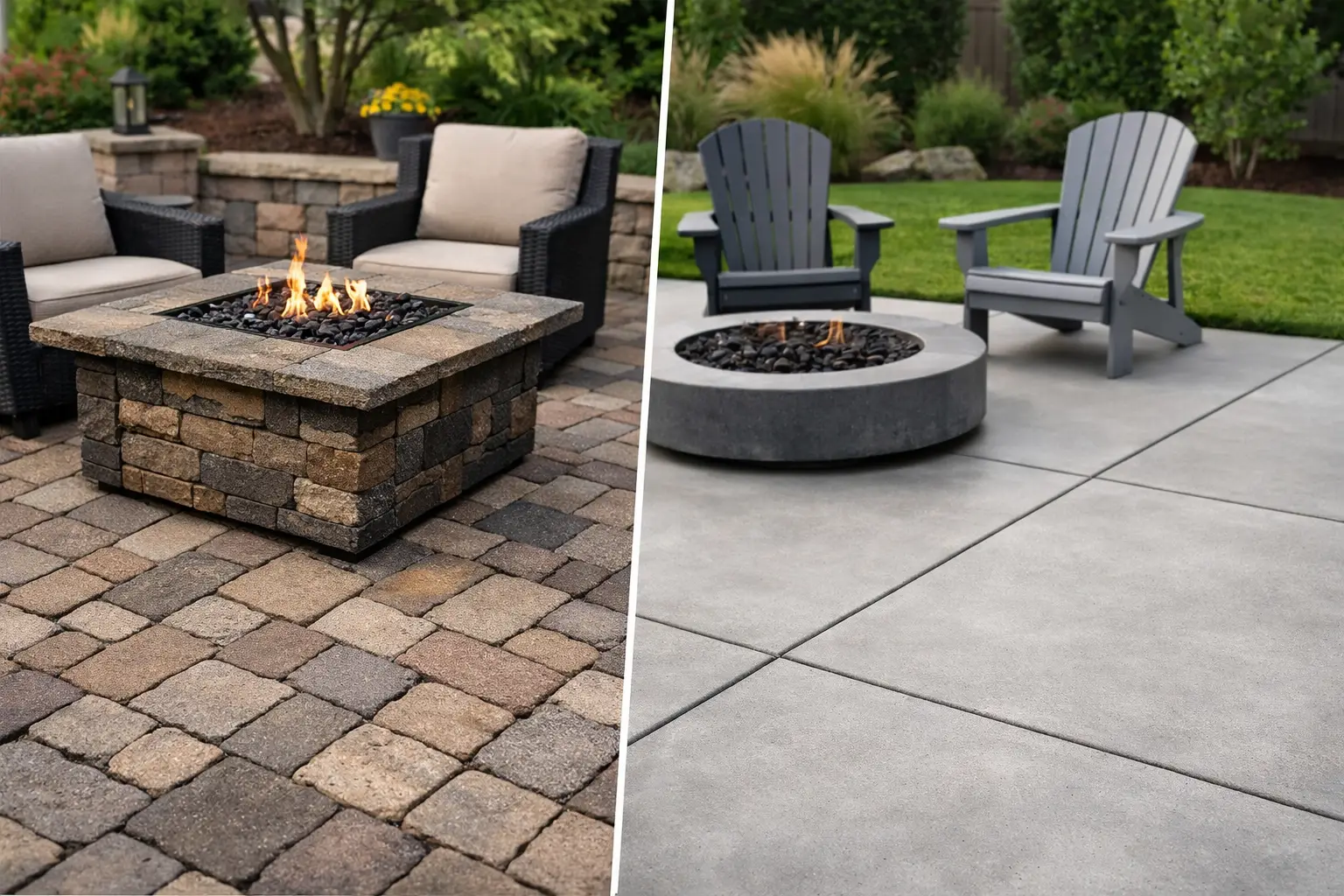
A new patio should make your backyard easier to enjoy, not create a maintenance project you regret a few summers later. When homeowners compare paver patio vs concrete, the right answer usually comes down to how you use the space, the look you want, your budget, and how much upkeep you are willing to take on in Bakersfield’s heat.
Both materials can create a beautiful, durable outdoor area. The difference is that concrete gives you a continuous, custom-finished surface, while pavers create a modular surface made from individual units. One is not automatically better than the other. A well-installed patio matters far more than choosing a material based on a photo alone.
Paver Patio vs Concrete: The Big Differences
A concrete patio is poured in place as a single slab, then finished to suit the project. It can have a clean broom finish, a smooth modern finish, exposed aggregate, color, decorative borders, or the textured appearance of stamped concrete. It is a strong choice for homeowners who want a polished outdoor surface with fewer joints and a wide range of design options.
A paver patio is built from individual concrete or stone pavers set over a compacted base. The joints are typically filled with sand or polymeric sand. Pavers offer a distinct patterned look and can be replaced one at a time if damage occurs. Their appeal often comes from their old-world, cobblestone, or high-end hardscape appearance.
The key distinction is how each surface handles movement. Concrete is designed with control joints that help manage natural cracking as the slab cures and responds to temperature changes. Pavers have many joints, allowing the system to flex somewhat, but those same joints require attention over time.
Upfront Cost and Long-Term Value
For many property owners, price is the first question. A basic concrete patio is often the more cost-effective option because installation is generally faster and requires fewer individual materials. That changes when you add custom colors, stamping, borders, detailed finishes, demolition, drainage work, or complex site access.
Pavers can carry a higher upfront cost due to excavation, base preparation, edge restraints, bedding material, and the labor involved in placing each unit. Premium pavers and intricate patterns can push the investment higher still.
However, cost should not be judged only by the initial estimate. A patio that fits your lifestyle, complements the home, and is installed correctly can add meaningful outdoor living value. Decorative concrete can provide a custom appearance without the expense of a fully pavered surface. Pavers may make sense for homeowners who specifically want that segmented, patterned look and are comfortable with ongoing joint maintenance.
For either option, a clear site-specific estimate is more useful than a generic price per square foot. Soil conditions, slope, access, existing concrete removal, patio size, drainage needs, and finish selections all affect the final scope.
Durability in Bakersfield Heat
Bakersfield patios take a beating from intense sun, dry conditions, and hot summer temperatures. A properly designed concrete patio is highly durable and well suited to this climate. The slab needs a properly prepared base, appropriate thickness for its intended use, correct reinforcement where needed, and planned joints to control cracking.
Concrete can crack. That is a fact of the material, not automatically a sign of poor workmanship. The goal is to prepare the site carefully and place control joints so natural movement occurs in less noticeable, planned locations. Large or unplanned cracks can result from poor subgrade preparation, drainage problems, heavy loads, tree roots, or significant soil movement.
Pavers also perform well in hot, dry weather, but they are not maintenance-free. Over time, the base can settle if it was not compacted properly. Individual pavers may shift, edges may move, and joint sand can wash out or break down. A paver surface can often be re-leveled or repaired in sections, which is a genuine advantage when settlement is isolated.
For patios near a house, drainage deserves just as much attention as the surface material. Water should move away from the foundation and should not collect against doors, walls, or landscape features. Quality installation starts below the finished surface.
Maintenance: What Each Patio Requires
Concrete is usually the easier choice for homeowners who want low routine maintenance. Sweeping, rinsing, and occasional cleaning are often enough to keep a standard patio looking good. Decorative concrete may benefit from periodic resealing to protect color and finish, especially in high-sun areas or around pools and outdoor kitchens.
Pavers need regular sweeping and may require replacement joint sand over time. Weeds can appear in joints if debris and moisture collect, even when polymeric sand is used. Ant activity, shifting, and pressure washing can also affect the sand between pavers. Sealing is optional in many cases, but some homeowners choose it to enhance color and help guard against staining.
Neither surface should be treated carelessly. Avoid harsh cleaners that can damage finishes, and address oil, grease, food, or leaf stains promptly. If your patio will include a grill, fire feature, outdoor kitchen, or frequent entertaining, choose a finish that is practical to clean as well as attractive.
Style and Design Flexibility
This category is often where concrete surprises people. A plain gray slab may be all some yards need, but concrete can be much more than plain. Stamped concrete can mimic stone, slate, brick, tile, or wood-plank textures. Integral color, stains, scoring, borders, and contrasting bands can create a custom patio that ties into the home’s architecture.
Concrete is especially effective when you want a large, continuous entertaining area. It works well for dining spaces, covered patios, walkways, pool decks, and transitions between indoor and outdoor living areas. Curved edges and custom shapes are also straightforward to create during the forming stage.
Pavers provide their own visual strengths. They are a natural fit for homes with traditional, Mediterranean, rustic, or formal garden styling. Different laying patterns can add character, and pavers can create strong visual separation between patio zones.
Consider the whole property before deciding. A patio should coordinate with the driveway, walkways, landscaping, exterior paint, and pool area. A material sample viewed in full sun is far more reliable than choosing from a small online image.
Surface Comfort and Safety
On a Bakersfield afternoon, any hardscape surface can become hot. Color makes a noticeable difference. Darker concrete colors and dark pavers tend to absorb more heat, while lighter shades are generally more comfortable underfoot. Texture also matters, especially around pools, spas, and outdoor showers.
For wet areas, a slip-resistant finish should be part of the design conversation from the beginning. A light broom finish or a properly selected textured decorative finish can provide better traction than a slick surface. The best patio finish balances safety, comfort, appearance, and ease of cleaning.
If accessibility is a concern, concrete often provides the smoother option for rolling furniture, wheelchairs, walkers, and strollers. Pavers can be comfortable underfoot when installed well, but their joints create a less continuous surface.
When Concrete Is Usually the Better Choice
Concrete is often the best fit when you want a durable patio with a clean, unified appearance and limited ongoing maintenance. It is also a smart choice for large outdoor living spaces, patios that connect directly to the house, and projects where a custom decorative finish can deliver the look you want within your budget.
It works particularly well when the project includes related concrete features, such as a walkway, pool deck, curbing, steps, or an outdoor kitchen pad. Designing these areas together can create a more intentional, finished look across the property.
When Pavers May Be Worth It
Pavers can be the right choice when their distinct style is the priority, or when you value the ability to lift and replace individual units after localized settling or damage. They can also suit smaller courtyards and garden patios where pattern and texture are central to the design.
Just be realistic about the installation. Pavers are only as stable as the excavation, base, compaction, edge restraint, and drainage beneath them. A low bid that skips proper preparation can lead to uneven surfaces and recurring repairs.
Make the Choice Based on Your Property
The best paver patio vs concrete decision is not made in a showroom. It is made by looking at your yard’s slope, soil, drainage, intended use, existing structures, and design goals. A simple backyard sitting area needs a different solution than a poolside entertaining space or a large commercial courtyard.
At National Concrete, the goal is to make that decision easy and hassle-free with practical recommendations, quality craftsmanship, and a patio built for the way you actually live. Choose the surface that gives you confidence every time you step outside – then give the installation the attention it deserves.