
Concrete Repair vs Replacement: Which Is Right?
July 27, 2026
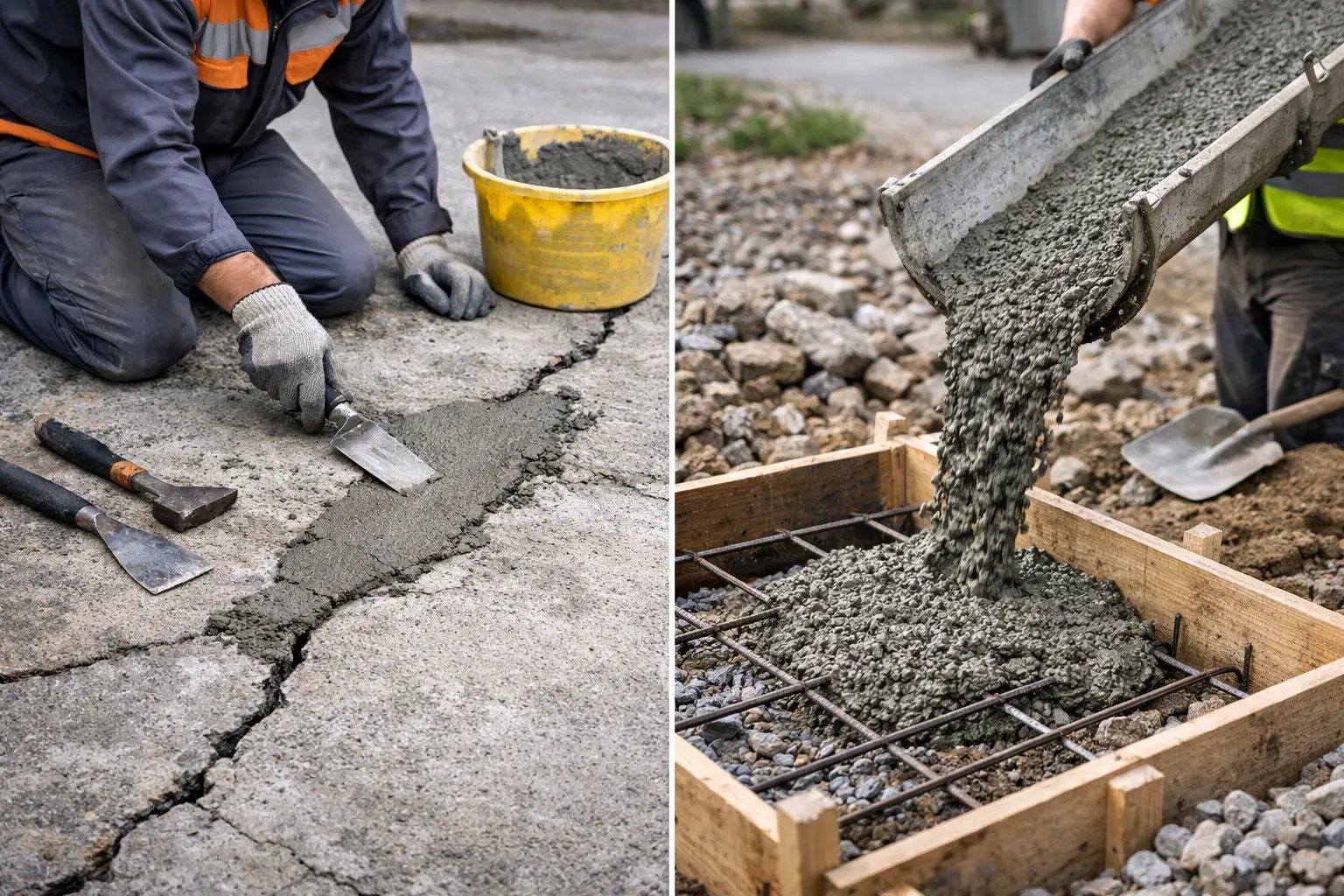
A driveway with a few hairline cracks may look like a repair job. A patio that slopes toward the house or a sidewalk with a raised edge is a different conversation. When weighing concrete repair vs replacement, the right answer comes down to more than appearance. The concrete’s condition, the cause of the damage, drainage, safety, and your plans for the property all matter.
For Bakersfield homeowners and Kern County property managers, a clear assessment can prevent money from being spent twice. The goal is not to automatically sell a larger project. It is to choose a solution that delivers a safe, durable surface and looks right for the property.
When Concrete Repair Makes Sense
Repair is often the smart choice when the slab is still structurally sound and the problem is isolated. Small surface cracks, minor chips, light spalling, or a stain that does not affect the concrete’s integrity may be corrected without removing the entire area.
A well-executed repair can restore the look and function of a driveway, patio, walkway, or pool deck at a lower initial cost. Common repair work may include crack filling, patching damaged spots, resurfacing worn concrete, sealing joints, or addressing a small section that has started to deteriorate.
The key question is why the damage happened. Concrete naturally expands and contracts with temperature changes, and hairline cracking can occur even in quality work. If a narrow crack is stable, not widening, and not creating a trip hazard, a repair may be all that is needed.
Good candidates for repair
Concrete repair is generally worth considering when the damage is cosmetic or limited to a small area, the slab remains level, drainage is working as intended, and the base beneath the concrete appears stable. A contractor should also confirm that cracks are not signs of deeper movement or poor soil support.
For example, a sound patio with a few surface blemishes may benefit from resurfacing or a decorative finish. A driveway with one damaged corner from a heavy impact may only need that section removed and replaced. In these cases, repairing the problem can preserve usable concrete and keep the project efficient.
The limitations of a repair
Repairs are practical, but they are not invisible in every situation. New patch material can vary slightly in color and texture from older concrete, especially after years of sun exposure. Decorative finishes and stamped patterns can be more challenging to blend than plain gray concrete.
More importantly, a crack repair does not stop future movement if the underlying cause remains. If water is reaching the base, roots are lifting the slab, or the soil has shifted, the same damage can return. A quality contractor will explain that trade-off clearly rather than treating every crack as a simple filler job.
Signs Replacement Is the Better Investment
Replacement becomes the better option when concrete has widespread damage, major settling, repeated cracking, or safety issues. Removing and reinstalling the affected area gives the contractor an opportunity to correct the base, improve drainage, place proper joints, and build a surface designed for the job it needs to do.
This is especially relevant for driveways, foundations, commercial walkways, and areas that carry regular vehicle or equipment loads. A slab that is breaking apart may look repairable on the surface, but patching over poor support rarely creates a long-term result.
Cracks that signal a bigger problem
Not every crack calls for replacement. However, wide cracks, cracks with one side higher than the other, branching patterns across a large area, or cracks that continue to reopen deserve a closer look. These conditions can point to settlement, expansive soil movement, inadequate base preparation, or drainage problems.
In Bakersfield’s dry climate, it is easy to overlook drainage until a hard rain exposes where water is collecting. Water that runs beneath a driveway or pools beside a foundation can weaken support over time. Replacement may allow for better grading and a layout that moves water away from the structure.
Uneven slabs and trip hazards
A raised walkway panel, settled patio edge, or broken pool deck is more than an eyesore. It can create a trip hazard for family, guests, tenants, employees, and customers. For commercial properties, damaged walkways can also affect the professional appearance of the site.
Sometimes a single panel can be replaced. When several panels are uneven or the problem extends across the slab, full replacement is often the more dependable route. It creates a consistent surface rather than a series of temporary fixes.
When the design no longer fits the property
Replacement is also an opportunity, not just a repair bill. A narrow cracked patio can become an outdoor living area. An aging driveway can be widened for better access. Plain concrete can be upgraded with a broom finish, decorative borders, color, or stamped concrete that complements the home.
If you already plan to change the footprint, add curbing, improve access, or update curb appeal, putting significant money into repairing the existing slab may not make sense. Starting fresh can give you a finished result that performs better and adds more visual value.
Concrete Repair vs Replacement: Comparing Cost and Value
Repair usually costs less upfront because it uses less material, less demolition, and fewer labor hours. That makes it attractive when the concrete has a long service life ahead of it. Replacement costs more initially, but it may provide stronger long-term value when the slab has systemic issues.
The cheapest option is not always the least expensive over time. A patch that needs to be revisited in two years can become frustrating and costly. On the other hand, replacing a large patio because of one minor crack is unnecessary if the rest of the slab is stable and attractive.
Think about the expected lifespan of the solution, not only the estimate total. A trustworthy concrete contractor should explain what is included in each option, what condition the underlying base is in, and what results you can realistically expect. That makes it easier to compare proposals fairly.
What a Professional Assessment Should Cover
Concrete decisions should be based on the full site, not a quick look at the crack itself. An experienced contractor will examine the damage pattern, check for elevation changes, consider how water moves around the area, and ask how the surface is used.
For a residential driveway, that may include the number and type of vehicles using it. For a commercial pad or walkway, it may include traffic volume, equipment loads, accessibility needs, and site drainage. The proper solution for a decorative backyard patio is not necessarily the proper solution for a loading area.
A good assessment also considers whether partial replacement will look and perform well beside the existing concrete. In some cases, replacing only the failed section is the best balance of cost and durability. In others, a continuous pour provides a cleaner appearance and reduces future mismatch concerns.
Choosing a Lasting Solution for Your Property
Do not let surface appearance alone make the decision. A clean-looking patch over an unstable slab can hide a problem for a short time, while a properly planned replacement can correct the conditions that caused the damage in the first place.
National Concrete helps Bakersfield-area homeowners and commercial clients evaluate concrete with straightforward recommendations, quality craftsmanship, and an easy, hassle-free process. Whether your project needs a focused repair, a new driveway, a safer walkway, or a custom patio upgrade, the right first step is a clear on-site evaluation.
Before you commit to either option, ask what caused the damage, how long the proposed fix should last, and whether drainage or base conditions need attention. Those answers will point you toward concrete work you can feel good about every time you pull into the driveway, walk the property, or welcome guests outside.