Backyard Hardscape Trends Bakersfield Homes Love
November 2, 2026
A Bakersfield backyard has to work harder than a backyard in a mild climate. It needs to handle long, hot summers, bright sun, dry conditions, pool traffic, and the kind of gatherings that turn a patio into the center of the home. The best backyard hardscape trends are not just about appearance. They help homeowners create outdoor spaces that stay comfortable, useful, and easy to enjoy year after year.
For many local property owners, that means moving beyond a plain concrete slab. Today’s hardscape projects combine thoughtful layout, decorative finishes, shade-friendly planning, and durable materials that suit the way Kern County families actually live outside.
Backyard Hardscape Trends That Add Real Value
The strongest trend is simple: homeowners are treating the backyard as a true extension of the house. A patio is no longer an afterthought placed behind the back door. It can become an outdoor dining room, a poolside lounge, a grilling area, or a clean transition between the home and the yard.
Custom concrete makes that flexibility possible. It can be poured in shapes and sizes that fit the property, finished for a particular look, and designed around existing features such as pools, pergolas, fire pits, garden beds, or outdoor kitchens. The goal is not to follow every passing design trend. It is to build a space that fits the home, the climate, and the people using it.
Larger, More Connected Patios
One of the most practical shifts is toward larger patios with clear zones for different activities. Instead of a small square landing outside the sliding door, homeowners are creating enough room for a dining table, seating area, barbecue, and walking space without everything feeling crowded.
A connected concrete patio can make even a modest backyard feel more organized. Curved edges, widened corners, and walkways that lead to separate seating areas create a sense of purpose. For homes with a pool, a continuous deck and patio layout can also reduce awkward transitions between surfaces.
The right size depends on how the space will be used. A family that hosts weekend cookouts needs a different layout than a homeowner who wants a quiet morning coffee spot. Planning for furniture dimensions, grill clearance, foot traffic, and future additions before concrete is poured can prevent expensive changes later.
Decorative Concrete With a Natural Look
Stamped concrete remains popular because it offers visual character without giving up the strength and low-maintenance benefits of concrete. Patterns that resemble natural stone, slate, brick, wood planks, and textured tile can give a patio or pool deck a more finished appearance while keeping the surface unified.
For Bakersfield homes, warmer earth tones are still a dependable choice, but many homeowners are also choosing lighter grays, soft tans, sand colors, and blended finishes. These colors can pair well with modern stucco exteriors, desert landscaping, black metal accents, and wood pergolas.
There is a trade-off to consider. Highly detailed patterns and multiple colors can create a dramatic result, but they may not suit every home or budget. A simpler broom finish with clean saw-cut joints, a subtle border, or a light integral color can look sharp and timeless. Good design does not require the most elaborate finish. It requires a finish that fits the property.
Cooler Pool Decks and Heat-Conscious Surfaces
Pool deck upgrades are a major priority in a climate where bare feet meet hot concrete for much of the year. Lighter colors generally absorb less heat than dark surfaces, making them a smart option around pools and patios with heavy sun exposure. Texture also matters. A properly selected finish can provide traction while still being comfortable for daily use.
Homeowners should be careful not to choose texture based on looks alone. An overly aggressive finish may feel uncomfortable underfoot, while a surface that is too smooth can be slippery when wet. The best pool deck design balances appearance, drainage, traction, and comfort.
Shade is part of this trend as well. Concrete pads designed for pergolas, patio covers, umbrellas, or cabanas can make the outdoor space more usable during the hottest parts of the day. Planning those structural elements early helps ensure footings, posts, and drainage are considered before the flatwork is complete.
Defined Outdoor Living Areas
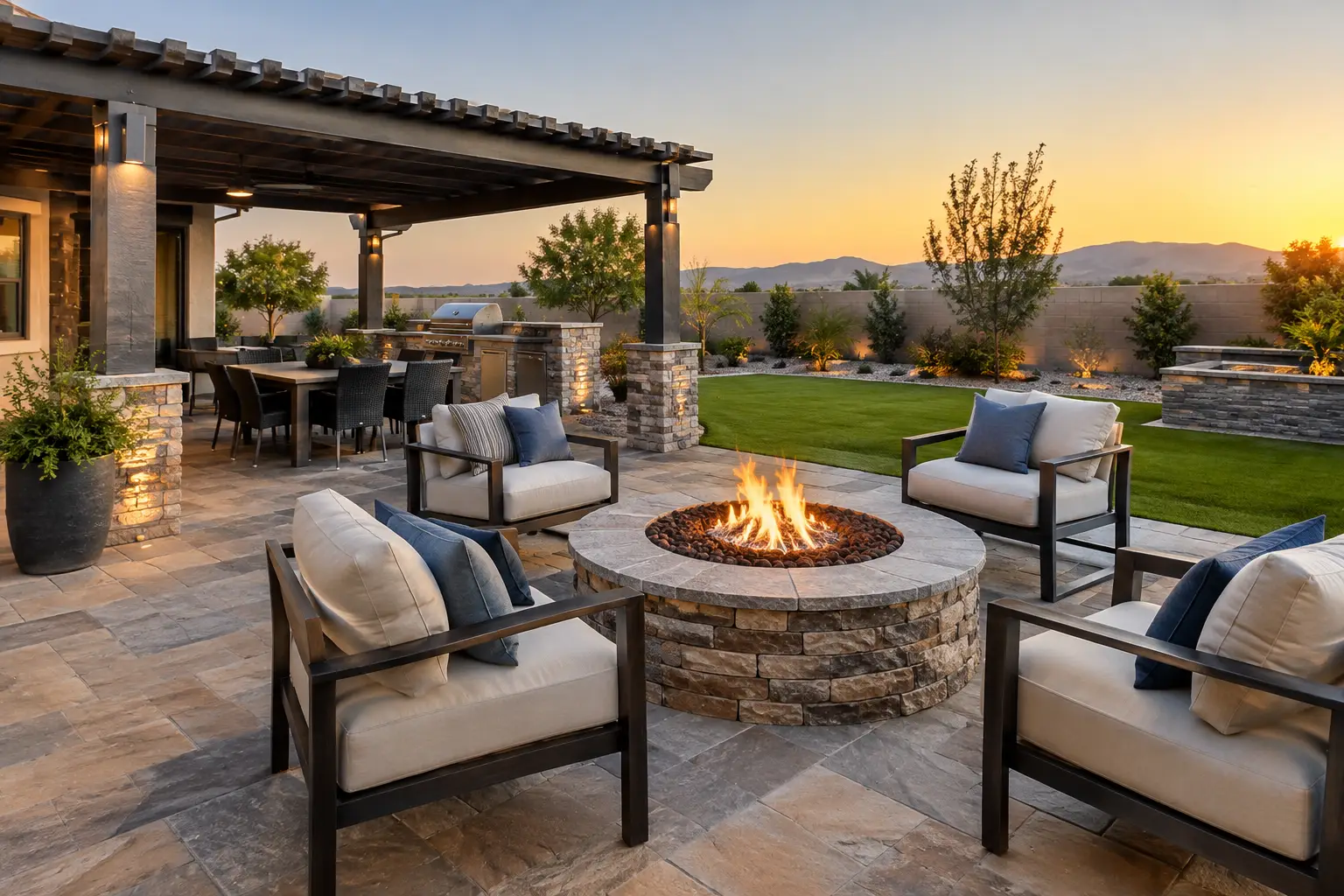
Backyards are becoming more intentional. Rather than placing furniture on an open slab and hoping it feels inviting, homeowners are using concrete layouts to define how the area will function. A slightly raised pad for a dining set, a curved lounge space near the pool, or a separate concrete base for a fire feature can make the yard feel planned without making it feel overbuilt.
Fire pits and outdoor fireplaces continue to be popular, especially for cooler evenings. The concrete surrounding them should be properly laid out with enough room for seating and safe circulation. Placement matters. A feature that looks great on a plan can become inconvenient if smoke blows toward the main seating area or if the walkway around it is too tight.
Outdoor kitchens follow the same principle. A concrete patio needs to support the footprint of cabinets, appliances, counters, and gathering space. Homeowners often focus on the grill island itself, but the surrounding floor area is what determines whether guests can comfortably move through the space.
Drainage and Grading Are Part of Modern Hardscape Design
The most attractive patio in the neighborhood will not perform well if water drains toward the home, collects near the pool, or creates low spots across the surface. Proper slope and site preparation are not flashy design features, but they are essential to a long-lasting concrete installation.
In Bakersfield, a dry stretch of weather can make drainage seem unimportant. Then a heavy rain exposes every low area. A professional concrete contractor evaluates the grade, plans for water movement, and places control joints to help manage normal concrete shrinkage. These details protect both the appearance and function of the project.
Drainage planning may also affect the final shape of the patio, walkways, curbing, and landscape borders. That is not a limitation. It is an opportunity to make the design work smarter from the beginning instead of relying on a repair after the fact.
Low-Maintenance Landscaping Meets Clean Concrete Lines
Many local homeowners are reducing lawn areas and pairing concrete with drought-conscious landscaping. This does not mean the yard has to look bare. Gravel, decorative rock, artificial turf, native plants, raised planters, and well-placed lighting can soften the look of hardscape while reducing ongoing water use and yard work.
Concrete walkways and curbing are especially useful in these designs. They establish crisp borders between planting areas, turf, and patio spaces, making the yard look maintained even when the landscape is intentionally low-water. Curved paths can add movement to a backyard, while straight lines complement more modern architecture.
The key is proportion. Too much hardscape can make a backyard feel hot and stark, especially on a smaller lot. A well-designed project leaves room for shade, planting, and visual relief. Concrete should give the yard structure, not take away its comfort.
Choosing a Trend That Will Still Feel Right Later
Trends are helpful when they solve a real problem. A light-colored pool deck makes sense because it can improve comfort in the heat. A larger patio makes sense because it gives family and guests room to gather. Decorative concrete makes sense when it brings character to a space without adding high maintenance.
Before choosing colors, patterns, or layout features, start with the way you want to use the backyard. Think about sun exposure, drainage, furniture, pets, kids, pool use, and how much maintenance you want to take on. Then choose a concrete design that supports those needs with lasting craftsmanship.
For Bakersfield homeowners, the best backyard is not the one that copies a photo online. It is the one built for your home, your climate, and the moments you want to spend outside. A thoughtful concrete plan can turn an underused yard into a place that brings a smile every time you step out the door.