
Best Pool Deck Coating Options for Bakersfield
August 2, 2026
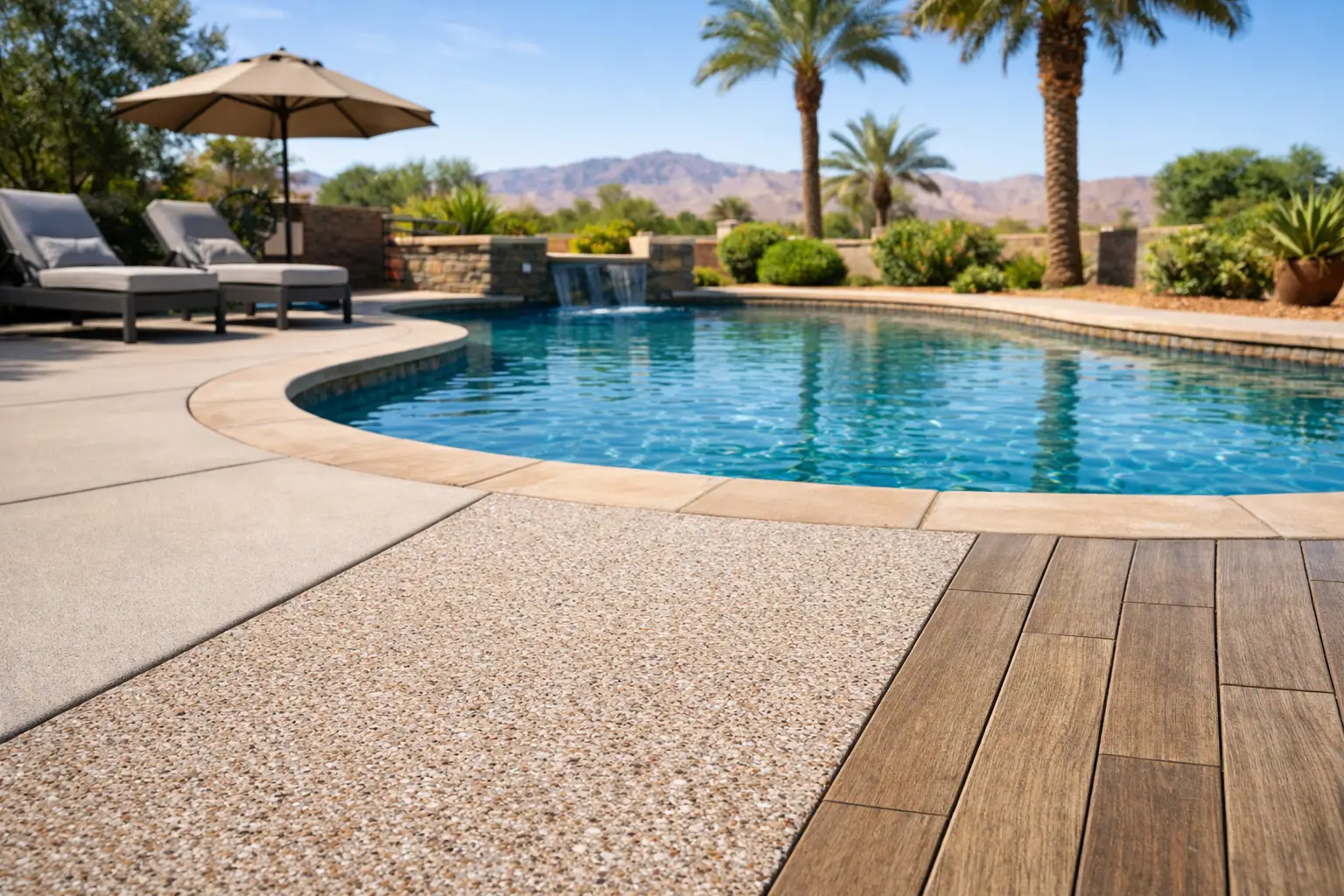
A pool deck has a tougher job than most outdoor surfaces. It takes hot Bakersfield sun, chlorinated water, wet bare feet, patio furniture, and constant foot traffic. When the concrete starts looking faded, stained, rough, or cracked, choosing the best pool deck coating options is about more than changing the color. The right system should improve traction, handle heat, and protect the concrete without creating a maintenance headache.
For many homeowners, the best choice depends on the condition of the existing deck, how much direct sun it receives, the look they want, and whether the surface needs a simple refresh or more substantial repair. A coating can make a dated pool area feel cleaner and more inviting, but only when the prep work and product match the project.
What a Pool Deck Coating Needs to Do
A good pool deck finish should be slip-resistant when wet, comfortable underfoot, and able to stand up to ultraviolet exposure. In Kern County, heat matters. A dark, dense coating may look sharp on a sample board but become uncomfortable to walk on during a July afternoon.
It also needs to work with the concrete underneath. Coatings are not a cure for structural movement, drainage problems, or major cracking. If water pools near the pool edge, if slabs have settled, or if cracks are widening, those issues should be addressed before a finish is applied. Quality concrete work starts with a sound surface, not a quick cover-up.
Best Pool Deck Coating Options for Local Homes
Acrylic Pool Deck Coatings
Acrylic coatings are among the most popular choices for residential pool decks. They are applied in thin layers over prepared concrete and are available in a wide range of colors and textures. Many systems can be finished with a light texture that helps improve footing around the pool.
This option works well for homeowners who want an affordable visual upgrade without the cost or thickness of an overlay. Acrylic coatings are also available in lighter colors that reflect more heat than bare gray concrete or dark decorative surfaces. That can make a real difference on exposed Bakersfield backyards.
The trade-off is that acrylic coatings are not indestructible. They may need periodic recoating, especially on heavily used decks or areas with frequent furniture movement. Proper cleaning and surface preparation are essential, because coating failure usually starts when the product is applied over dirt, moisture, weak concrete, or old failing sealer.
Cement-Based Overlays
A cement-based overlay is a stronger design option when a pool deck has cosmetic wear, minor surface flaws, or an outdated finish. A contractor applies a bonded layer of specialized cement material over the existing slab, then textures, colors, or patterns it to create a new look.
Overlays can be finished in several ways. A broom or knockdown texture creates a clean, slip-resistant surface. A stamped overlay can provide the appearance of stone, tile, slate, or other decorative materials without the expense and movement concerns of individual pavers. For homeowners who want a custom pool area, this is often where design flexibility becomes most valuable.
An overlay is thicker and more involved than a basic acrylic coating, so it generally costs more. It also requires solid existing concrete. If the deck has major cracks, loose areas, extensive spalling, or ongoing settlement, placing a decorative overlay over the problem may only delay a larger repair.
Epoxy Coatings
Epoxy coatings are known for their hard, durable finish and strong resistance to many stains and chemicals. They can be a good fit for covered patios, certain commercial spaces, or protected outdoor areas where a high-build finish is desired.
For an uncovered swimming pool deck, however, epoxy is rarely the first recommendation on its own. Standard epoxy can yellow or chalk under intense ultraviolet exposure, and smooth finishes can become slick when wet. Some exterior-rated epoxy systems include texture and a UV-stable topcoat, but the full system must be selected carefully.
Epoxy is best viewed as a specialized option, not an automatic answer for every pool deck. If you are considering it, ask how the product will perform in direct sun, how it handles moisture vapor from the concrete, and what texture will be used for wet traction.
Polyurethane and Polyaspartic Systems
Polyurethane and polyaspartic coatings are more advanced resin systems often used where durability, chemical resistance, and faster installation are priorities. They can offer better UV stability than standard epoxy and can be built with broadcast texture for slip resistance.
These systems can be an attractive choice for homeowners who want a clean, modern coated finish and are willing to invest in professional preparation. They are also commonly considered for commercial or high-traffic environments where downtime needs to be limited.
The downside is cost and application sensitivity. Temperature, moisture, concrete condition, and mixing procedures all matter. A fast-curing product can be an advantage in skilled hands, but it leaves less room for mistakes. This is not a project where cutting corners on labor pays off.
Cool Deck-Style Textured Coatings
Cool deck-style coatings are designed with comfort in mind. These textured acrylic-cement systems can help reduce surface heat while adding a more forgiving, slip-resistant finish around the water. They are especially appealing for pool decks that receive full afternoon sun.
The phrase “cool deck” is often used broadly, so it helps to ask what system is actually being proposed. Surface color, texture, base condition, and sun exposure all affect how hot the deck feels. A light beige, sand, or soft gray typically performs better underfoot than a charcoal or deep brown finish.
This coating style is a practical fit for homeowners focused on everyday pool use. It can refresh faded concrete, improve comfort, and give the backyard a more finished appearance without changing the entire layout.
How to Choose the Right Finish
Start with the condition of the existing deck. If the concrete is structurally sound but faded or stained, an acrylic or cool deck-style coating may be all that is needed. If the surface has shallow imperfections or you want a decorative pattern, a cement-based overlay provides more transformation. If the deck will see heavy commercial use or you need a high-performance resin system, polyurethane or polyaspartic may be worth discussing.
Then consider safety. Every pool deck should have texture, but texture should be balanced. An overly aggressive finish can be uncomfortable on bare feet and harder to clean. A properly applied knockdown, broom, or fine broadcast texture usually gives homeowners the traction they need without feeling harsh.
Color is another practical decision, not just a design preference. Lighter colors can help reduce heat absorption and make a smaller backyard feel more open. Mid-tone colors often hide dust and everyday debris better. If you are matching an existing patio, coping, or outdoor kitchen, request samples and view them in direct sunlight before making a final decision.
Preparation Determines Whether the Coating Lasts
The most attractive coating product cannot compensate for poor preparation. Before applying a new finish, a professional should inspect the concrete for cracks, weak areas, old sealers, contamination, drainage concerns, and moisture issues. The deck may need cleaning, grinding, patching, crack treatment, or mechanical profiling to create the right bond.
Pool decks also need careful attention around expansion joints and cracks. These areas move differently than the slab itself, so they should not simply be buried under a rigid coating. Using the right joint treatment helps prevent the finished surface from cracking prematurely.
At National Concrete, we believe a smooth project starts with a clear assessment of what the deck actually needs. Sometimes a simple coating is the smart answer. Other times, repairing or resurfacing the concrete first delivers the more dependable long-term result.
Care After Installation
Most pool deck coatings benefit from simple, regular care. Sweep off leaves and grit, rinse away pool chemicals or spills, and use a mild cleaner rather than harsh acids or abrasive tools. Place protective pads under metal furniture, particularly chairs that are moved frequently.
Avoid dragging heavy grills, planters, or furniture across the surface. If a coating gets chipped or worn in a high-traffic area, address it early instead of waiting for water to work beneath the finish. Periodic inspection and timely touch-ups protect the investment and keep the deck looking welcoming.
A well-chosen pool deck coating should make your backyard easier to enjoy, not harder to maintain. The best next step is to evaluate the concrete honestly, choose a finish that suits Bakersfield heat and your family’s use of the space, and have the work completed with the preparation and craftsmanship it deserves.