
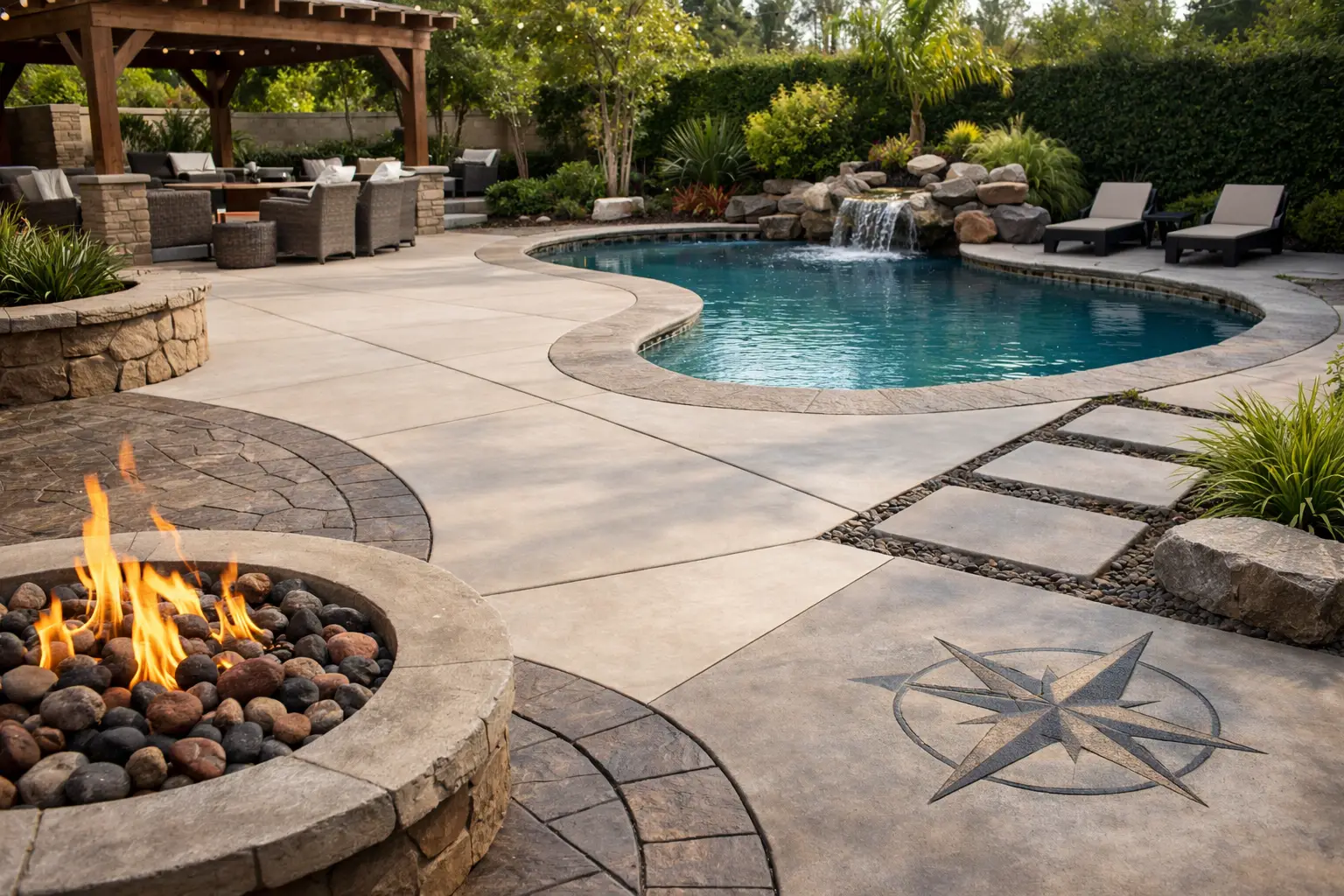
10 Decorative Concrete Backyard Ideas That Last
A plain gray slab can get the job done, but your backyard has the potential to do far more. The right decorative concrete backyard ideas can create a comfortable gathering space, define a pool area, improve drainage, and add real visual value to a Bakersfield home without choosing a surface that needs constant replacement.
Concrete is especially practical in Kern County. Our hot summers, dry conditions, and occasional temperature swings call for outdoor materials that can handle regular use and direct sun. The key is choosing a design that suits how you use the yard, then making sure the installation includes the right preparation, drainage, joints, and finish.
1. Create a stamped concrete patio with character
Stamped concrete is one of the most popular ways to turn a basic patio into a finished outdoor living area. It can recreate the look of flagstone, slate, brick, wood planks, or natural stone while keeping the strength and continuous surface of concrete.
For many homeowners, a warm earth-tone stone pattern works well with Bakersfield landscaping and stucco exteriors. A wood-plank stamp can be a smart choice around fire pits, dining areas, or covered patios where you want a more relaxed look without maintaining real wood.
Stamped concrete is not a shortcut for poor workmanship. Pattern alignment, color application, release agents, control joints, and sealing all affect the final appearance. A skilled installer plans the layout before concrete is placed so the pattern looks intentional instead of chopped up at edges and transitions.
2. Use a broom-finish patio with decorative borders
Not every backyard needs a highly patterned surface. A clean broom finish with a stamped, colored, or smooth border offers a polished custom appearance at a more restrained price point.
The field of the patio remains simple and slip-resistant, while the border frames the space like an outdoor rug. Borders can follow the patio perimeter, wrap around a seating area, or continue alongside a walkway. This approach works particularly well for homeowners who want lasting function first but still want the finished project to feel designed.
Choose contrasting colors carefully. Dark borders can look sharp, but they may absorb more heat in open sun. Medium tans, soft grays, and warm browns often hide dust and everyday outdoor debris better than very light or very dark finishes.
3. Build a pool deck designed for bare feet
A pool deck needs more than good looks. It should provide dependable traction, stay as comfortable as possible underfoot, and direct water away from the home and pool equipment areas.
Textured concrete finishes are a strong fit for pool decks. Lightly textured stamped patterns, broom finishes, and certain specialty coatings can add visual interest without creating a surface that feels overly aggressive on bare feet. Lighter colors also tend to be more comfortable during a Bakersfield summer afternoon than deep charcoal or brown concrete.
Avoid selecting a finish based only on a small sample. Ask to see larger examples of texture and color in natural light. A pattern that looks subtle indoors can appear much busier across a wide pool deck. Pool areas also benefit from clear expansion-joint planning and proper slope so standing water does not become part of the design.
4. Add a concrete fire pit patio
A dedicated fire pit area gives a backyard a purpose after sunset. Concrete makes it easy to create a circular, square, or free-form pad that separates seating from lawn, gravel, or planting areas.
A round stamped-concrete pad can soften a yard with many straight lines, while a rectangular pad pairs naturally with modern patio furniture and a linear fire feature. Consider how people will move around the seating area. There should be enough room for chairs to slide out, guests to walk behind them, and a clear path back to the house.
The fire feature itself must be built and installed with appropriate materials and local safety requirements in mind. Concrete around it should be planned as part of the full layout, not poured as an afterthought once the fire pit is already in place.
5. Connect backyard zones with decorative walkways
A backyard feels more finished when its separate spaces connect with purpose. Decorative concrete walkways can lead from the patio to a pool, garden, side gate, outdoor kitchen, or detached structure while reducing worn paths through grass and soil.
For a softer, more natural look, consider a curved walkway with a stone-style stamp. For a contemporary property, clean rectangular panels with saw-cut lines may fit better. The best width depends on use: a simple garden path can be narrower, while a main route between the house and entertaining area should feel comfortable for two people passing.
Walkways also solve practical issues. Properly graded concrete can help manage runoff and keep foot traffic out of muddy or dusty areas. That is a small improvement that makes a real difference when hosting family and friends.
6. Choose exposed aggregate for texture and contrast
Exposed aggregate reveals decorative stone within the concrete surface. The result has more texture than a standard finish and can range from subtle to bold depending on the aggregate selected.
It is a good option for pathways, patios, and pool-adjacent spaces where traction matters. It also pairs well with smooth concrete borders, creating contrast without relying on added color or a stamped pattern.
There is a trade-off: exposed aggregate has a naturally textured feel, which some homeowners love and others find too rough for large barefoot areas. It is usually best to view an installed sample and think about where children, pets, and guests will walk most often before committing to it across the entire backyard.
7. Frame an outdoor kitchen with a concrete pad
Outdoor kitchens, grills, and built-in bars need a stable foundation. A properly designed concrete pad creates a level base for cabinetry, appliances, counters, and seating while visually tying the kitchen into the rest of the yard.
This is a place where the concrete design should support the architecture rather than compete with it. If your patio already has a busy stamped pattern, a simpler adjacent pad or border can keep the space from feeling crowded. If the home has a clean modern exterior, a smooth finish with intentional saw cuts may be exactly right.
Plan utilities before pouring. Gas, electrical, water, drainage, and equipment access should be considered early. Moving or cutting concrete later is possible, but it is rarely the easy or affordable option.
8. Add definition with seat walls and raised planters
Decorative concrete does not have to stay flat. Low seat walls, raised planters, curbing, and retaining features can help shape a larger backyard into useful spaces.
A seat wall around a patio provides extra seating without filling the area with chairs. Raised planters can separate a dining zone from a lawn or frame a fire pit. In sloped yards, properly engineered retaining solutions may be necessary to create a level usable area and manage soil movement.
These features need thoughtful construction. Walls and planters deal with soil pressure, irrigation, drainage, and changing temperatures, so appearance should never come ahead of structural details.
9. Use saw-cut patterns for a modern backyard
Saw-cut concrete is an understated option with strong visual impact. After the concrete is placed, controlled cuts create clean geometric panels, grids, or larger rectangular sections. The joints look deliberate while also helping manage the natural movement of concrete.
This style works well with modern homes, minimalist landscaping, artificial turf, and linear patio covers. It can be finished in a natural gray, lightly tinted color, or paired with decorative gravel, turf strips, or planting beds between larger concrete sections.
Keep the geometry practical. Excessive cuts can make a space look overly busy, and joint placement must still serve the concrete itself. A professional layout balances design with the realities of cracking control.
10. Combine concrete with turf, gravel, and planting beds
Some of the best decorative concrete backyard ideas use concrete as the anchor, not the only material. Large concrete pads can be softened with artificial turf, decomposed granite, gravel, drought-tolerant plants, and shade structures.
Concrete stepping panels through turf can create a crisp resort-style path. A patio bordered by gravel and planting beds can feel less formal while keeping the main seating area easy to clean. This mixed-material approach is especially useful in larger yards where one continuous slab could feel oversized or create too much reflected heat.
Every material transition should be planned for drainage and maintenance. Gravel should stay contained, turf needs a proper base, and planting areas should not drain toward the concrete or the home’s foundation.
How to choose the right backyard concrete design
Start with the way you want to use the space. A family that hosts weekend cookouts may benefit most from a large patio, defined walkways, and a kitchen pad. A pool-focused backyard may need a cooler-colored, slip-resistant deck and clear drainage. A smaller yard may look best with one well-designed stamped patio rather than several competing features.
Then consider sun exposure, existing elevations, access for construction equipment, and the condition of the soil. Decorative concrete is a long-term improvement, so the base preparation matters as much as the color and pattern on top. Saving money by skipping site work or drainage planning can lead to settlement, water problems, or repairs that cost more later.
A clear on-site estimate helps turn inspiration into a buildable plan. National Concrete helps Bakersfield homeowners match the right concrete finish, layout, and construction details to their property. A backyard should make you want to spend more time outside, and the right concrete work gives that space a solid, good-looking foundation for years to come.